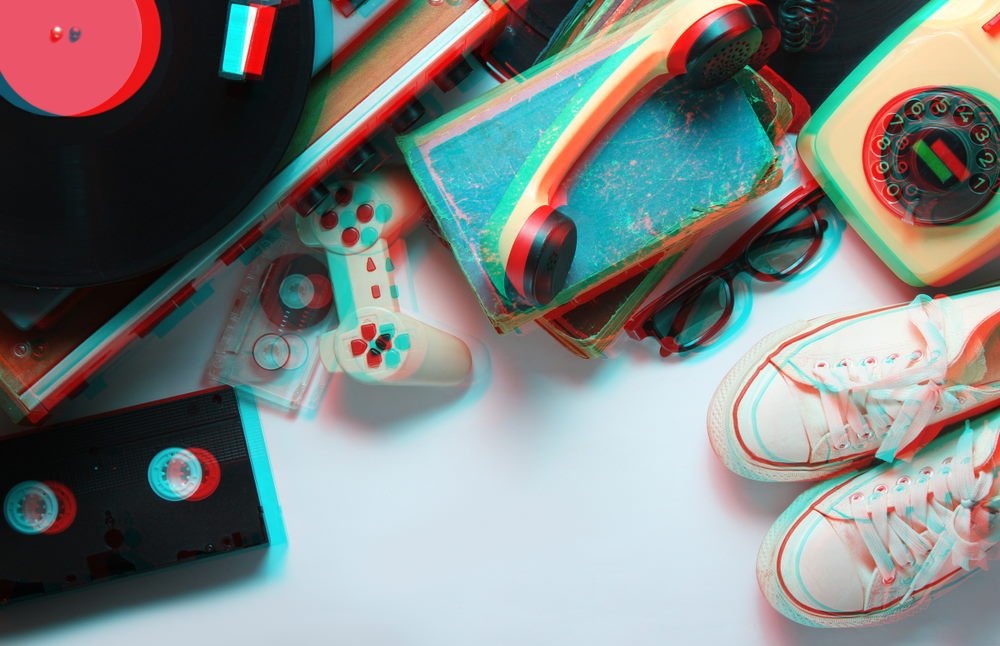
The nineties were a wonderful grab bag for music lovers. The question is not which music genre was popular at the time, but which was not? Dirty Seattle grunge, sweet-voiced pop divas, crazy Eurodance, good-natured Britpop bursting with zest for life, lightning-fast skate punk, numbly stomping around Nu Metal, innocent bubblegum pop, steamy soul and R&B, dangerously barker-wielding gangsta rappers, even banjo-pinging country tunes and sultry Latin pop. In the 1990s, all these style movements competed against each other in the charts without prejudice. “MTV,” “TMF,” “The Fresh Prince of Bel-Air,” “Full House,” “Seinfeld,” The Simpsons,” “Friends,” Super Nintendos and PlayStations ruled the small TV screen, while CD players and Sony Discmans tickled the eardrums. Streaming was still a distant prospect. The first commercial MP3 players did not appear until 1998. And at that time they could barely fit 20 songs! The CD still had all the say.
Which one of these deserves the top spot? Cast your votes below and let us know your personal ranking in the comments!
Cast your vote - the ranking shifts live based on the votes.
NU METAL & The Great Woodstock '99 Disaster
The party couldn't last forever. As the 1990s drew to a close, a darker, more volatile energy began taking over the music world. Granted, mainstream pop was still booming: 2Pac scored massive posthumous hits from beyond the grave, Cher staged the ultimate comeback with the Auto-Tuned smash 'Believe', and pop princesses Britney Spears and Christina Aguilera ruled the airwaves alongside Blink-182 running naked through the charts with 'What's My Age Again'. But over in the heavy music scene, Nu Metal was calling the shots. Bands like Korn gave voice to adolescent alienation and rage on their 1998 breakthrough Follow the Leader, with Jonathan Davis delivering unflinching, raw lyrics about childhood trauma.
Everything boiled over at Woodstock '99 in Rome, New York. An all-star lineup including Korn, Limp Bizkit, Metallica, Rage Against the Machine, Red Hot Chili Peppers, and DMX was supposed to celebrate 30 years since the original summer of love. Instead, the festival descended into a nightmare. Sweltering heat on an unshaded tarmac runway, extortionate water prices ($4 a bottle), overflowing sanitation, and poor security created a pressure cooker. When Fred Durst launched into 'Break Stuff', shouting 'It's time to let yourself go right now, 'cause there are no rules out there!', the crowd erupted into full-scale riots, burning vendor tents and tearing down audio towers. When the smoke finally cleared, Woodstock '99 went down in history as 'The Day the Nineties Died'.
GIRL POWER!
“I wanna, I wanna, I wanna / I really, really, really wanna zigazig ah!” – Recorded in barely 30 minutes, 'Wannabe' jumped to number 1 in no fewer than 37 countries in 1996. That same autumn, 'Spice' was released. The record sold more than 23 million copies worldwide. This means that the Spice Girls still have the most successful album by a girl group to their name. The debut also catapulted the world hits 'Say You'll Be There', '2 Become 1' and the double A-side 'Who Do You Think You Are'/'Mama' to the highest position of the charts. It was a crazy time. Victoria Beckham, Emma Bunton, Melanie Brown, Melanie Chisholm and Geri Halliwell conquered the world giggling under their alter egos Posh, Baby, Scary, Sporty and Ginger Spice. The British quintet even effortlessly won the overseas music market around their fingers. It has been since The Beatles that a British band was so deeply loved by the American public. The armpit-fresh dance-pop songs were a breath of fresh air between all the grimy grunge and dangerously cool hip-hop. A crucial assist for 'teen pop'. After the Spice Girls, posters of girl groups, boy bands and all kinds of pop lolitas suddenly adorned millions of teenage rooms. The girls also had something to say: 'GIRL POWER!' - Although that image of girls' emancipation was meticulously molded by their manager Simon Fuller, but still. That man knew something about marketing. A few years later he would create the entire worldwide 'Idols' TV circus. When the hit single 'Spice Up Your Life' launched the second album 'Spiceworld' in October 1997, 'Spicemania' was at its crazy peak. These were the days when Ginger Spice pinched Prince Charles in the royal ass, Pepsi and Polaroid waved lucrative sponsorship deals, toymaker Galoob Toys sold out 11 million Spice Girls dolls at Christmas, their clay stop-motion versions dragged the Hanson goons by their blond hair through the boxing ring of MTV's 'Celebrity Deathmatch' and the girls even ran after The Fab Four with 'Spice World - The Movie' (1997). But after the top you can only go down. On May 31, 1998, nine days before the start of their American tour, Geri Halliwell announced her retirement. Without the fiery Ginger, things went downhill quickly. Victoria, Emma, Mel B and Mel C attempted a meager attempt at a comeback as a foursome. ' Forever ' (2000) didn't even get past Westlife's choirboys in the UK Album Charts. That same winter the group pulled the plug. Temporary, we now know. At the closing ceremony of the 2012 London Olympics, the Spice Girls demonstrated with verve why they were the most important pop phenomenon of the 90s.
Log in to post a comment.
EURODANCE & other crazy pop phenomena
People who actively experienced the 90s like to look back on the decade nostalgically. It was also quite a wonderful era. The Wall had just fallen, the WTC towers were still standing, there were Flippos in the chip bags, the Super Soaker 50 provided cooling in the then still acceptably hot summers and there was always a little time for Super Mario 64 or a game of Mortal Kombat. That cheerful feeling was also expressed in the music. While grunge and gangsta rap dominated the United States, the entire UK sang along to Britpop anthems like cuddly hooligans, and elsewhere Ricky Martin's sultry southern Latin was preparing for a global rise, Europe also had its musical individuality. EURODANCE! Armed with a battery of synthesizers, drum computers with plenty of cocktails and highly infectious vocal lines, one Eurodance act after another sprang up in Western Europe. Snap! took the lead in early 1990 with 'The Power'. Two years later, the Germans made their breakthrough with the international mega hit 'Rhythm Is a Dancer'. Meanwhile, Dr. Alban reached number 1 with his 'It's My Life' in almost all member states of the then European Union. The Dutch-Belgian 2 Unlimited was responsible for the European hit of the year in 1993 with 'No Limit'. The following year, Scatman John had the entire planet jazz scatting with his “ Ski-Ba-Bop-Ba-Dop-Bop ,” and Italian-German Mo-Do controlled the charts with “ Eins, Zwei, Polizei .” By 1995, the glory days of Eurodance seemed to be over. Or not? The genre transformed completely in line with the changing spirit of the times, like a Mighty Morphin Power Ranger into something new. The Italian Gala hit the discos with 'Freed From Desire', while the Belgian Paradisio raised the temperatures considerably with 'Bailando'. The German Sash! In the meantime, the people learned some Spanish and French with 'Ecuador' and 'Encore une fois'. But the best was yet to come. “Life in plastic, it's fantastic!” – In 1997, Aqua conquered the world with 'Barbie Girl'. The success album 'Aquarium' also had hits such as 'Doctor Jones' and 'My Oh My' in the charts. The Danish-Norwegian dance act proved with 'Turn Back Time' that they could hold up well even without busy bubblegum beats. In fact. The melancholic ballad also demonstrated that frontwoman Lene Nystrøm could sing a more than decent piece. In Aqua's wake, copycats like Toy-Box (' Tarzan & Jane ', ' Best Friend & ' The Sailor Song '), Daze (' Together Forever (The Cyber Pet Song) ') and the self-proclaimed 'technobilly pop band' Cartoons (' Doodah ' and ' Witch Doctor ') tried to get in on the action. But it never became as memorable as the best-selling Danish music act of all time.
Log in to post a comment.
Unforgettable movie soundtracks
The film and music industries were closely intertwined in the 90ies. The 90s gave birth to a lot of extraordinary film soundtracks. What was special was that millions of people actually ran to the record store to purchase it. Because what else did you have to do if you wanted to listen to those beautiful songs again? In an era without YouTube, iTunes and Spotify, movie soundtrack sales broke one record after another. Whitney Houston's 'I Will Always Love You' spent no less than 14 weeks at number 1 on the Billboard Hot 100. More than 20 million people bought the single. With 45 million copies sold, 'The Bodyguard' (1992) is still the best-selling soundtrack ever and the 3rd best-selling album of all time. 'The Voice' was of course also present on 'Waiting to Exhale' (1995), the award-winning film soundtrack that attracted celebrated R&B and Soul stars such as TLC, Toni Braxton, Brandy, Mary J. Blige and Aretha Franklin. Celine Dion's 'My Heart Will Go On' became the 10th best-selling single of all time. The unforgettable theme song of 'Titanic' (1997) also immediately grabbed all available shiny statues at the Oscars, Golden Globes and Grammys. If you want to point out all the countries where Bryan Adams' '(Everything I Do) I Do It for You' was number 1 on the world map, that would be a bit of a challenge. And say that the power ballad was almost cut from the film 'Robin Hood: Prince of Thieves' (1991)! Who could have predicted that after 28 years in the hard rock business, Aerosmith would still score its biggest hit with 'I Don't Want To Miss a Thing' from the Michael Bay sci-fi disaster 'Armageddon' (1998)? But the alternative added value seeker will certainly get his money's worth among the piles of 'Music from the Motion Picture' and 'Original Motion Picture Soundtrack' from the 90s. Just think of the great Seattle grunge language card 'Singles' (1992) or the brutal collection of tracks that NIN frontman Trent Reznor put together for Oliver Stone's 'Natural Born Killers' (1994). Quentin Tarantino showed his musical connoisseurship in film after film. And certainly on the 'Pulp Fiction' (1994), enriched with Dick Dale's screeching 'Misirlou' surf guitar and 'Urge Overkill's 'Girl, You'll Be a Woman Soon'. The soundtrack to Baz Luhrmann's 'Romeo + Juliet' (1996) became a huge success thanks to songs like Des'ree's 'Kissing You' and The Cardigans' 'Lovefool'. Radiohead's end credits salute 'Exit Music (For a Film)' was missing from the disc, because Thom Yorke & co wanted to save the song for their upcoming 'OK Computer' (1997). The 'Trainspotting' (1996) soundtrack, buzzing with Leftfield electronics and pumping Underworld beats, proved so popular that it even received a follow-up disc the following year. And who doesn't spontaneously think of 'Good Will Hunting' (1997) with Elliott Smith gems such as 'Between the Bars', 'Say Yes', 'Angeles' and 'Miss Misery'? Even in children's films the musical quality was sky high. Granted. In retrospect, R. Kelly turned out to be a scary child molester. But with 'I Believe I Can Fly' he gave the already excellent 'Space Jam' soundtrack (1996) a thrilling emotional highlight. Animated characters and beautiful melodies were also a golden match for Disney in the 1990s. In its 'Disney Renaissance', the House of Mouse again made timeless cartoons such as 'The Little Mermaid' (1989), 'Beauty and the Beast' (1991) and 'Aladdin' (1992). This resulted in prize-winning beautiful songs such as 'Under the Sea', 'Beauty and the Beast' and 'A Whole New World'. But the most beautiful-sounding childhood memory from that golden era was written by Elton John and Tim Rice for 'The Lion King' (1994). Because who doesn't get a little melancholy when he hears 'Can You Feel the Love Tonight', 'Circle of Life' or 'Hakuna Matata'?
Log in to post a comment.
Billions of CDs, Napster, Metallica & the iPod
In 1982 the first commercial CD was released. The ancient gramophone record was not immediately impressed by this 'Compact Disc'. That was yet to come. In 1988, CD sales overtook vinyl sales for the first time. By 1991, the 12 cm wide disc had also replaced the cassette as the most successful physical sound carrier. That year, 1 billion CDs flew out the door. Then things went fast. In 1996, more than 2 billion units were sold worldwide. That generated huge amounts of money for the music industry. Vinyl pressing was an expensive and labor-intensive process. That all changed with this incredibly ergonomic optical audio disc from Philips and Sony. It cost barely 1 euro to make a CD. The final price sticker on the plastic box was 15 times more. Count your winnings. Never had the music world found such a lucrative cash cow. The hegemony of the CD was unprecedented. But her reign proved not to be endless. In the late 1990s, the powerful music moguls looked askance at the growing Internet and the arrival of MP3s. Those crazy things wouldn't ruin their party, right? No. You didn't even get 2 albums on one of those silly, clunky MP3 players and the internet back then was as slow as your grandmother. On June 1, 1999, Shawn Fanning, Sean Parker and Hugo Sáez Contreras launched Napster. The world's first popular peer-to-peer music sharing service. So popular that none other than Metallica took the boys to court. That had the opposite effect. The media attention helped Napster gain millions of new users by spring 2000. 2000 was also the peak of CD sales. But after a historic 2.455 billion CDs sold that year, the inevitable demise came. Lightning fast, moreover. The following year, on October 23, 2001, Steve Jobs suddenly conjured a cool little white thing out of the pocket of his jeans during an Apple presentation in Cupertino. The iPod. An MP3 player that could hold 1,000 songs. “Ultra portable”, too. “… you can take your entire music library with you, right in your pocket.” – Before the music industry fully realized what was happening, it was already too late.
Log in to post a comment.
The sinister dark side of BOYSBANDS
After the monster success of the New Kids on the Block in the late 1980s, shrewd managers, greedy impresarios and other rogue figures in the music industry understood that there was money to be made from boy bands. A hell of a lot of money, in fact. In the meantime, the popularity of the NKOTB declined as quickly as it had arrived. But no big deal. A new batch of boy bands was already ready to replace these pioneering girl idols. In England, Take That plotted its teen girl blitzkrieg with “ Everything Changes .” Across the Atlantic Ocean, Boyz II Men showed with 'End of the Road' how you can conquer the charts worldwide with four voices from Philadelphia. A certain Lou Pearlman watched it all with a grin. The corpulent New Yorker was related to Art Garfunkel and saw his blood bond with that legendary American singer-songwriter as destiny. But the ambitious entrepreneur wouldn't get his hands dirty himself. Oh no. Dozens of naive teenagers and early twenties would do that for him. Lou Pearlman is the man who invented the Backstreet Boys in 1993. Two years later he also cobbled together *NSYNC. In addition, the manager also pushed dozens of other later American boy bands such as O-Town, LFO and Take 5 with a dubious contract. He even had one of his big fingers in the pie with Innosense, the girl group that Britney Spears sang with on a Blue Monday in 1997! The man was without a doubt the most successful boy band manager ever. The Backstreet Boys have sold more than 100 million records worldwide. No boy band ever did better. His other protégés, *NSYNC, are going for silver with 70 million units. Pearlman knew how to sell pop idols, that much was certain. “If Lou wasn't the entrepreneur that he was, he would've been the best car salesman you've ever seen,” Backstreet Boy AJ McLean looks back on his former mentor. But behind all those ringing cash registers there is a sinister dark side. Justin Timberlake & co worked hard, surviving on a daily allowance of $35. Even when they had already sold 10 million records. The Backstreet Boys performed in sold-out mega stadiums after ' Quit Playing Games (with My Heart) ' and ' Everybody (Backstreet's Back) ', but the boys could not even pay for their poor rental apartment after the tour. Meanwhile, their manager lived in a house the size of Disneyland. The title of *NSYNC's album after their grim and highly mediatized legal battle with their greedy ex-owner spoke volumes. 'No Strings Attached' (2000) and the unsubtle lead single 'Bye Bye Bye' became world hits. Today, Justin Timberlake is one of the most successful solo artists in the world. Things didn't end well for Lou Pearlman. The man didn't just squeeze dozens of teen idols. He also had time to defraud unsuspecting investors of almost half a billion dollars. His years of Ponzi fraud ultimately became his downfall. 'Big Boppa' checked into Florida federal prison on May 21, 2008 for a 25-year prison sentence. He also died there ingloriously on August 19, 2016 from cardiac arrest. Want to know more about this disturbing story? Then be sure to check out ' The Boy Band Con: The Lou Pearlman Story ' (2019). Speaking of an authoritative documentary: Lance Bass shows off as producer on the credits.
Log in to post a comment.
Hip-hop was a matter of life and death
In the late 1980s, N.W.A. gangsta rap on the map. Their 'Straight Outta Compton' (1988) became the blueprint for the West Coast hip hop that dominated the American charts a few years later. The collective from Compton did not last long. But their musical legacy was forever. When the ex-band members weren't threatening to shoot each other, they dropped legendary solo albums. Ice Cube was the first to shake the dollar tree with angry and highly controversial albums like ' AmeriKKKa's Most Wanted ' (1990) and ' Death Certificate ' (1991). Meanwhile, Suge Knight founded Death Row Records in Los Angeles. At the end of 1992, Dr. Dre released 'The Chronic' there. While multitasking, Dre scolded his ex-bandmate Eazy-E for all kinds of rude things on his legendary first solo album, he suddenly became one of the best-selling American artists, he invented 'G-funk' and the producer also launched the career of Snoop Dogg in the meantime. That tall rapper debuted at number 1 on the Billboard 200 the following year with his 'Doggystyle' (1993). In between all that unadulterated quality stuff, a twenty-year-old literary prodigy also poked his nose at the window with ' 2Pacalypse Now ' (1991). After ' Strictly 4 My N.I.G.G.A.Z... ' (1993), ' Me Against the World ' (1995), ' All Eyez on Me ' (1996) and eight months in prison, 2Pac strolled into the infamous Death Row Records. At its peak, that legendary West Coast record label was making as much as 100 million dollars annually. In between raking in money, boss Suge Knight and his rappers found plenty of time to feud with their East Coast rivals. Because in New York tough bosses also made hip-hop. For those who doubted that, Puff Daddy named his record label Bad Boys Records. 'Ready to Die' by The Notorious B.I.G. was released there in 1994. with the instant classics ' Juicy ' and ' Big Boppa '. It was a golden age full of groundbreaking platinum hip-hop records. Just think of masterpieces like Naughty by Nature's ' 19 Naughty III ' (1993), Wu-Tang Clan's hardcore kung fu manual ' Enter the Wu-Tang (36 Chambers) ' (1993), Nas' ' Illmatic ' (1994), Jay-Z's gangster epic ' Reasonable Doubt ' (1996) and Busta Rhymes' ' The Coming '. Thanks to these language-savvy pioneers, hip-hop suddenly became the best-selling music genre in the US by the mid-1990s. The wonderful richness of words and the lyrical sense of language with which these 90ies rappers juggled, forms a stark contrast to the scratching hysterical boasting toddler rap that, after the turn of the century, made the old school 'boom bap' lover grab earplugs and paracetamol in fright. But hip-hop was not only exceptionally superior and successful. Above all, it was also life-threatening. The East Coast-West Coast rivalry resulted in the deaths of two of the genre's biggest artists. On September 13, 1996, Tupac Shakur died in the hospital, six days after taking four bullets on Las Vegas Boulevard. On March 9, 1997, his archrival Biggie Smalls received just as many bullets through his wall-to-wall chest. A few months later, Puff Daddy and Biggie's widow Faith Evans sang "I'll Be Missing You." The killers were never found.
Log in to post a comment.
The last decade before reality TV replaced the music video
In the 90s there were not only music channels. Moreover, they actually broadcast music day and night! Where else were young people supposed to get their music videos? Certainly not on YouTube, because the video giant only released its first video online on April 23, 2005. Moreover, there was precious little music available on the worldwide web in the 1990s. The decade was already coming to an end when the first MP3s appeared. The big gatekeeper for music videos was MTV. The American television network, founded in 1981, stayed away from empty-headed Jersey and Geordie Shore's. The success of MTV did not go unnoticed in the Low Countries either. The Dutch TMF was founded on May 1, 1995. TMF Vlaanderen followed on October 3, 1998. Yet something was already afoot in the 1990s. Slowly but surely, the music channel would program fewer music clips and more other content. These ranged from enjoyable animated series such as 'Beavis and Butt-head' (1993), 'Daria' (1997) and the great stop-motion brawl 'Celebrity Deathmatch' to the spicy talk show 'Loveline' (1996) and the first reality shows 'The Real World' (1992) and 'Road Rules'. But there was no way back. The bosses ordered more reality TV year after year. Because: that clearly generated more advertising money and viewers. Year after year, the 'M' seemed to stand for 'Wacky' and 'Money' rather than 'Music'. After the turn of the century, new shows such as 'Jackass', 'MTV Cribs' and 'The Osbournes' set the tone. And then it all went downhill terribly quickly for the American music channel. But at the end of the 20th century the music video still put up a brave defense! And its annual high mass was the 'MTV Video Music Awards' ceremony. Millions of smartphone-less teenagers and twenty-somethings would watch the TV screen to see who would take home a coveted 'Moon Man' at the VMAs that year. The show has always been synonymous with spectacle. What naughty stunt would multiple winner Madonna plan again this year? Which rockers would beat the crap out of each other backstage? In 1992, Axl Rose and Kurt Cobain almost rolled on the floor, after which the Nirvana frontman took revenge by banging on Axl's piano just before Guns N' Roses' 'November Rain' performance. Only the grunger made a mistake in his instrument. To his horror, however, he turned out to have salivated the grand piano of occasional pianist Elton John. Bonuses also happened within the same band itself. Liam Gallagher's hooligan behavior during brother Noel's 'Champagne Supernova' guitar solo at the 1996 edition is legendary. Just like the alleged pop diva fight between Whitney Houston and Mariah Carey in 1998. In 1991, Poison singer Brett Michaels got into a fight backstage with his guitarist C.C. DeVille after a shameful display that made the expiration date of glam metal painfully clear. The ultimate VMA moment? Michael Jackson, who not only performs his hit 'Scream' at the 1995 edition, but also performs all his biggest hits for fifteen minutes and is also joined by Slash for 'Black Or White' and 'Billie Jean'. The moonwalking, robot-dancing and costume-changing 'King of Pop' groped his crotch as if he had eternal life forever. In 2011, Wacko Jacko's iconic passage was voted 'Best VMA Pop Performance' and 'Most Iconic VMA Performance' in the history of the award show.
Log in to post a comment.
The BRITPOP madness
What was the British answer to American grunge? Unbridled zest for life! No one said it better than Noel Gallagher. “At the time it was written in the middle of grunge and all that, I remember Nirvana had a tune called 'I Hate Myself and Want to Die'. Which I was like 'Well I'm not fucking having that.' As much as I fucking like him and all that shit, I'm not having that.” Never shy of a bold statement, the Oasis mastermind added: “Seemed to me like a guy who had everything and was miserable about it, and we had fuck all and I still thought that getting up in the morning was the greatest fucking thing ever because you didn't know where you'd end up at night . We didn't have a pot to piss in but it was fucking great.” “Tonight, I'm a Rock 'N' Roll Star!”, Noel's brother Liam already knew when the Oasis audience only consisted of a sound man, the barmaid and two drunken stray regulars. 'Live Forever', that was the Cool Britannia adage. The working class heroes from Manchester, equipped with astonishing self-confidence, meanwhile rolled across the streets of the British tabloids with the art school students from Blur. The British Heavyweight Championship was scheduled for August 14, 1995. The musical archrivals both launched their new single that day. Who would win 'The Battle of Britpop'? The results made no sense. Oasis sold 216,000 copies of 'Roll With It'. Blur convincingly outdid the Gallagher brothers by selling 274,000 copies of 'Country House'. Ironically, those weren't even that memorable singles. Both bands certainly have much bigger anthems in their back catalog (' Champagne Supernova ', ' Don't Look Back in Anger ', ' Acquiesce ' vs. ' Girls & Boys ', ' Parklife ', ' Beetlebum ')! Blur also signed for a Pyrrhic victory. With ' (What's the Story) Morning Glory? ' (1995), Oasis even clawed its way into the unreachable American market. 25 years later, 'Wonderwall' will be the first 90ies song to break the milestone of 1 billion Spotify streams. The peak of the Britpop craze took place on August 10 and 11, 1996. Then Oasis will gather a dream bill (including Ocean Color Scene, The Bootleg Beatles, The Chemical Brothers, The Prodigy, Manic Street Preachers & The Charlatans!) and a quarter of a million people on the lawn in front of Knebworth House, Hertfordshire. “Some might say we will find a brighter day!” sang Liam on the second evening, wearing a hastily grabbed white wool cardigan from his sweetheart Patsy Kensit as a stage outfit. In all the drunken madness of the night before, the enfant terrible of Britpop had forgotten that they had to play for two days. After 'The Concert of a Generation', the Britpop craze did not last long. Oasis lost their hand with the bombastic ' Be Here Now ' (1997), while Blur sought refuge in the American lo-fi of ' Song 2 '. The following year, Pulp wrote the brilliant eulogy of the era when everything seemed possible on that rainy island northwest of France with ' This Is Hardcore ' (1998). “Americans want grungy people, stabbing themselves in the head on stage. They get a bright bunch like us, with deodorant on, they don't get it,” the inimitable Liam Gallagher later underlined the difference between Britpop and American guitar music. What other colorful gems are still shamefully missing here? You will discover that in this supersonic Top 10 Best Britpop Bands!
Log in to post a comment.
GRUNGE & other hard guitars dominated the charts
Today you have to dig through the charts with a metal detector in search of some rock music. When the device starts beeping, it turns out to be an Italian Eurovision Song Contest winner. Early 90s, on the other hand! Then you really stumbled over the hard guitar bands every week. Metallica released its famous 'The Black Album' in the summer of 1991. The black gem sold more than 16 million copies in America alone and climbed its way to the top of the German, Dutch, Swedish, Norwegian and Swiss album charts, among others. But the real triumph of the guitar was yet to come. As the spandex star of glam metal acts like Poison and Skid Row faded away, a new sound bubbled up in Seattle's underground. In September 1991, that simmering pot suddenly exploded with the release of Nirvana's 'Nevermind'. 'Smells Like Teen Spirit' unleashed a true musical revolution. Other grunge bands such as Pearl Jam, Alice in Chains and Soundgarden exchanged the sweaty local venues for MTV and the multi-million success. Less than three years later, a handyman discovered Kurt Cobain's lifeless body. With the death of the Nirvana frontman, the days of the grunge genre also seemed to be numbered. But don't worry. In between mourning, Courtney Love found time to release Hole's ' Live Through This ' (1994). In the meantime, one skate and ska-punk band after another conquered the American charts from sunny California. Bands like The Offspring, Green Day, Bad Religion, NOFX, Rancid and Sublime stunned the music industry with their staggering sales figures. Aren't these obscure niche groups on KROQ-FM yesterday?! Between Nirvana's 'Nevermind' (1991) and Green Day's 'Dookie' (1994), there was a lot of other good stuff to be grabbed from the record bins. American alternative rock bands such as Jane's Addiction, Red Hot Chili Peppers, Smashing Pumpkins and Weezer were very popular in the Billboard Album Top 200. While acts such as R.E.M. , Garbage , The Breeders and Beck certainly didn't make weak records either! The foaming melting pot of Rage Against The Machine's debut turned out to be the harbinger of the Nu Metal that pulverized the mainstream in the late 90s. All well and good. But was there no music being made in our region? That's for sure! And it sounded quite different.
Log in to post a comment.
Missing an item in this list?
Log in or create a free account to add an item yourself.
Log in / create account
Log in to post a comment.