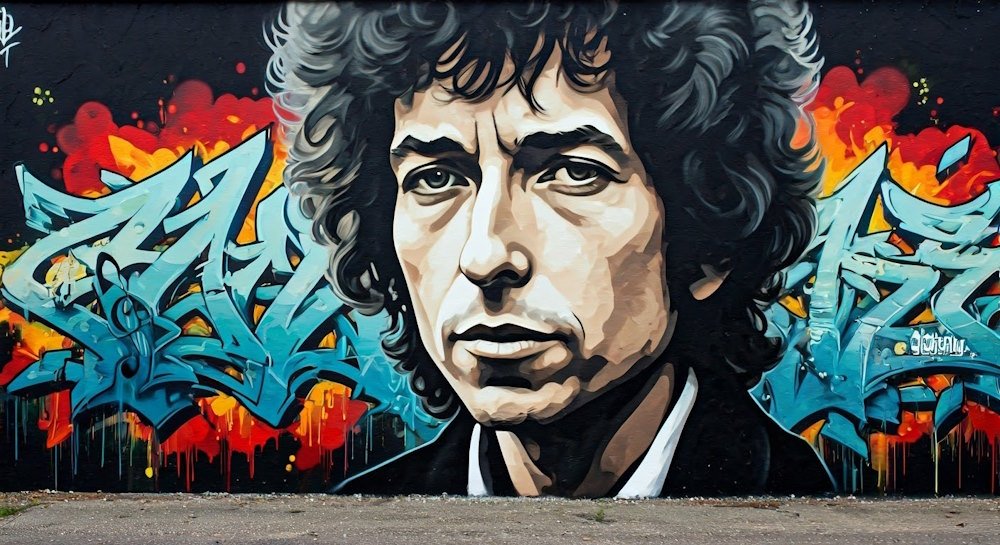
Robert Allen Zimmerman, known to the world as Bob Dylan, is the undisputed bard of modern literature and popular music.
Emerging from the bohemian coffeehouses of Greenwich Village in 1961 armed with an acoustic guitar, a harmonica rack, and an extraordinary gift for poetic prophecy, Dylan single-handedly elevated rock lyricism from adolescent romance into high art.
10. Make You Feel My Love
Released on his critically acclaimed 1997 renaissance album Time Out of Mind, “Make You Feel My Love” proved that Dylan’s capacity for crafting timeless, direct emotional standards remained completely undiminished late into his career. Built upon a warm, hymnal piano progression and subtle electric organ chords, Dylan delivers an unadorned promise of unconditional, protective devotion: “When the rain is blowing in your face / And the whole world is on your case / I could offer you a warm embrace / To make you feel my love.”
While the song went on to become a modern pop standard covered by Billy Joel, Garth Brooks, and most famously Adele (whose multi-platinum rendition introduced Dylan’s melody to a new generation), Dylan’s original recording carries a weathered, fragile gravel that makes the vulnerability feel earned through a lifetime of experience.
9. Subterranean Homesick Blues
Opening his electric 1965 album Bringing It All Back Home, “Subterranean Homesick Blues” was the sonic lightning bolt that signaled Dylan’s audacious departure from pure acoustic folk into electric rock and roll. Fusing Chuck Berry’s rapid-fire rhythm-and-blues beat with Jack Kerouac’s Beat poetry and street-level paranoia, Dylan delivers rapid-fire verses without pause: “Look out kid, it’s somethin’ you did / God knows when, but you’re doin’ it again / You better duck down the alleyway, lookin’ for a new friend.”
Pennebaker’s legendary promotional film clip, featuring Dylan standing in an alleyway beside poet Allen Ginsberg, casually flipping oversized cue cards with handwritten lyrics, the track is widely recognized as the grandfather of modern music videos and one of the earliest precursors to hip-hop rhythmic phrasing.
8. Lay Lady Lay
Originally written for the soundtrack of the 1969 film Midnight Cowboy (though submitted too late to be included), “Lay Lady Lay” was the romantic standout of Dylan’s warm, country-western departure Nashville Skyline. Having quit smoking cigarettes prior to the sessions, Dylan astonished listeners by adopting a soft, rich, and crooning baritone voice completely distinct from his trademark nasal rasp.
Anchored by Kenny Buttrey’s playful cowbell and bongo percussion and Pete Drake’s weeping pedal steel guitar, the song is a tender, seductive invitation to romantic intimacy: “Lay, lady, lay, lay across my big brass bed / Stay, lady, stay, stay with your man awhile.”
7. Mr. Tambourine Man
Featured on 1965’s Bringing It All Back Home, “Mr. Tambourine Man” is Dylan’s surrealist, dreamlike invocation to the muse of artistic creation.
Inspired in part by a massive Turkish drum played by folk musician Bruce Langhorne, Dylan crafts an ethereal, kaleidoscopic voyage through exhaustion, night-wandering, and spiritual freedom: “Hey!
6. The Times They Are A-Changin’
Written by Dylan in late 1963 with the deliberate intention of creating a generational anthem for the civil rights and student protest movements, the title track of his third album captured the seismic cultural upheaval of the 1960s with biblical moral authority. Drawing on traditional Irish and Scottish ballad meter, Dylan warned politicians, parents, and critics that the old order was rapidly disintegrating: “Come mothers and fathers throughout the land / And don’t criticize what you can’t understand / Your sons and your daughters are beyond your command / Your old road is rapidly agin’.”
Recorded just weeks before the assassination of President John F. Kennedy, the song became the clarion call of a generation demanding social justice, freedom, and institutional accountability, remaining an immortal anthem for social movements across the globe.
5. Like a Rolling Stone
Widely voted by Rolling Stone magazine as the single greatest song of all time, “Like a Rolling Stone” fundamentally altered the DNA of popular music in the summer of 1965. Originating from a 20-page piece of sprawling, vengeful prose Dylan scribbled after an exhausting British tour, the song transformed a three-minute pop radio format into a six-minute literary whirlwind.
From the explosive snare-drum gunshot of Bobby Gregg that opens the track to Al Kooper’s soaring, improvised Hammond organ riff and Michael Bloomfield’s biting Telecaster licks, the track radiates raw electricity.
4. Blowin’ in the Wind
Written by a 21-year-old Dylan in April 1962 in the Commons Cafe in Greenwich Village and adapted from the melody of the traditional slave spiritual “No More Auction Block,” “Blowin’ in the Wind” is the ultimate secular hymn of human rights and peace. Dylan asks nine timeless rhetorical questions concerning war, racism, and human suffering: “How many roads must a man walk down / Before you call him a man? / How many seas must a white dove sail / Before she sleeps in the sand?”
Rejecting neat, didactic solutions in favor of existential truth, “The answer, my friend, is blowin’ in the wind”, the song became an international anthem of the American Civil Rights Movement, famously sung by Peter, Paul and Mary on the steps of the Lincoln Memorial before Martin Luther King Jr. delivered his “I Have a Dream” speech in August 1963.
3. Knockin’ on Heaven’s Door
Built upon a sparse, four-chord cycle (G-D-Am7, G-D-C) and supported by Terry Paul’s subtle bass and delicate choral harmonies, the song captures a dying lawman laying down his weapons: “Mama, take this badge off of me / I can’t use it anymore / It’s gettin’ dark, too dark for me to see / I feel like I’m knockin’ on heaven’s door.” Though covered by dozens of artists, from Eric Clapton to Guns N’ Roses’ explosive hard-rock rendition, Dylan’s original remains the most poignant, solemn meditation on mortality and spiritual surrender ever recorded.
2. Tangled Up in Blue
The dazzling opening track of his 1975 confessional masterpiece Blood on the Tracks, “Tangled Up in Blue” represents Dylan’s highest achievement in narrative songwriting. Influenced by his study of painting with art teacher Norman Raeben, Dylan designed the song to break the linear conventions of time and perspective, fluidly shifting between first and third-person pronouns and interweaving past, present, and future into a single, multi-dimensional emotional canvas.
Chronicling a decade-long journey of lost love, bohemian wandering, late-night strip-club reunions, and literary awakenings (reading a book of poems by an Italian poet from the thirteenth century), the song moves with breathless acoustic drive in open A tuning.
1. Hurricane
Clocking in at over eight and a half minutes of blistering, cinematic fury, “Hurricane” opens Dylan’s 1976 masterpiece Desire as a fearless, journalistic protest masterpiece. Co-written with theater director Jacques Levy after Dylan visited former middleweight boxing contender Rubin “Hurricane” Carter in prison, the song meticulously dissects the corrupt, racist conspiracy that led to Carter’s wrongful conviction for a 1966 triple murder in Paterson, New Jersey.
Driven by Scarlet Rivera’s frantic, gypsy-flavored violin lines, Rob Stoner’s galloping bass, and Dylan’s laser-focused, staccato delivery, the song reads like an electrifying screenplay: “Pistol shots ring out in the barroom night / Enter Patty Valentine from the upper hall / She sees the bartender in a pool of blood / Cries out, ‘My God, they killed them all!'”
Which choice on this list is your personal favorite? Share your thoughts and rankings in the comments below.