
LSD, swirling light projections, exotic Eastern scales, and sprawling sonic improvisations: in the mid-1960s, the counterculture ignited an audio revolution that shook popular music to its core. Driven by surreal poetry, mystical philosophy, and revolutionary new effects units like fuzz boxes, wah-wah pedals, and tape echo, psychedelic rock bands pushed the boundaries of human consciousness.
From the sun-soaked acid tests of San Francisco to the hazy underground clubs of London, these trailblazers transformed standard pop songs into mind-expanding journeys. Here are the fifteen greatest psychedelic rock bands of the 1960s.
Which one of these deserves the top spot? Cast your votes below and let us know your favorites in the comments!
Cast your vote - the ranking shifts live based on the votes.
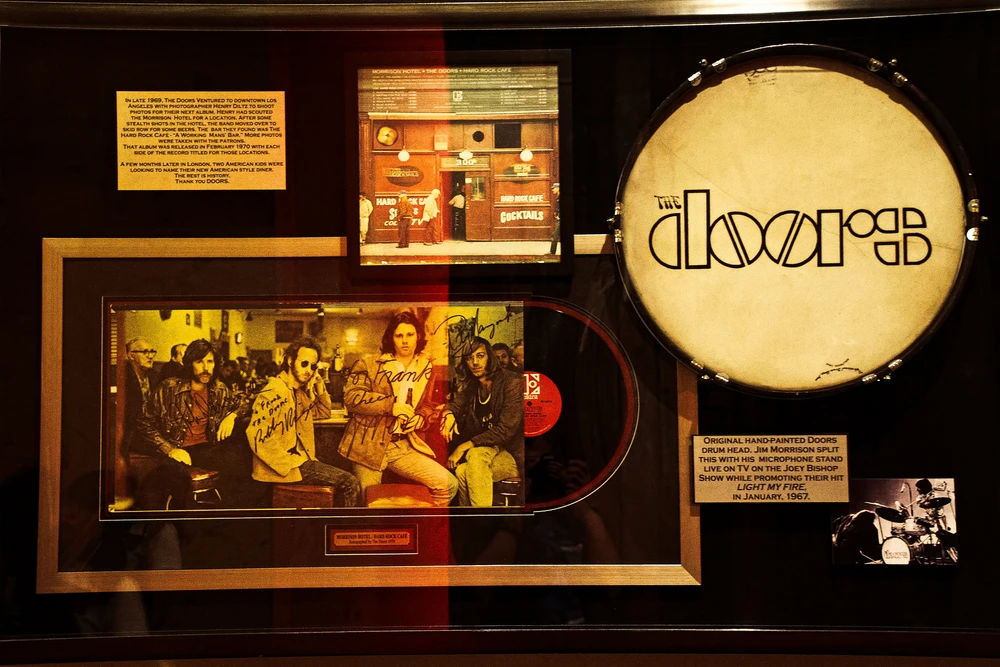
The Doors
Jim Morrison's hypnotic, shamanistic baritone and Ray Manzarek's baroque Vox Continental organ riffs plunged listeners into the sultry, dangerous twilight of Los Angeles. On epic journeys like 'Light My Fire' and 'The End', the interplay between Manzarek and guitarist Robby Krieger elevated rock into a dark, cinematic acid trip. The Doors captured the rebellious, mystical spirit of the late sixties like no one else.
The Jimi Hendrix Experience
Armed with his revolutionary 'Hendrix chord' (7#9) and a wall of screaming Marshall stacks drenched in Fuzz Face and Octavia effects, Jimi Hendrix turned the musical world upside down in 1967. With Mitch Mitchell's explosive jazz-inflected drumming and Noel Redding's anchored bass, 'Purple Haze' sounded like a visitor from another dimension. Hendrix didn't just play guitar; he transformed it into a living, howling conduit of pure cosmic energy.
Log in to post a comment.
Jefferson Airplane
Grace Slick's commanding, dramatic vocals guided listeners through a surreal Alice in Wonderland landscape structured over the hypnotic pulse of a Spanish bolero on 'White Rabbit'. Backed by Jorma Kaukonen's winding acid guitar and Jack Casady's rumbling basslines, the band became the sonic architects of San Francisco's Summer of Love. Their slow-building crescendos remain the gold standard of high-drama psychedelia.
Log in to post a comment.
Cream
Eric Clapton's creamy 'woman tone' solos, Jack Bruce's howling blues vocals, and Ginger Baker's polyrhythmic African-inspired beats converged on 'Sunshine of Your Love' to invent heavy psychedelia. As the ultimate supergroup, Cream fused British blues with soaring studio experimentation and sprawling concert jams. They proved that heavy riffs and kaleidoscopic distortion could coexist in complete harmony.
Log in to post a comment.
Pink Floyd
During the Syd Barrett era at London's legendary UFO Club, Pink Floyd conjured a cosmic sonic storm powered by Binson Echorec tape echoes, stuttering Mellotrons, and whimsical fairy-tale imagery. Tracks like 'Astronomy Domine' and 'Interstellar Overdrive' launched space rock into orbit, trading conventional song structures for atmospheric voyages. They captured the playful wonder and disorienting edge of the British psychedelic underground.
Log in to post a comment.
The Byrds
Roger McGuinn's chiming twelve-string Rickenbacker guitar famously mirrored the free-jazz sax improvisations of John Coltrane over a driving, hypnotic rhythm section. Widely acknowledged as one of the very first psychedelic rock singles, 1966's 'Eight Miles High' sent shockwaves through the airwaves. The Byrds brought poetic brilliance and sky-high sonic ambition to American folk rock.
Log in to post a comment.
The 13th Floor Elevators
Roky Erickson and his Texas visionary cohort were among the very first musicians to formally brand their sound as 'psychedelic rock'. Driven by Tommy Hall's mind-bending electric jug and Erickson's unhinged, soulful howling, tracks like 'You're Gonna Miss Me' sounded wilder and more feral than anything in California. They captured the raw, manic energy of acid rock at its primal origins.
Log in to post a comment.
Grateful Dead
As the house band for Ken Kesey's legendary Acid Tests, the Grateful Dead became the supreme champions of the San Francisco jam band ethos. Masterpieces like 'Dark Star' were not rigid songs, but endless musical portals designed for Jerry Garcia's fluid, exploratory guitar dialogues. The Dead pioneered an organic, communal style of psychedelic Americana that captivated generations of devoted followers.
Log in to post a comment.
Traffic
Steve Winwood's deeply soulful voice and burning guitar work anchored Traffic's unique blend of folk, jazz, and mystical psychedelia. With Jim Capaldi's tight grooves and Chris Wood's atmospheric flute and sax flourishes, songs like 'Dear Mr. Fantasy' offered an earthy, intoxicating antidote to flashy studio gimmicks. Traffic brought immense musical sophistication and British soul to the counterculture era.
Log in to post a comment.
Iron Butterfly
Clocking in at over seventeen minutes, 'In-A-Gadda-Da-Vida' became an era-defining psychedelic odyssey fueled by swirling church organ solos and Ron Bushy's iconic drum solo. Doug Ingle's menacing riff and heavy fuzz tone built a crucial sonic bridge connecting acid rock directly to early heavy metal. The track became an unexpected radio smash and a permanent staple of rock folklore.
Log in to post a comment.
The Velvet Underground
Led by Lou Reed's deadpan street poetry and John Cale's screeching, drone-heavy electric viola, The Velvet Underground offered a dark, gritty alternative to California's flower-power optimism. Songs like 'Venus in Furs' and 'Heroin' pushed avant-garde minimalism and sonic dissonance into uncharted territory. Warhol's protégés crafted a hypnotic, intoxicating sound that cast a massive shadow over indie rock and punk.
Log in to post a comment.
The Zombies
Recorded at Abbey Road with a Mellotron left behind by The Beatles, The Zombies' 1968 masterpiece 'Odessey and Oracle' represents the pinnacle of baroque psychedelic pop. Colin Blunstone's breathy, romantic lead vocals and Rod Argent's shimmering electric piano work on 'Time of the Season' captured the warm sunset glow of the era. It remains one of the most melodically exquisite records of the 1960s.
Log in to post a comment.
Love
Arthur Lee seamlessly married Spanish flamenco guitar, mariachi horn arrangements, and sweeping classical strings with haunting introspective lyricism on the 1967 masterpiece 'Forever Changes'. Tracks like 'Alone Again Or' painted a sun-drenched yet deeply uneasy portrait of late-sixties Los Angeles. Love delivered an orchestral, timeless take on psychedelia that continues to influence modern indie artists.
Log in to post a comment.
The Moody Blues
By merging their rock lineup with the sweeping orchestrations of the London Festival Orchestra and the swirling textures of the Mellotron, The Moody Blues created symphonic psychedelia. Justin Hayward's romantic ballad 'Nights in White Satin' transported listeners on a lush, starry-eyed emotional journey. The band showed how expansive classical grandeur could expand the boundaries of rock music.
Log in to post a comment.
Country Joe and the Fish
Country Joe McDonald and guitarist Barry Melton led this Berkeley collective through atmospheric acid-rock explorations that soundtracked the Bay Area's ballroom scene. Blending satirical political anthems with dreamy Farfisa organ swirls and Eastern modal guitar leads, their early albums were pure sonic voyages. They stood at the epicenter of 1960s student activism and psychedelic idealism.
Log in to post a comment.
Missing an item in this list?
Log in or create a free account to add an item yourself.
Log in / create account
Log in to post a comment.