In 1984, horror visionary Wes Craven introduced the world to Freddy Krueger, a scarred child murderer who stalks and slaughters his victims within their vulnerable subconscious dreams. Armed with a razor-clawed leather glove, a grubby red-and-green striped sweater, and a battered fedora, Krueger became an immortal pop-culture icon played with devilish charisma by Robert Englund.
Unlike silent hulking slashers, Freddy possessed a wicked personality, turning surreal dreamscapes into terrifying playground death traps. Standing tall alongside the iconic horror giants featured in our countdown of the Halloween slasher series, the Elm Street saga remains a landmark of American fantasy horror. Here are all nine A Nightmare on Elm Street movies and the television anthology in order.
1. Freddy’s Nightmares (1988-1990): The Nightmare TV Series
Capitalizing on Freddy mania in the late 1980s, this television anthology series ran for forty-four episodes with Robert Englund hosting in full Krueger makeup. The series explored the bizarre psychological nightmares and twisted fortunes of ordinary residents living in Springwood, Ohio.
The pilot episode, directed by horror legend Tobe Hooper, remains the standout installment, offering a direct prequel that detailed Freddy’s sensational criminal trial and his fatal lynching at the hands of vengeful neighborhood parents.
2. A Nightmare on Elm Street (1984): The Classic That Started It All
Wes Craven’s original classic remains a striking triumph of psychological horror and surreal terror. Heather Langenkamp gave a fiercely grounded performance as Nancy Thompson, the clever teenager who realizes that falling asleep means facing a sadistic supernatural predator.
Featuring Johnny Depp in his film acting debut and legendary practical set-pieces like the rotating bedroom room that unleashed geysers of blood, the film turned the universal need for human sleep into an agonizing nightmare.
3. A Nightmare on Elm Street 2: Freddy’s Revenge (1985): The Controversial Sequel
Breaking series rules by having Freddy possess the body of a teenage boy rather than killing him within the dream realm, this direct sequel polarized fans upon release. Mark Patton starred as Jesse Walsh, moving into Nancy’s former house and struggling against Freddy’s parasitic control.
Over the decades, the film has undergone a major critical reappraisal, recognized as a fascinating queer-cinema landmark for its rich subtext, homoerotic imagery, and Patton’s memorable scream-queen performance.
4. A Nightmare on Elm Street 3: Dream Warriors (1987): A Fan Favorite
Directed by Chuck Russell with a script co-written by Frank Darabont and Wes Craven, Dream Warriors is widely regarded as the gold standard of Elm Street sequels. Heather Langenkamp returned alongside Patricia Arquette as a group of institutionalized teenagers who learn to manifest superpowers in their dreams to battle Krueger.
Featuring jaw-dropping practical stop-motion effects, the giant snake-Freddy puppet, and Dokken’s immortal metal theme song, the film struck the ideal balance between frightening surreal horror and dark comic-book adventure.
5. A Nightmare on Elm Street 4: The Dream Master (1988): Freddy at His Most Powerful
Director Renny Harlin took the helm for this neon-soaked, MTV-paced blockbuster that marked the financial peak of the franchise. Introducing Tuesday Knight and Lisa Wilcox as Alice Johnson, the story followed the surviving Springwood youth as Alice absorbs her fallen friends’ dream abilities.
Englund fully embraced Freddy’s role as a wisecracking pop icon, delivering memorable one-liners alongside inventive death set-pieces, including a girl transforming into a cockroach trapped inside a sticky roach motel.
6. A Nightmare on Elm Street 5: The Dream Child (1989): Dark and Artistic
Director Stephen Hopkins brought an ambitious, gothic visual style to this fifth chapter, utilizing M.C. Escher-inspired dream architecture and dark comic-book shading.
The plot centered on Alice’s unborn baby, through whose developing dreams Freddy begins hunting new victims.
7. Freddy’s Dead: The Final Nightmare (1991): Freddy’s Over-the-Top Farewell
Promoted as the definitive conclusion of the series, this sixth chapter leaned completely into cartoon slapstick and Looney Tunes physical humor. Freddy used power gloves, played interactive video games, and flew on broomsticks through Springwood.
While the final ten minutes were presented in theatrical red-and-blue 3D and revealed Freddy’s biological daughter, the utter lack of genuine suspense alienated longtime fans of Craven’s original terror.
8. Wes Craven’s New Nightmare (1994): Freddy in the Real World
Wes Craven returned to direct this groundbreaking meta-masterpiece, anticipating the self-aware postmodern horror boom he would ignite two years later with Scream. Heather Langenkamp played a fictionalized version of herself, being stalked by an ancient malevolent entity taking the form of Freddy.
Englund portrayed both himself and a redesigned, terrifyingly dark version of Freddy stripped of comedic one-liners. Intellectual, unsettling, and emotionally mature, it restored artistic dignity to the franchise.
9. Freddy vs. Jason (2003): The Ultimate Horror Clash
After a decade of development hell, director Ronny Yu brought horror’s two greatest heavyweight titans together for an epic showdown. When Freddy manipulates Jason Voorhees into terrifying Springwood to restore fear, the two unstoppable monsters inevitably turn against each other.
Delivering spectacular, bloody hand-to-hand combat across boiler rooms and Crystal Lake cabins, the film satisfied decades of fan anticipation with massive box office success.
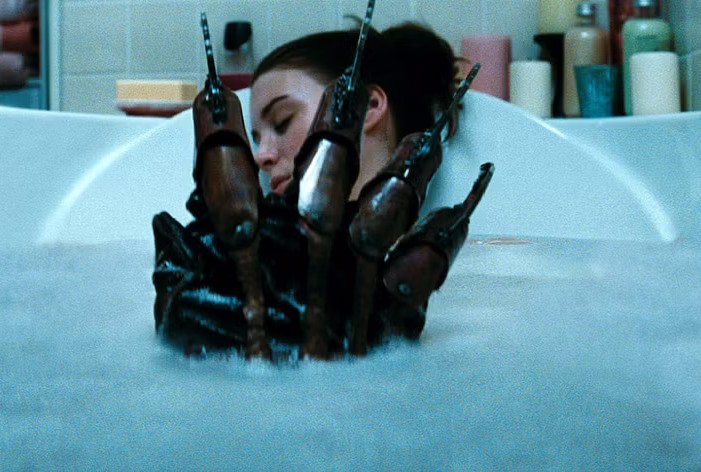
10. A Nightmare on Elm Street (2010): The Controversial Remake
Platinum Dunes produced this grim remake, casting acclaimed dramatic actor Jackie Earle Haley as Freddy Krueger. The film attempted a darker, more realistic depiction of Krueger as an explicit pedophile, but lacked the surreal magic and emotional heart of Craven’s original vision.
Despite Haley’s committed performance and impressive visual effects, the film relied too heavily on shot-for-shot recreations of iconic scenes without adding fresh artistic perspectives, leading to a quick demise for the rebooted timeline.
Which choice on this list is your personal favorite? Share your thoughts and rankings in the comments below.