A nuclear disaster can be devastating. Nature is destroyed, people can become seriously ill and the consequences for the environment can last for decades. Yet some animals, and one remarkable microbe, are surprisingly resistant to radiation. These are eight living things that could survive a nuclear disaster better than we would.
A quick explanation: radiation doses are measured in grays (Gy). For humans, a dose of around 5 Gy received at once is often fatal without treatment.
1. Fruit flies

Fruit flies are much more resistant to radiation than we are: adult fruit flies can survive doses hundreds of times higher than the lethal dose for humans. One reason is that the cells of adult insects hardly divide anymore, and dividing cells are the most vulnerable to radiation damage. Their short life of a few weeks also means that long-term effects such as cancer hardly have time to develop.
2. Parasitic wasps

You may not be a fan of wasps, but certain tiny parasitic wasps, such as those of the genus Habrobracon, are among the most radiation-resistant animals known. In laboratory experiments, adults survived doses in the order of a thousand grays or more, hundreds of times the lethal dose for a human. They were not unaffected, though: such doses do make them infertile.
3. Cockroaches
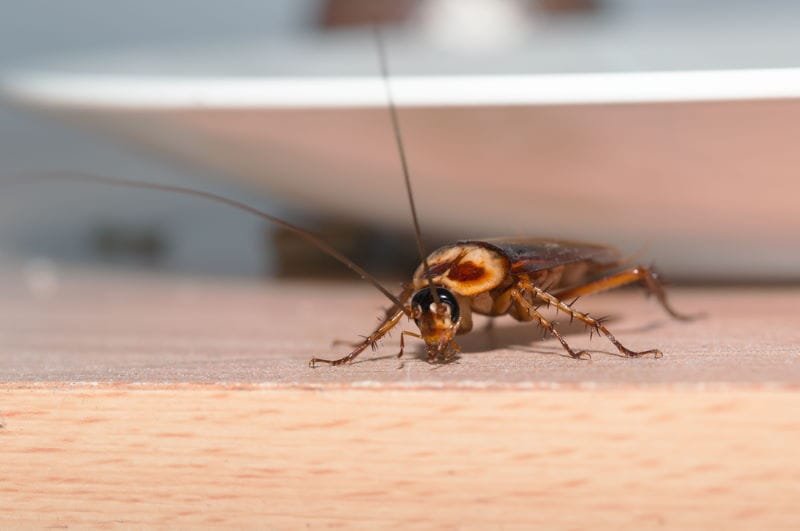
The cockroach is famous as the animal that would survive a nuclear war. That reputation is partly deserved: cockroaches can tolerate around six to fifteen times more radiation than humans. They are also incredibly tough in other ways: they can survive for weeks without food and for a while even without their head. But they are far from the champions of radiation resistance. Fruit flies and parasitic wasps do much better, and a cockroach would still be killed by the heat and blast of a nuclear explosion.
4. Scorpions
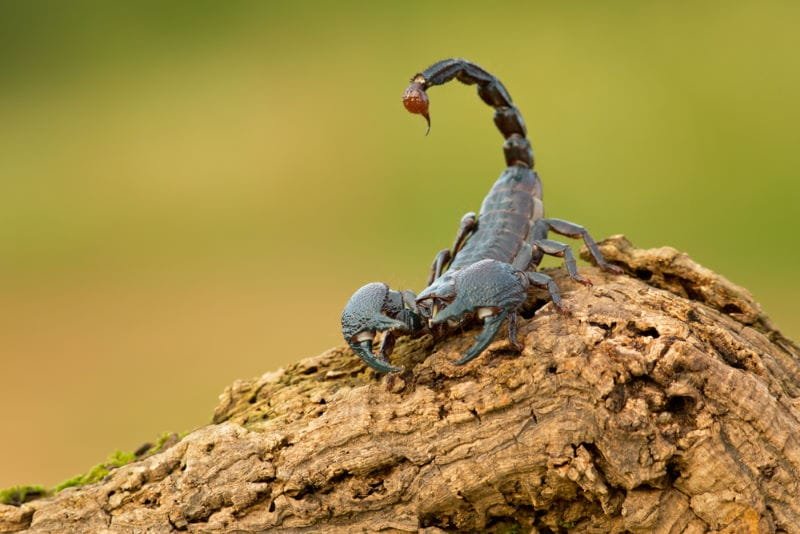
Scorpions are thought to be very resistant to radiation, although there has been relatively little research on them. They are known for their resilience: some can survive being frozen, can go for many months without food and can survive in extreme deserts. Scorpions also glow blue-green under ultraviolet light, but that has nothing to do with radioactivity: it is fluorescence, caused by substances in their outer skeleton.
5. Tardigrades
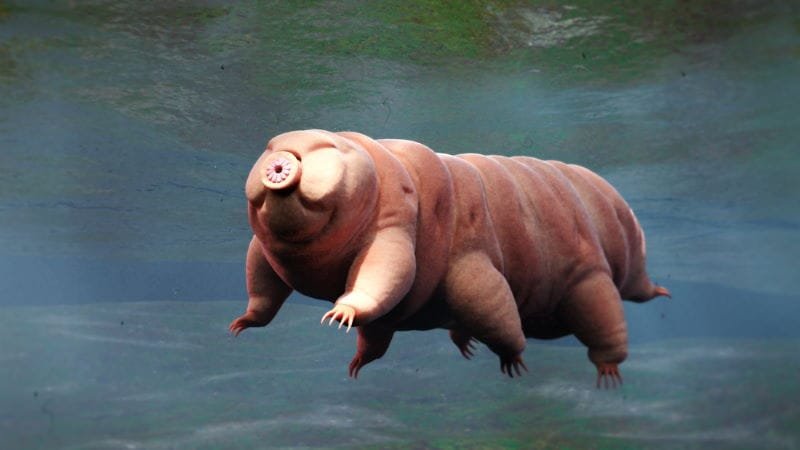
You cannot see them with the naked eye, but tardigrades, also called water bears, are among the toughest animals on Earth. In a dried-out state, they can survive extreme heat and cold, a lack of water and oxygen, and even the vacuum of space: in 2007, tardigrades were exposed to open space on a satellite, and some of them survived. They can withstand thousands of grays of radiation. One of their secrets is a special protein, named Dsup, that wraps around their DNA and protects it from damage.
6. The wolves of Chernobyl
After the nuclear disaster of 1986, an exclusion zone of thousands of square kilometers was set up around Chernobyl, where people are no longer allowed to live. Paradoxically, it has become a refuge for wildlife. Wolves, elk, deer, wild boar and even rare Przewalski’s horses thrive there, because the absence of humans outweighs the harmful effects of the radiation. Research on the Chernobyl wolves, which are exposed to much higher radiation than normal, suggests that they may have developed changes in their immune system that could make them more resilient to cancer, although that research has not yet been fully confirmed.
7. The black frogs of Chernobyl
Researchers who studied Eastern tree frogs in the Chernobyl exclusion zone noticed something remarkable: frogs from the most contaminated areas were much darker, even almost black, than frogs elsewhere. The researchers think this is a case of rapid evolution. The dark pigment melanin can help protect cells against radiation, so darker frogs probably had a better chance of survival in the years after the disaster, and passed on their dark color.
8. Bonus: Deinococcus radiodurans, the toughest of all
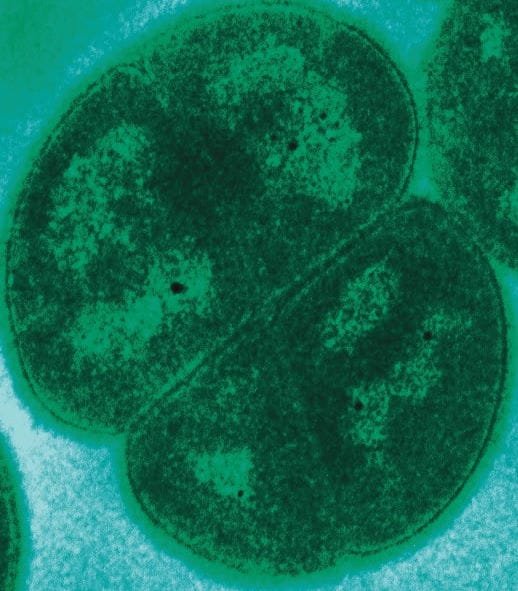
This one is not an animal, but a bacterium, and it is the absolute champion of radiation resistance. Deinococcus radiodurans, nicknamed “Conan the Bacterium”, can survive doses of several thousand grays without loss of viability, around a thousand times the lethal dose for a human. Its secret is not that radiation does not damage it: its DNA is shattered into hundreds of pieces, but it can repair it within hours. Scientists are studying the bacterium to learn more about DNA repair, and for possible use in cleaning up radioactive waste.