Geese are hard to miss. They fly overhead in their famous V-formation, graze in huge flocks on fields and meadows, and honk loudly when anyone comes too close. These sturdy waterbirds have relatively long, strong legs, which makes them good walkers, and they spend much of the day grazing on grass and other plants.
The true geese belong to two genera: the gray geese (Anser) and the black geese (Branta). Depending on how scientists count them, there are around 18 to 20 species, and some of the birds below are treated as subspecies by some experts. And then there is number 20, the odd one out.
Gray geese (genus Anser)
1. Greylag goose (Anser anser)
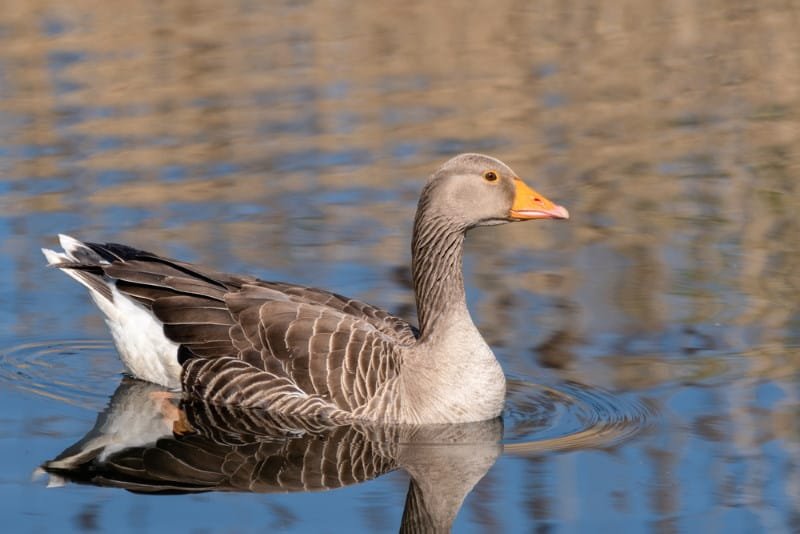
The greylag goose is the ancestor of most domestic geese in Europe. This gray-brown goose is 75 to 90 centimeters long and weighs about 3 to 4 kilograms. You can recognize it by its orange-pink bill and pink legs, and in flight by its pale gray forewings. In many parts of Europe, its numbers have increased enormously in recent decades.
2. Greater white-fronted goose (Anser albifrons)
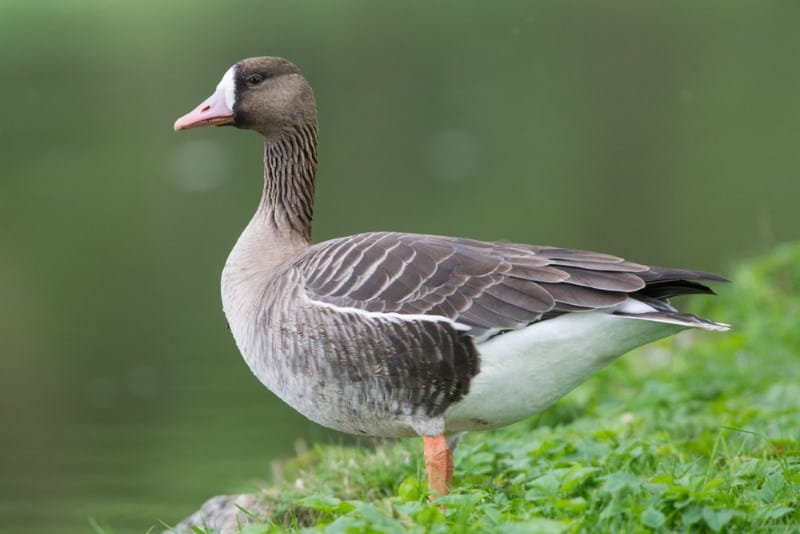
The white patch around the base of its bill gives this goose its name and makes it easy to recognize. Adults also have black bars on their belly and orange legs. It breeds on the Arctic tundra of Russia, North America and Greenland, and spends the winter in huge flocks on farmland further south.
3. Lesser white-fronted goose (Anser erythropus)
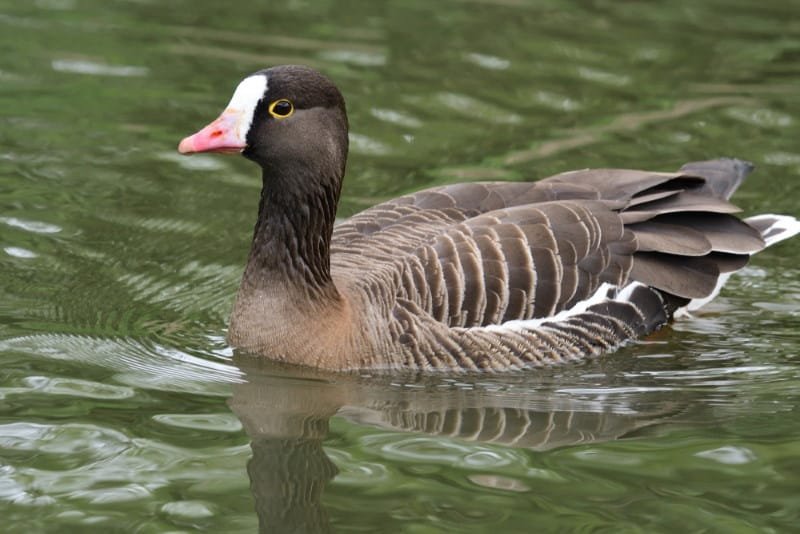
This small goose (53 to 66 centimeters) looks like a smaller version of the white-fronted goose, but has a striking yellow ring around the eye and a short bill. It is one of the most threatened geese in Europe because of hunting and habitat loss along its migration routes. In Sweden, conservationists tried to rebuild the population by having barnacle geese raise the chicks, so that they would learn a safer migration route to the west. The species is listed as vulnerable.
4. Taiga bean goose (Anser fabalis)
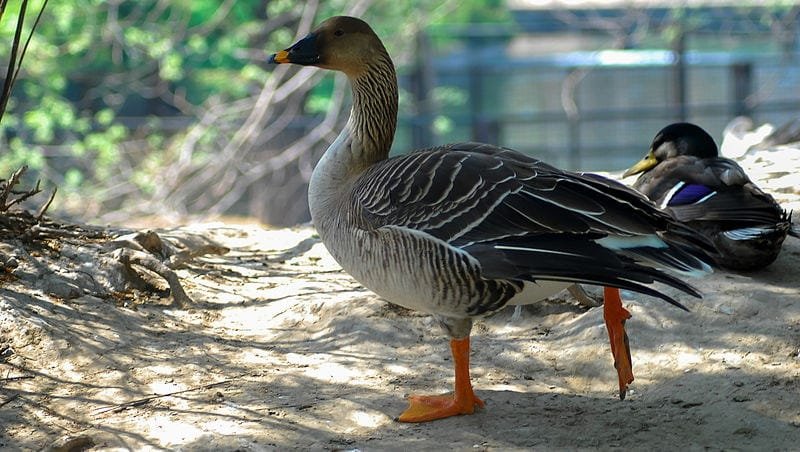
You need to be a real birdwatcher to tell the taiga bean goose from the tundra bean goose. The taiga bean goose is generally larger (68 to 90 centimeters), with a longer, slimmer neck, a wedge-shaped head and a longer bill with an orange band. As its name suggests, it breeds in the boreal forests, or taiga, of Scandinavia and Russia.
5. Tundra bean goose (Anser serrirostris)
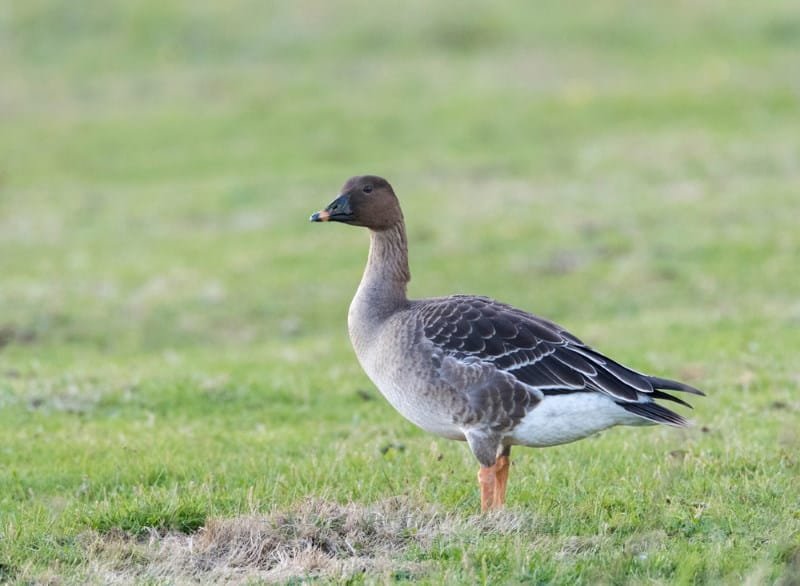
Scientists have long debated whether the tundra bean goose is a separate species or a subspecies of the taiga bean goose. It has a shorter, stubbier bill, a rounder head and a shorter neck. The biggest difference is where it breeds: on the open tundra of Arctic Russia rather than in the forests.
6. Pink-footed goose (Anser brachyrhynchus)
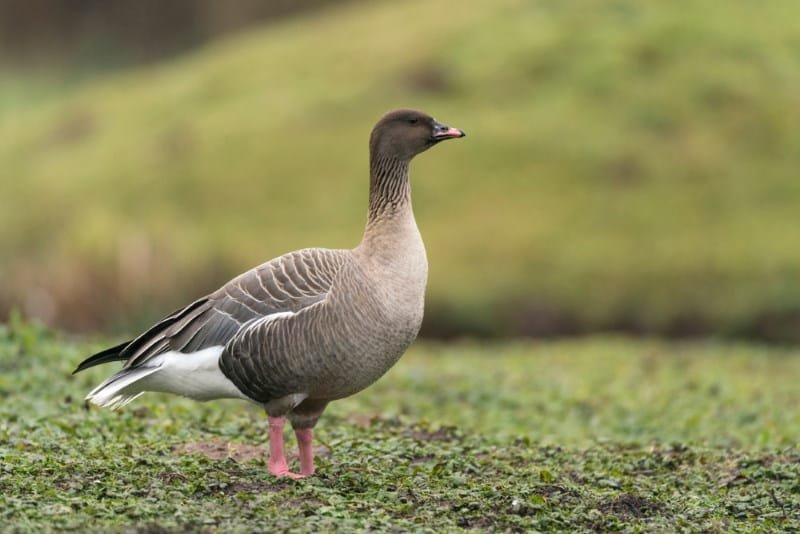
The pink-footed goose is a medium-sized goose of 60 to 75 centimeters, with a short bill with a pink band and, of course, pink legs. It breeds in Greenland, Iceland and Svalbard. Large numbers spend the winter in Britain, where tens of thousands can gather at a single roost.
7. Bar-headed goose (Anser indicus)
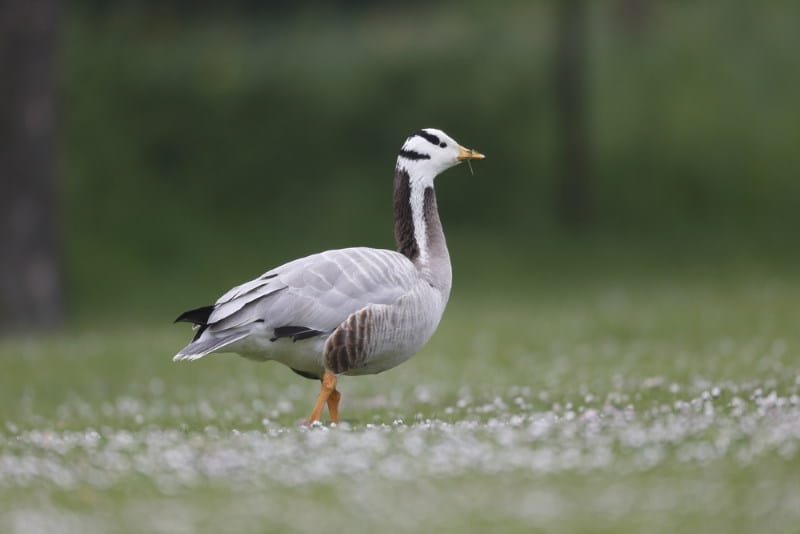
With its pale gray plumage, yellow bill and legs, and two black bars on its white head, the bar-headed goose is a beautiful bird. It is also one of the highest-flying birds in the world. Every year it migrates across the Himalayas between Central Asia and India. Most flights stay below about 6,000 meters by following valleys, but there are reports of bar-headed geese flying at more than 7,000 meters, where the air contains less than half the oxygen at sea level.
8. Emperor goose (Anser canagicus)
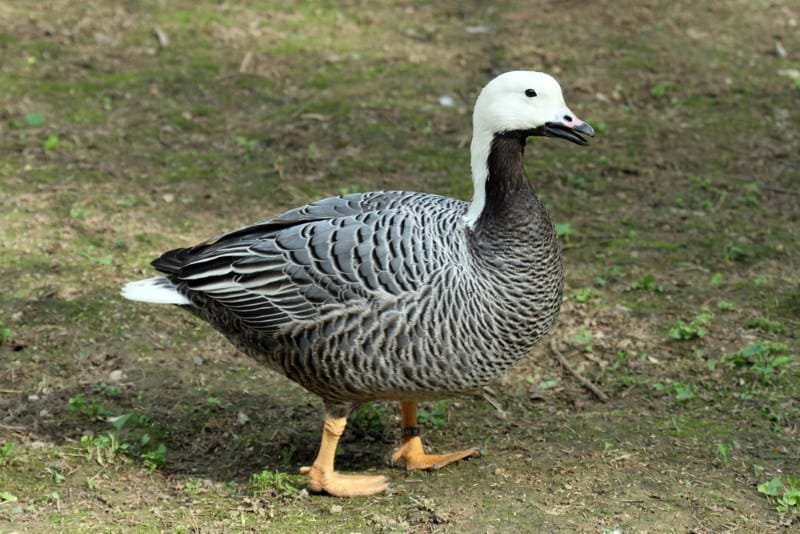
The compact emperor goose has a scaly-looking gray body, a white head and a white back of the neck. It breeds in western Alaska and eastern Siberia and spends the winter along the coasts of the Aleutian Islands, where it feeds on seaweed and shellfish. Its population is relatively small, in the order of 100,000 to 200,000 birds.
9. Swan goose (Anser cygnoides)
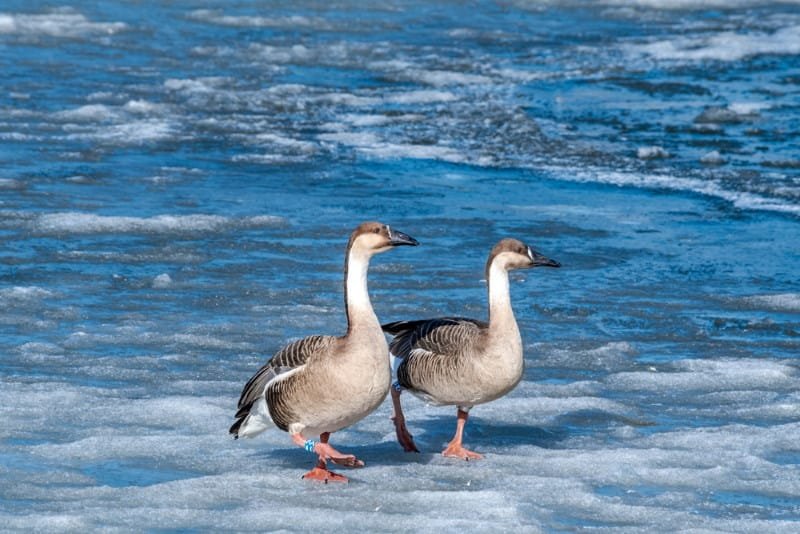
Despite its name, the swan goose does not look much like a graceful swan, apart from its long neck. It has a long black bill and gray-brown plumage, with a dark brown cap and stripe down the back of the neck. It breeds in Mongolia, China and Russia and is the wild ancestor of the Chinese domestic goose, recognizable by the knob on its bill. In the wild, it is listed as vulnerable.
10. Snow goose (Anser caerulescens)
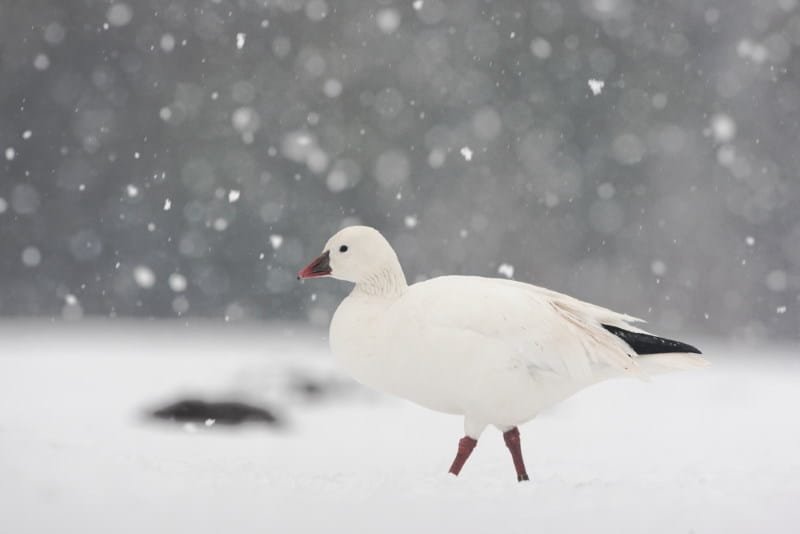
The snow goose breeds in the Arctic of Canada, Alaska, Greenland and Siberia, and spends the winter in the southern United States and Mexico. It is almost entirely white, with only black wingtips. There is also a dark form, the “blue goose”, with gray-blue plumage and a white head. Snow geese can gather in flocks of hundreds of thousands, and their numbers have grown so much that they are damaging parts of the Arctic tundra.
11. Ross’s goose (Anser rossii)
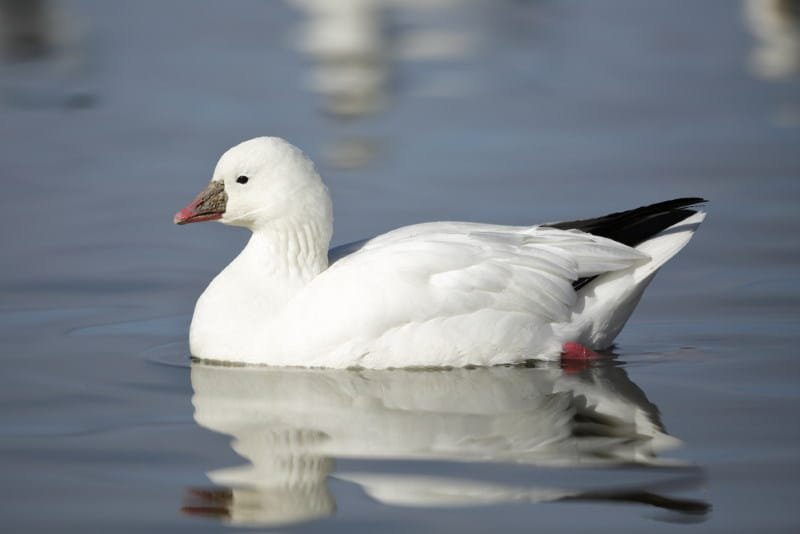
The Ross’s goose looks like a smaller version of the snow goose, at 53 to 66 centimeters, with a shorter, stubbier pink bill. It breeds only on the tundra of northern Canada and spends the winter in the southern United States and Mexico, often mixed in with flocks of snow geese.
Black geese (genus Branta)
12. Canada goose (Branta canadensis)
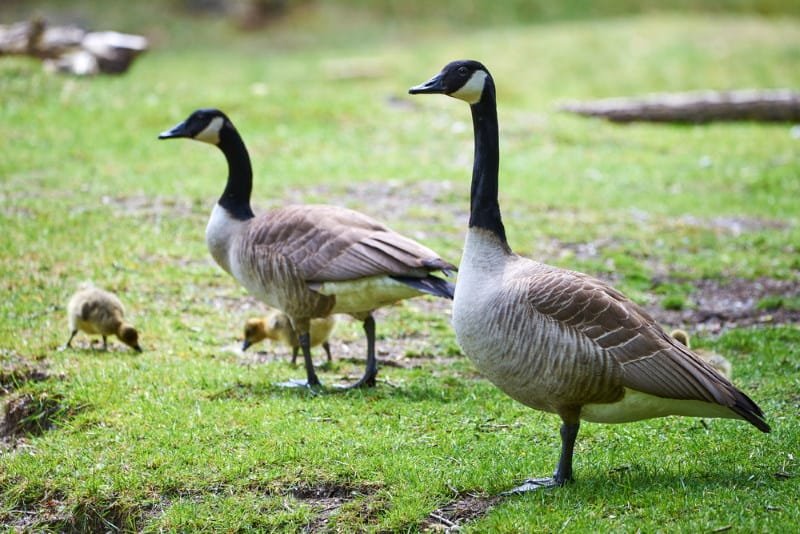
The Canada goose is one of the most familiar geese in the world. Originally from North America, it has been introduced to Europe and New Zealand, where it is now common in city parks. Large individuals can reach a length of about one meter. Its body is gray-brown, its head and neck are black with a white “chinstrap” on the cheeks.
13. Cackling goose (Branta hutchinsii)
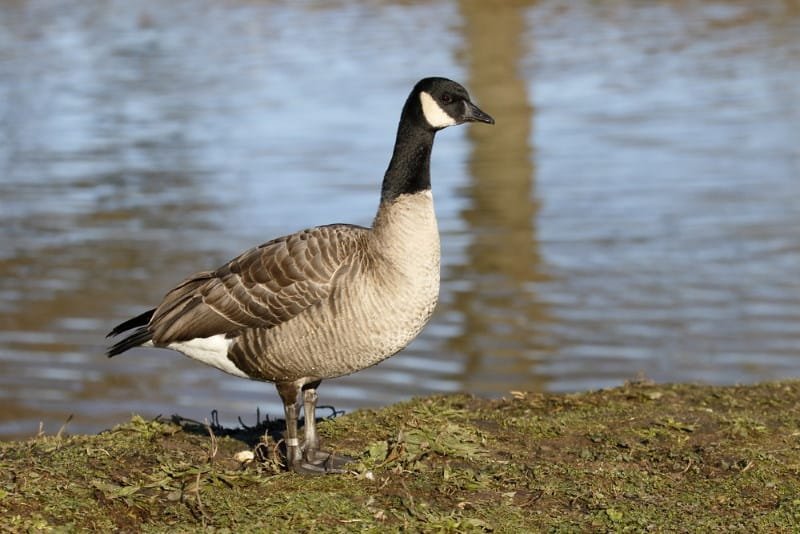
The cackling goose looks like a miniature version of the Canada goose, with a shorter neck and a stubby bill. It was only recognized as a separate species in 2004. The smallest forms are barely larger than a mallard duck.
14. Barnacle goose (Branta leucopsis)
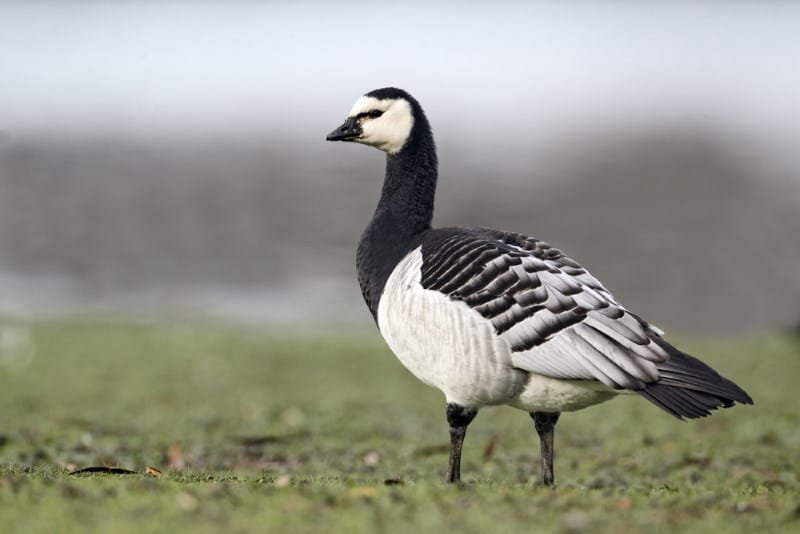
The barnacle goose is an elegant black, white and gray bird of 55 to 66 centimeters, with a white face and a black neck. In the Middle Ages, people did not know where these geese bred, because they nested far away in the Arctic. Instead, they believed the geese grew from goose barnacles on driftwood, hence the name. Some clergy even used this as an excuse to eat goose during Lent, since the birds were supposedly more fish than meat.
15. Brant goose (Branta bernicla)
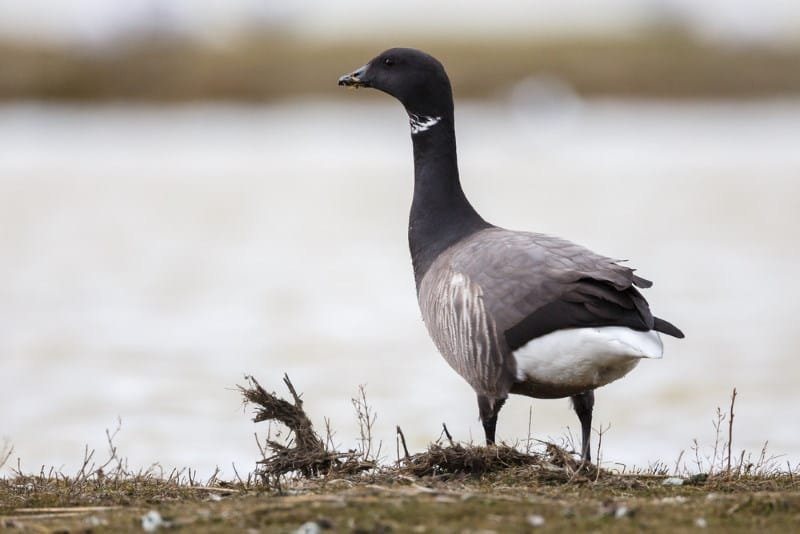
The brant, or brent goose, is a small, dark sea goose with a black head and neck, a small white neck patch and a dark gray body. It breeds on the high Arctic tundra and spends the winter on coasts and mudflats, where it feeds on eelgrass and algae. The dark-bellied form breeds in Siberia and spends the winter along the coasts of Western Europe.
16. Light-bellied brant (Branta bernicla hrota)
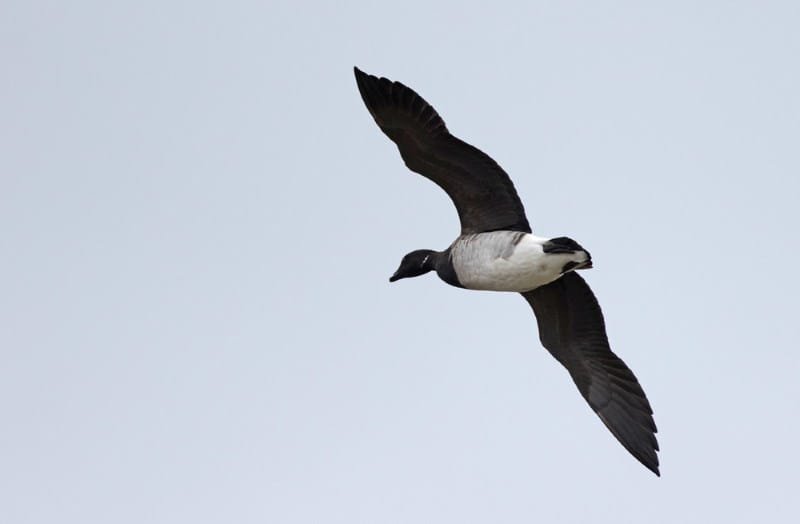
The light-bellied brant has a much paler belly and flanks than its dark-bellied relative, which creates a strong contrast with its black chest and neck. It breeds in Arctic Canada, Greenland and Svalbard and spends the winter in Ireland, Denmark, northeastern England and along the Atlantic coast of North America.
17. Black brant (Branta bernicla nigricans)
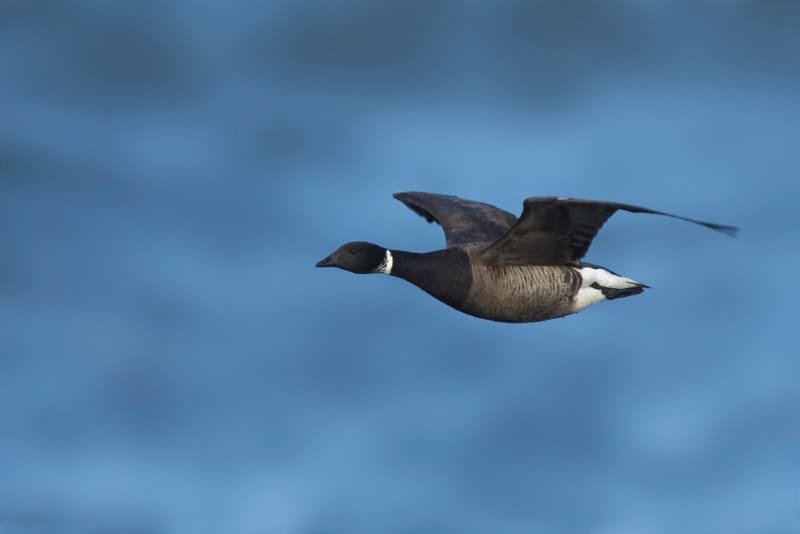
The black brant is the darkest of the brants, with an almost black back and belly that contrast with its bright white flanks and a broad white collar. It breeds in Alaska, northern Canada and eastern Siberia, and spends the winter along the Pacific coast of North America and Asia. In Europe, it is a rare visitor.
18. Red-breasted goose (Branta ruficollis)
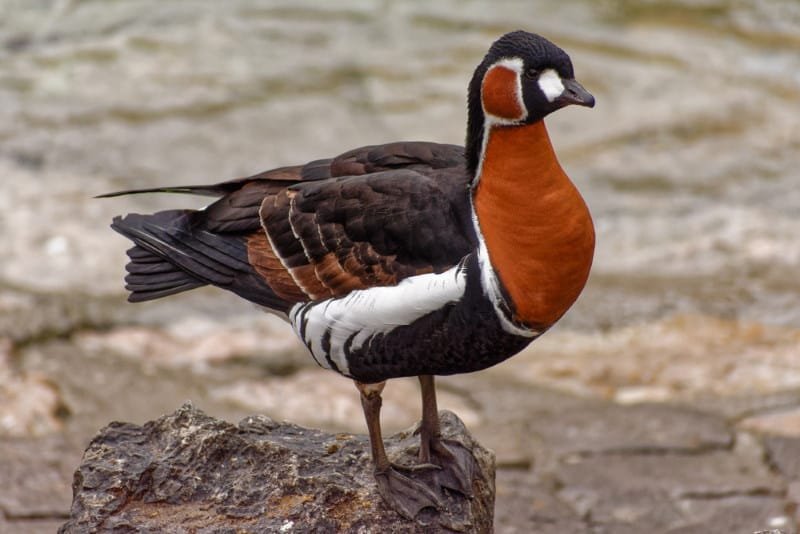
The red-breasted goose is often called the most beautiful goose in the world, with its striking pattern of black, white and rusty red on the neck, chest and cheeks. It breeds on the Taymyr Peninsula in Arctic Siberia and spends the winter mainly in Bulgaria, Romania and Ukraine near the Black Sea. It is listed as vulnerable.
19. Hawaiian goose, or nene (Branta sandvicensis)
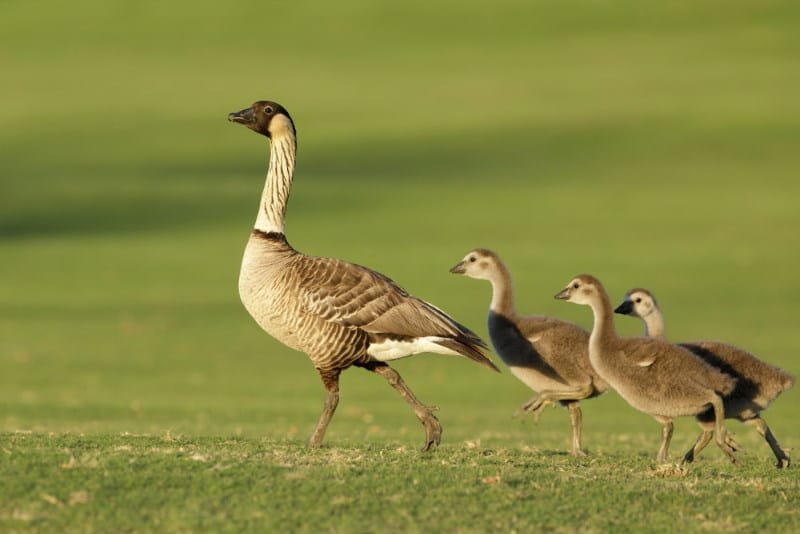
The nene is the state bird of Hawaii and, unlike most geese, lives mainly on land, often on the slopes of volcanoes. Its feet are less webbed than those of other geese, which helps it walk over lava rock. By the early 1950s, only about 30 nenes were left in the wild, but thanks to captive breeding programs there are now several thousand again.
20. The odd one out: the Egyptian goose
You may wonder why the Egyptian goose is not on this list. It looks like a goose and is called a goose, so what is going on? In fact, the Egyptian goose is not a true goose at all. It belongs to the shelduck group and is more closely related to ducks. It was sacred to the ancient Egyptians and has spread widely across Europe after escaping from parks and collections.