Ducks live on every continent except Antarctica, in all shapes, sizes and colors. Telling them apart can be tricky, especially the females, which are usually brown and well camouflaged to protect their nests.
The males, called drakes, are often much more colorful. These are 20 beautiful and well-known duck species, and how to recognize them.
1. Mallard
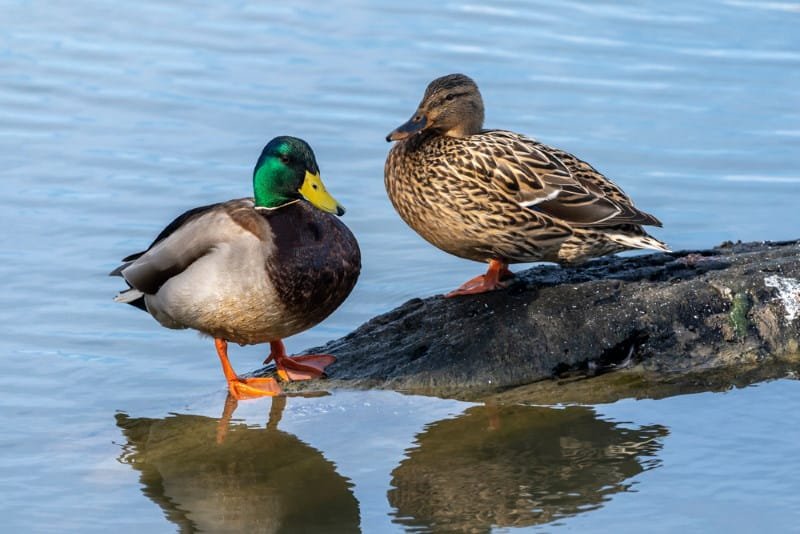
The most familiar duck in the world and the ancestor of almost all domestic ducks. The drake has a glossy green head, a white collar and a yellow bill. The female is mottled brown with an orange and brown bill. After the breeding season, the drake molts into dull “eclipse” plumage and looks much like the female.
2. Mandarin duck
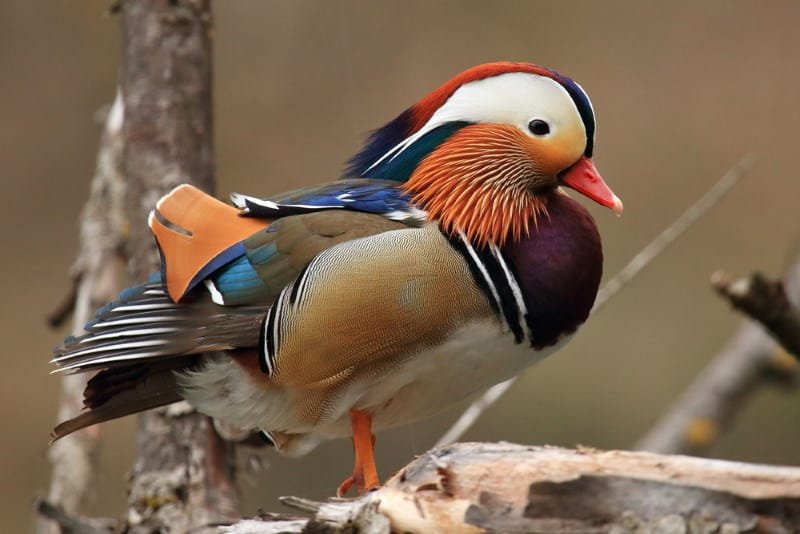
Perhaps the most spectacular duck of all. The drake has orange “sails” on its back, a purple chest and a crest of green, orange and white. Originally from East Asia, escaped birds have formed wild populations in Europe, including a large one in the United Kingdom. In China, a pair of mandarin ducks is a symbol of love and fidelity.
3. Wood duck
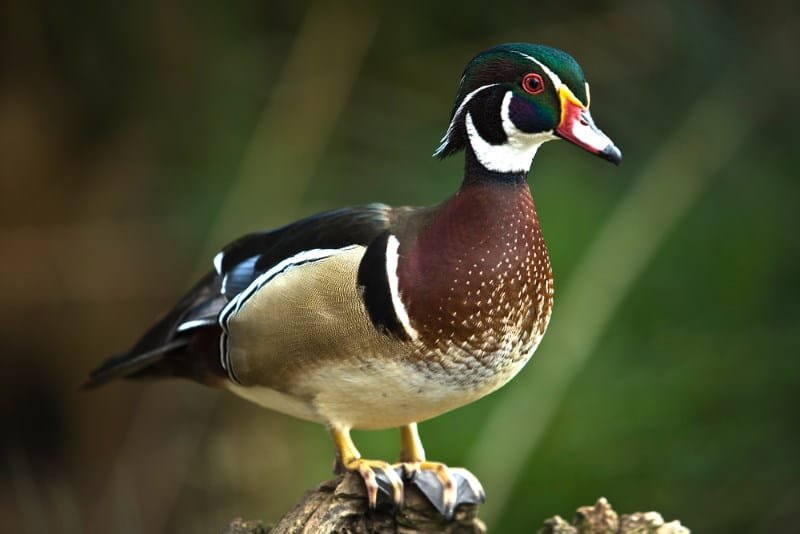
The North American cousin of the mandarin duck, with a green crest, red eyes and an intricate pattern of colors. Wood ducks nest in tree holes, sometimes high above the ground. Just a day after hatching, the ducklings jump out of the nest, sometimes from more than 15 meters, without getting hurt.
4. Call duck
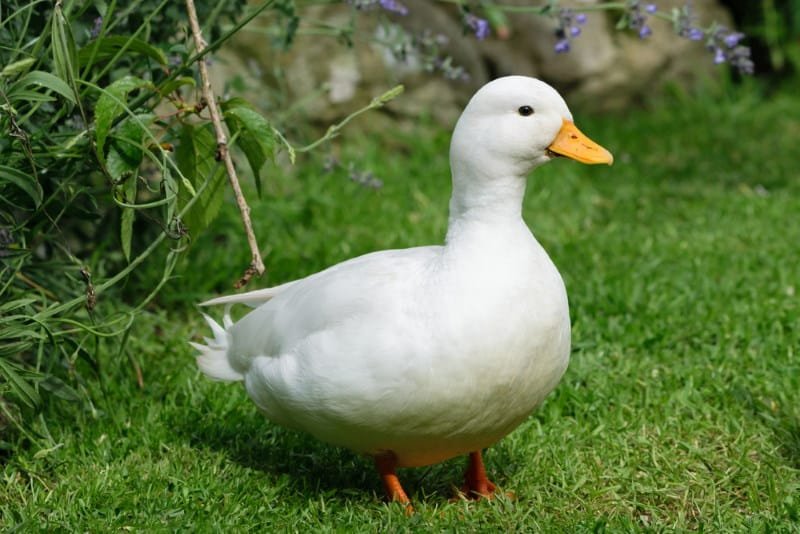
A small domestic breed, best known in white. Its loud, persistent call was once used in the Netherlands to lure wild ducks into duck traps called decoys, where they were caught. Today, it is a popular ornamental duck, and famous for being very noisy.
5. Eurasian wigeon
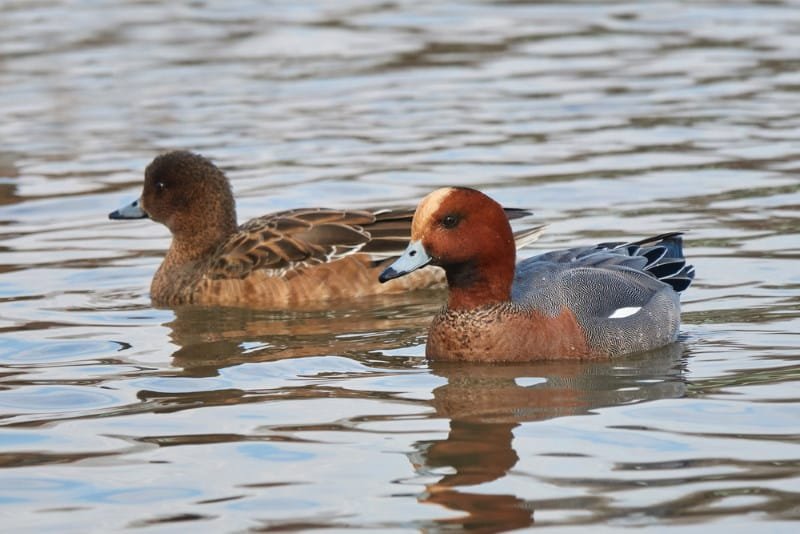
The drake has a chestnut head with a creamy yellow forehead, a pinkish chest and a gray body. Wigeons are known for their whistling call and graze on grass like geese. In winter, they gather in large flocks in Western Europe.
6. Northern pintail
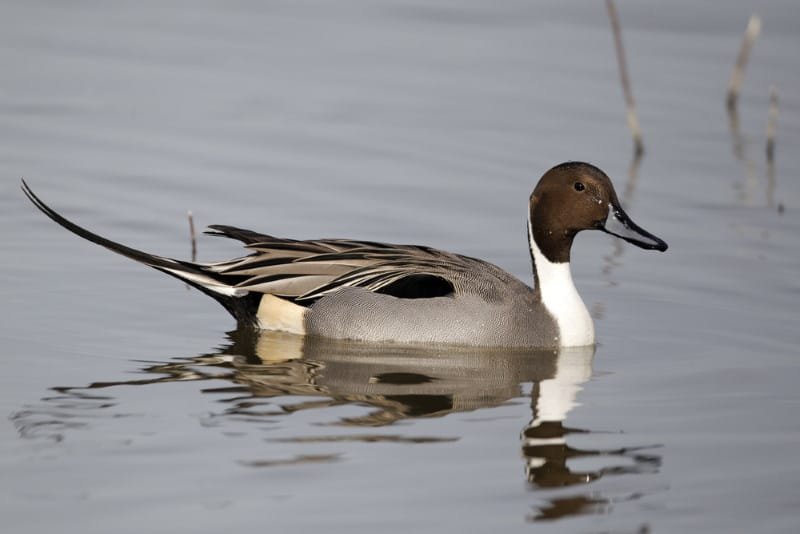
An elegant duck named after the long, pointed tail of the drake. The male has a chocolate brown head with a white stripe running up the side of the neck. Pintails breed across the Northern Hemisphere and migrate long distances.
7. Northern shoveler
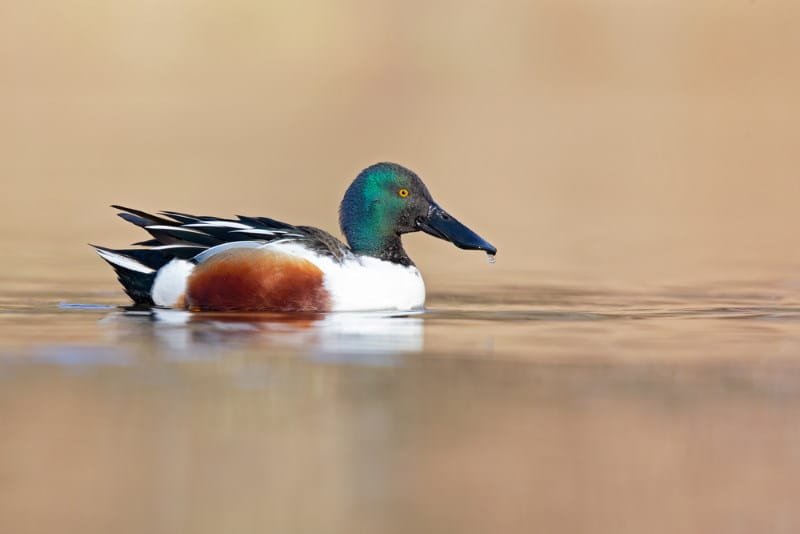
Unmistakable thanks to its huge, spoon-shaped bill, which both males and females have. It uses it to filter tiny animals and seeds from the water. The drake has a green head, white chest and chestnut sides.
8. Gadwall
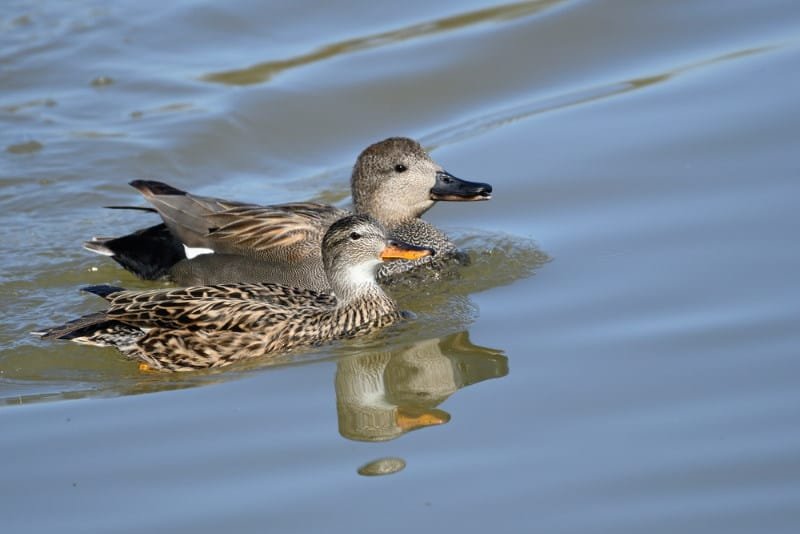
At first glance a plain gray duck, but up close the drake has beautiful fine patterns and a black rear end. The gadwall is about the size of a mallard. One of its subspecies, from the Pacific, went extinct in the 19th century.
9. Eurasian teal
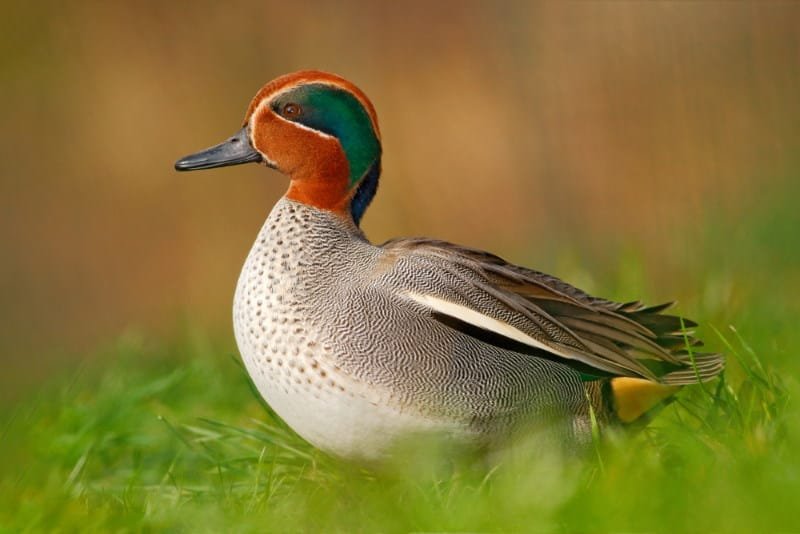
At about 35 centimeters, the smallest dabbling duck in Europe. The drake has a chestnut head with a broad green band around the eye. Teals are fast, agile fliers that often take off almost vertically.
10. Tufted duck
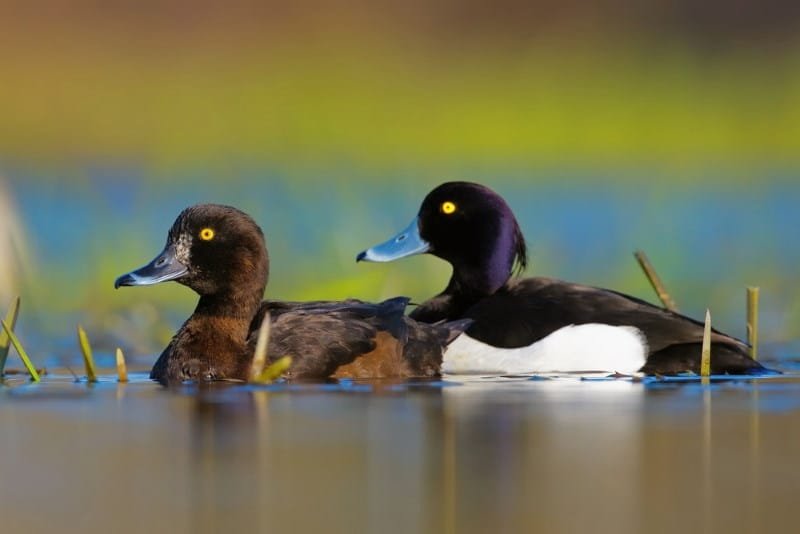
A diving duck with black and white plumage, bright yellow eyes and, in the drake, a long drooping tuft on the back of the head. Tufted ducks dive for mussels and other small animals.
11. Greater scaup
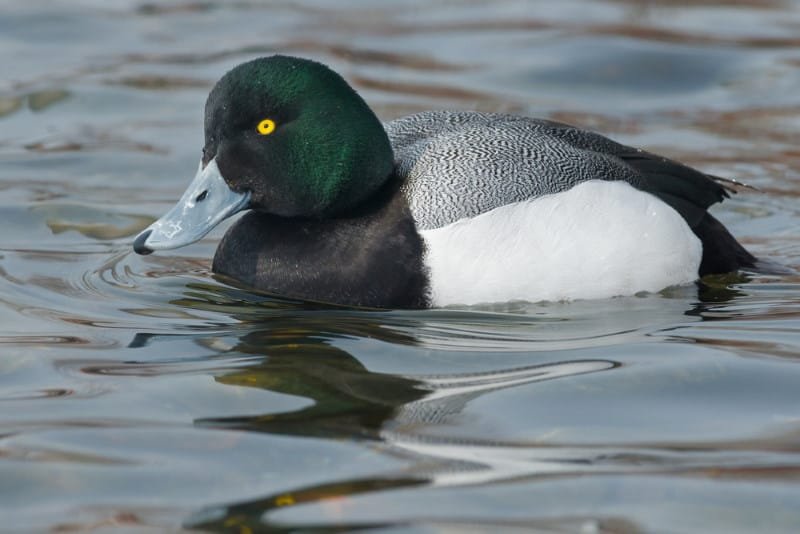
Similar to the tufted duck, but without the tuft and with a light gray back. The drake’s head has a green sheen. Scaups breed in the far north and spend the winter in large flocks on coastal waters and big lakes.
12. Common pochard
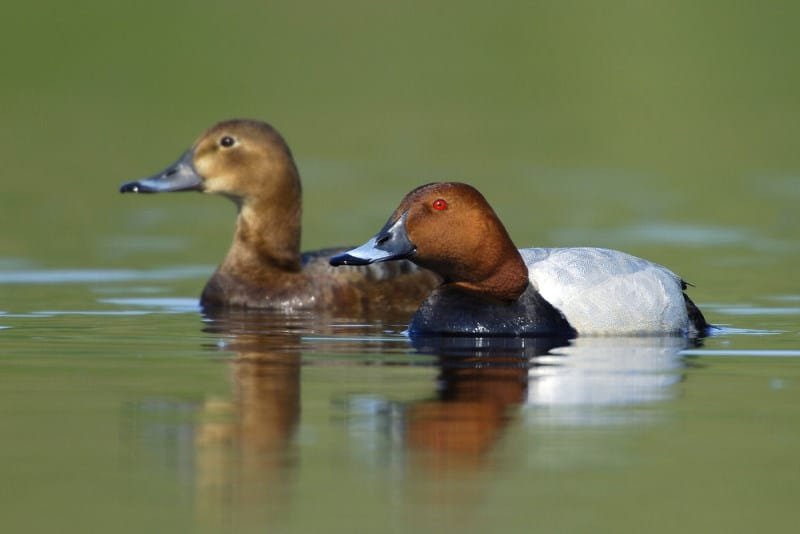
The drake has a rusty red head, red eyes, a black chest and a light gray body. Pochards are diving ducks that feed mainly on water plants. Their numbers have declined sharply, and they are now listed as vulnerable.
13. Red-crested pochard
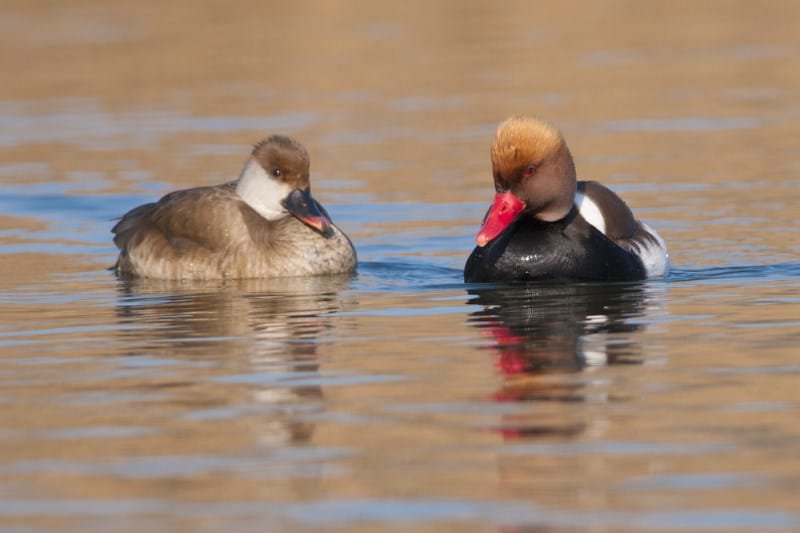
The drake is a showstopper, with a fluffy orange head and a bright red bill. Red-crested pochards feed on underwater plants, especially stoneworts, and dive or dabble to reach them.
14. Ferruginous duck
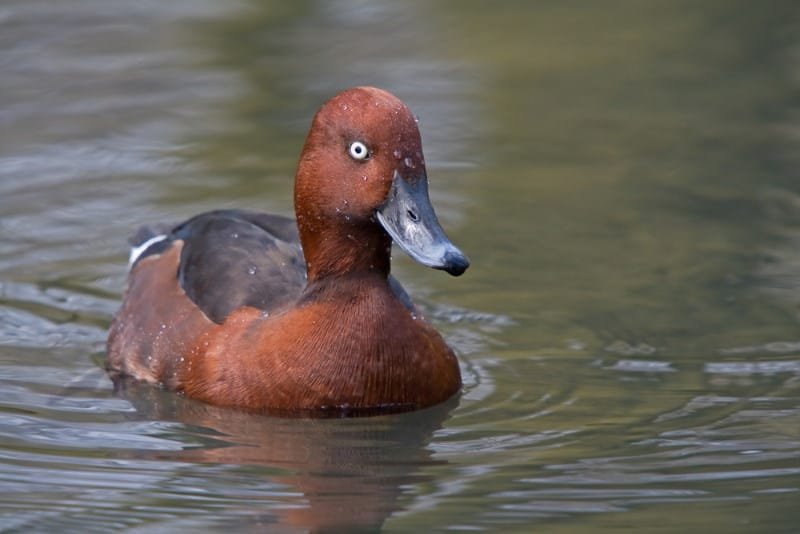
A rich chestnut-brown diving duck. Only the drake has the striking white eyes. It is rare in Western Europe and is listed as near threatened.
15. Common goldeneye
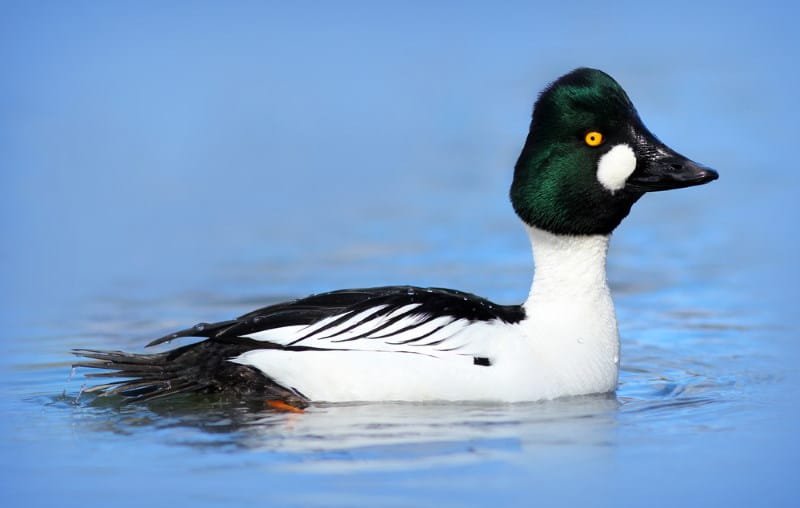
The drake has a dark green, triangular head, golden eyes and a round white patch between the eye and the bill. Goldeneyes nest in tree holes, and their wings make a distinctive whistling sound in flight.
16. Common eider
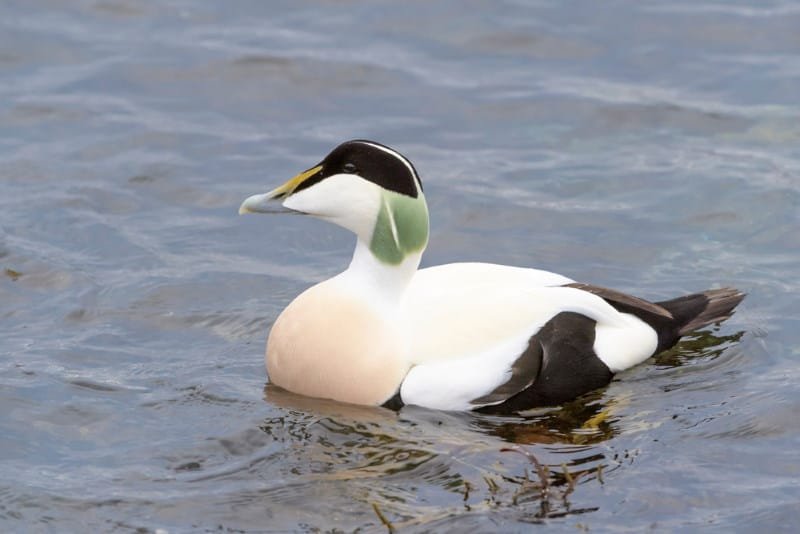
A large sea duck, famous for its incredibly soft down feathers, which the female plucks from her breast to line her nest. In Iceland and Norway, this eiderdown is carefully collected from nests after the ducklings have left, for luxury duvets. The drake is black and white with a pale green patch on the back of the head.
17. Long-tailed duck
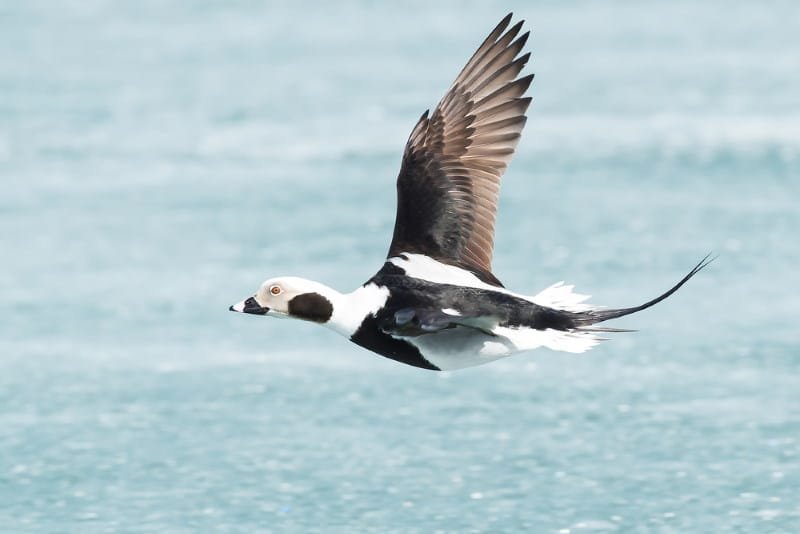
A sea duck of the Arctic with a long, elegant tail. Unusually, it has different summer and winter plumages. It is one of the deepest-diving ducks, recorded at depths of around 60 meters.
18. Velvet scoter
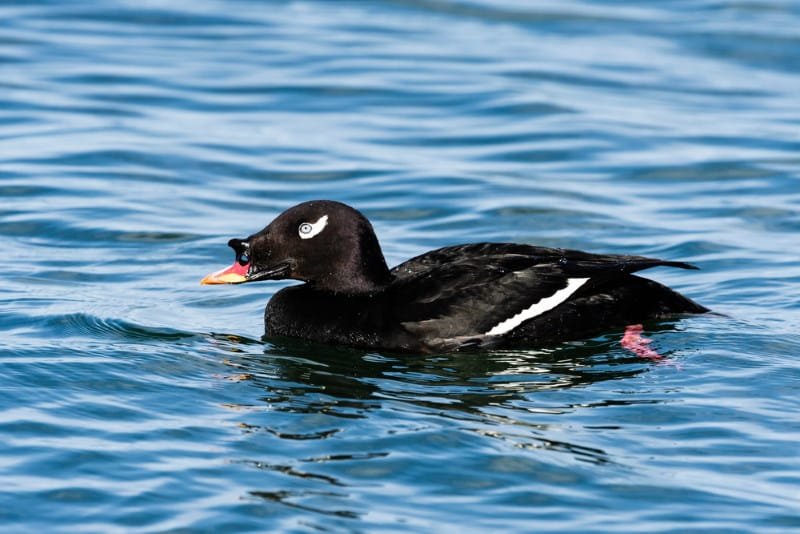
A large sea duck that spends much of its life at sea. The drake is black, with a small white patch under the eye and white wing patches that are especially visible in flight.
19. Fulvous whistling duck
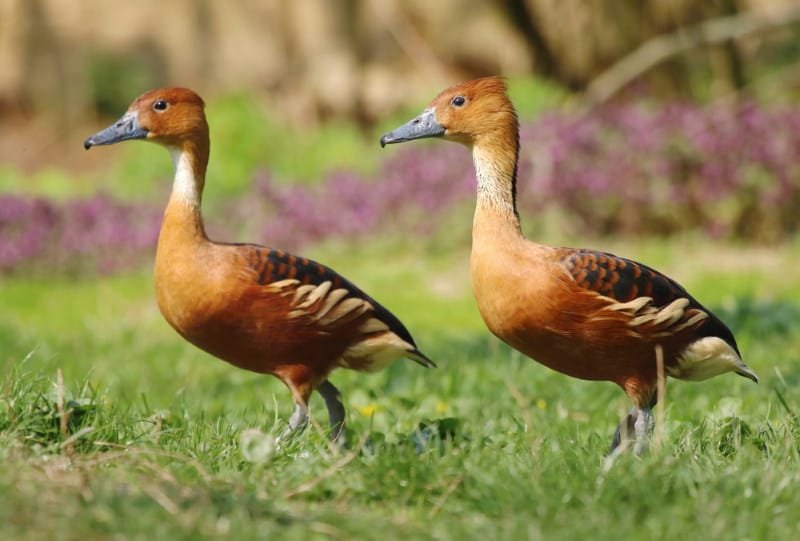
A long-legged, long-necked duck with a warm yellowish-brown color and a whistling call. Males and females look the same. It is found in the Americas, Africa and South Asia.
20. Hartlaub’s duck
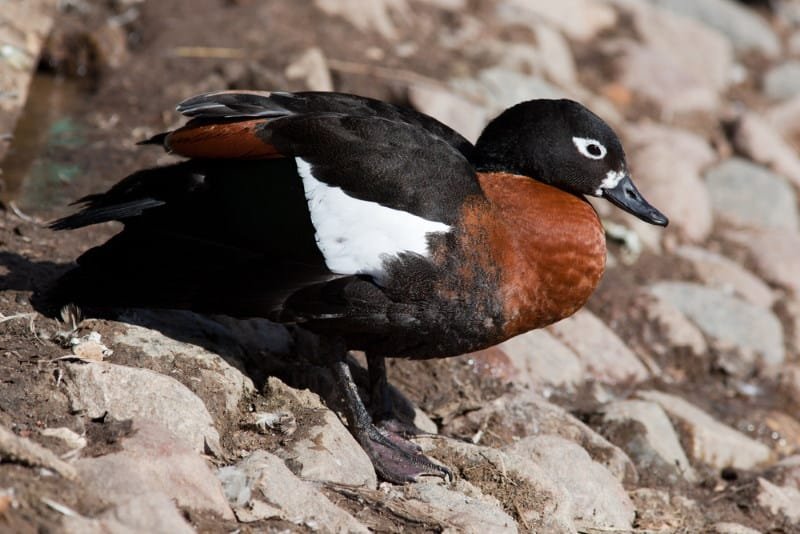
A chestnut-colored duck with a black head that lives along forested rivers in the rainforests of Central and West Africa. It is named after the German ornithologist Gustav Hartlaub.