In the animal kingdom, migration is completely normal. Animals sometimes have to travel long distances to find food, shelter or a partner, or to escape extreme heat or cold. Some journeys are calm, but others are truly extreme. These are ten of the most extreme migrations in the animal kingdom.
1. Wildebeest

Every year, around one and a half to two million wildebeest make a circular journey through the Serengeti in Tanzania and the Maasai Mara in Kenya, following the rains and the fresh grass. This Great Migration covers around 800 to 1,000 kilometers a year. The wildebeest are accompanied by hundreds of thousands of zebras and gazelles. The most dramatic moments are the river crossings, especially of the Mara River, where huge crocodiles lie in wait. Traveling in such huge groups gives each individual a better chance of escaping predators.
2. Monarch butterfly
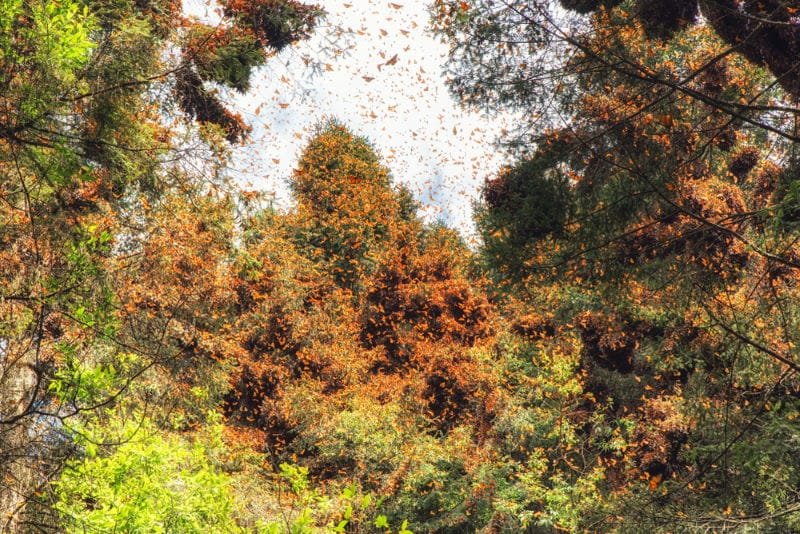
The monarch butterfly migrates in a unique way. Every autumn, millions of monarchs from the United States and Canada fly up to around 4,000 kilometers south to a few mountain forests in central Mexico, where they spend the winter in huge clusters on fir trees. In spring, they head north again, but no single butterfly completes the round trip: it takes several generations to return. The generation that flies south lives much longer than the others, up to eight months. How they find their way to the same forests, without ever having been there, is still not fully understood, but they use the position of the sun and probably the Earth’s magnetic field.
3. Arctic tern
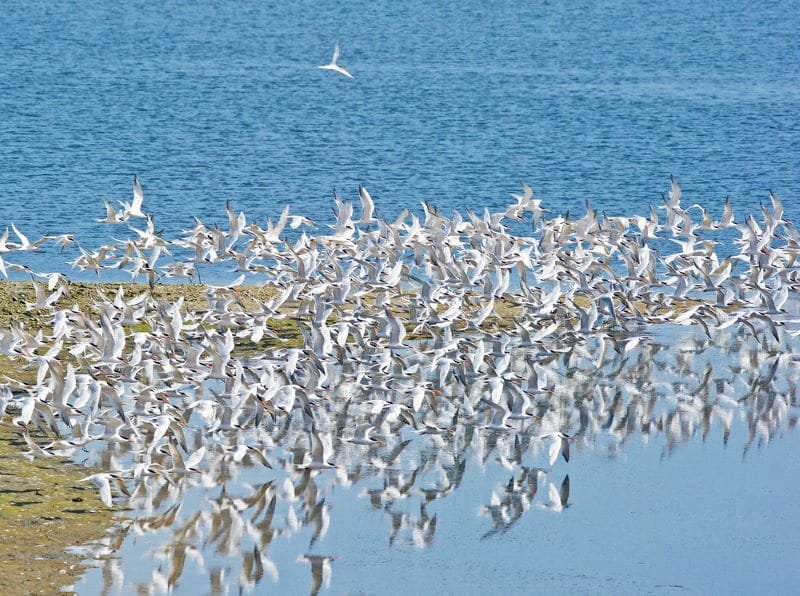
The Arctic tern is a small seabird weighing only around 100 grams, but no animal makes a longer annual migration. It breeds in the Arctic and spends the northern winter near Antarctica, enjoying two summers a year. Tracking studies have shown that, with all its detours, it can fly 70,000 to 90,000 kilometers a year. Over a lifetime of around 30 years, that adds up to the distance from the Earth to the Moon and back, around three times.
4. Bar-tailed godwit
The bar-tailed godwit holds the record for the longest non-stop flight of any bird. In 2022, a young godwit tagged in Alaska flew around 13,500 kilometers to Tasmania without a single stop, in 11 days, without eating, drinking or sleeping on the ground. Before the journey, godwits eat so much that they double their body weight, while some of their internal organs shrink to save weight.
5. Salmon

Salmon spend most of their lives in the ocean. After a few years, they return to the river where they were born, probably finding their way thanks to their sense of smell and the Earth’s magnetic field. They swim against the current, leaping up waterfalls and rapids, while bears and eagles wait for them. Chinook salmon in the Yukon River travel up to around 3,000 kilometers upstream. Pacific salmon stop eating once they enter fresh water, and after spawning, they die.
6. Hummingbirds

Hummingbirds are tiny, yet some make astonishing journeys. The ruby-throated hummingbird, weighing only around 3 grams, crosses the Gulf of Mexico non-stop, a flight of around 800 kilometers. The rufous hummingbird makes an even longer journey, of up to around 6,000 kilometers, between Mexico and its breeding grounds as far north as Alaska. Relative to its body length, that is one of the longest migrations of any bird. Before departing, hummingbirds eat so much that they almost double their body weight.
7. Caribou
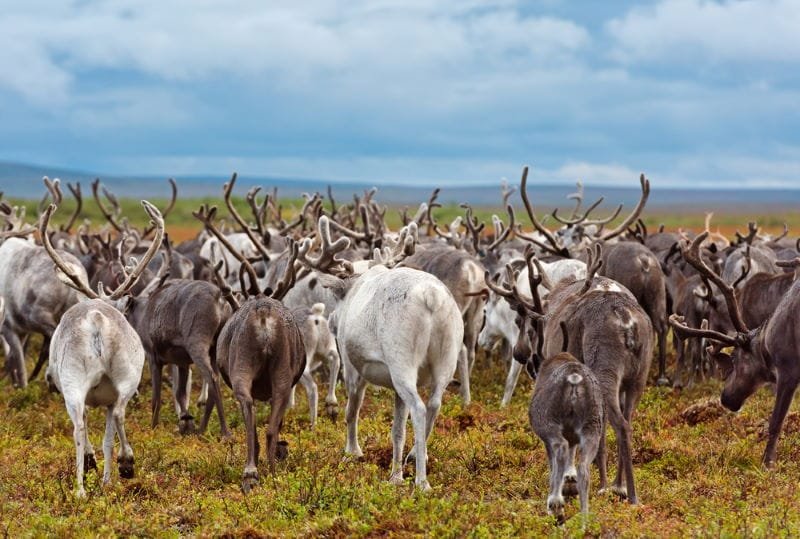
Caribou, the North American name for reindeer, travel in huge herds across the tundra and forests of Alaska and Canada. Some herds travel more than a thousand kilometers between their winter and summer grounds, making them the longest land migrations on Earth. Herds can number in the tens of thousands, and they can run at up to around 70 to 80 km/h. Newborn calves can walk within hours and keep up with the herd within a day.
8. Humpback whale

Humpback whales, which can grow to around 15 meters long, make some of the longest migrations of any mammal. Every year, they travel between cold, food-rich polar waters, where they feed in summer, and warm tropical waters, where they give birth and mate, a journey of up to around 8,000 kilometers each way. During the breeding season, they hardly eat, living off their fat reserves. In 2022 and 2023, researchers documented a male humpback that traveled more than 13,000 kilometers between the Pacific coast of Colombia and Zanzibar.
9. Wandering glider dragonfly

The wandering glider, or globe skimmer (Pantala flavescens), is a dragonfly that lives up to its name. Research suggests that it migrates across the Indian Ocean, from India via the Maldives to East Africa and back, a multi-generational round trip of around 14,000 to 18,000 kilometers. Like the monarch, no single dragonfly completes the whole journey. It is probably the longest migration of any insect, made possible by riding the monsoon winds.
10. Leatherback turtle

Several sea turtles travel enormous distances, but the leatherback, the largest turtle in the world, makes the longest migration of any reptile. Tagged leatherbacks have been tracked for more than 20,000 kilometers across the Pacific, between nesting beaches in Indonesia and feeding grounds off the coast of California, where they feed on jellyfish. Other turtles are impressive too: some green turtles swim more than 2,000 kilometers from Brazil to tiny Ascension Island in the middle of the Atlantic to lay their eggs on the beach where they were born.