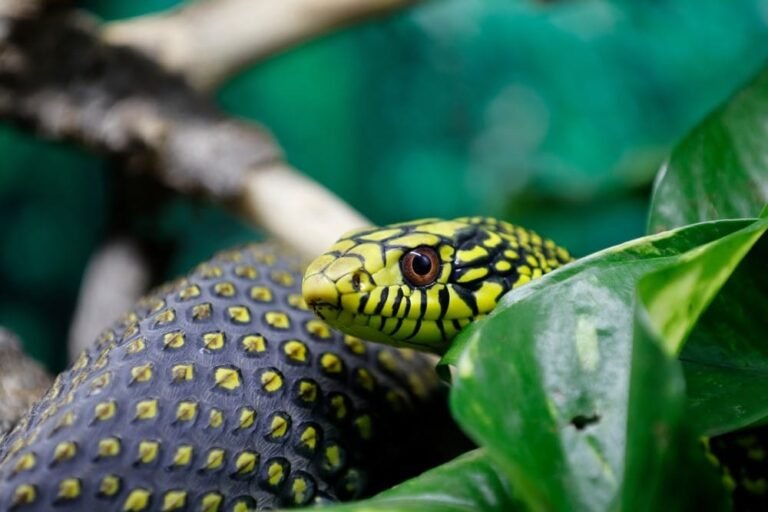
Reproduction does not always require a male and a female. In nature, many animals can reproduce asexually, producing offspring that are genetically (almost) identical to themselves. This can happen in different ways: by budding, by splitting or by parthenogenesis, also called virgin birth. These are ten animals that can effectively copy themselves.
1. Aphids
Aphids are notorious for building huge populations in no time, and that is largely thanks to parthenogenesis. In good periods, such as summer, when there is plenty of food, female aphids give birth to live daughters that are genetically identical to themselves, without any fertilization. Even more remarkable: those daughters can already carry their own developing daughters inside them, like Russian nesting dolls. Only when conditions worsen in autumn do they produce males and switch to sexual reproduction.
2. Starfish
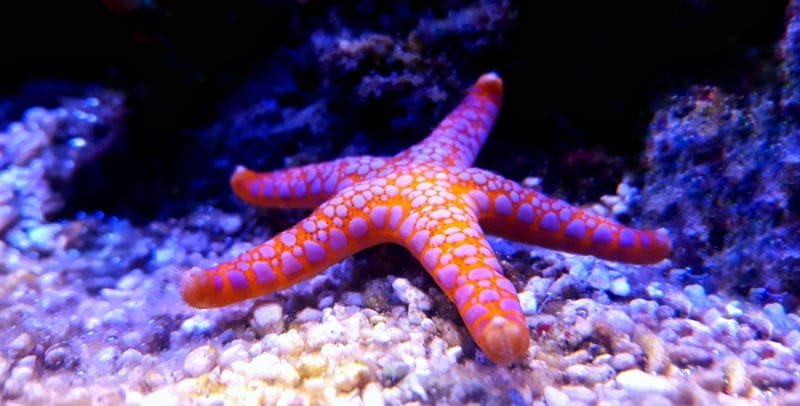
Many starfish can regrow a lost arm. Some species go a step further: if a severed arm still contains a small part of the central disc, it can grow into a completely new, genetically identical individual. A few species even reproduce deliberately this way, by tearing themselves in two.
3. Hydras
Hydras are tiny freshwater predators, related to jellyfish and sea anemones. They reproduce by budding: a bulge forms on the parent’s body and grows into a miniature version with its own tentacles and mouth. Eventually, the young hydra breaks off and starts an independent life, genetically identical to its parent. Hydras are also famous for something else: they appear not to age, and in the lab, they can seemingly live indefinitely.
4. Whiptail lizards
Some species of whiptail lizards in the southwestern United States and Mexico consist entirely of females. They lay unfertilized eggs that still develop into healthy offspring. These species arose from hybrids between two other species. Interestingly, the females still perform mating behavior with each other, with one acting the part of the male. This pseudo-mating appears to stimulate egg production.
5. Water fleas
Water fleas, small crustaceans that live in fresh water, use a clever strategy called cyclical parthenogenesis. In good conditions, females produce genetically identical daughters. When conditions worsen, they also produce males, and sexual reproduction takes place. This results in tough resting eggs that can survive drought and freezing, and that add genetic variation. Cloning in good times and sex in bad times is an evolutionarily very smart combination.
6. Corals and sea anemones
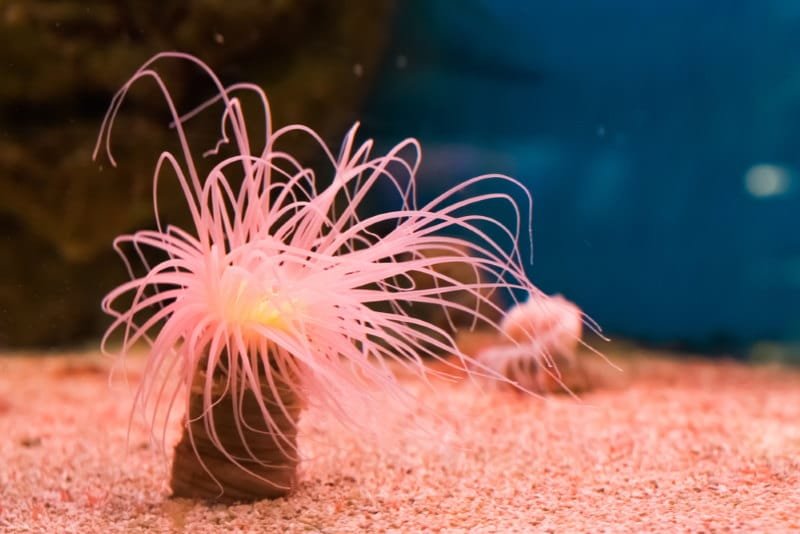
Many corals and sea anemones can reproduce both sexually and asexually. Some sea anemones literally split themselves in two, after which both halves grow into complete individuals. Another method is budding, in which new polyps sprout from the parent. Budding is essential for the growth of coral reefs: a single coral colony is made up of thousands of genetically identical polyps that all arose by budding from one original polyp.
7. Marbled crayfish
The marbled crayfish is a true mystery of nature. It was first noticed in the German aquarium trade in the 1990s, and it turned out that all individuals are female and reproduce by cloning. The whole species probably descends from a single animal. Because one crayfish is enough to start a population, it has spread rapidly, both through the pet trade and in the wild, and has become an invasive species in parts of Europe and Madagascar.
8. Bdelloid rotifers
Bdelloid rotifers are microscopic animals that live in water and damp moss. Scientists have never found a single male. As far as we know, they have reproduced without sex for tens of millions of years, which was long thought to be impossible for a group of animals. Their secret may be that they pick up genes from bacteria, fungi and plants, and that they can dry out completely and come back to life when water returns.
9. Komodo dragons and sharks: virgin births
Some animals that normally reproduce sexually can occasionally switch to virgin birth when no male is available. In 2006, two female Komodo dragons in British zoos laid eggs that hatched without ever having met a male. Similar virgin births have been recorded in several sharks, snakes and even birds such as turkeys. Strictly speaking, these offspring are not exact clones of their mother, but they do not have a father.
10. Planarian flatworms
Planarians are small freshwater flatworms with an extraordinary ability to regenerate. Some species reproduce by simply tearing themselves in two, after which each half grows back into a complete worm. In experiments, scientists have cut planarians into dozens of pieces, and each fragment grew into a new, complete worm, including a new head and brain.
Asexual reproduction is an efficient strategy for rapid population growth when conditions are ideal. The main disadvantage is the lack of genetic variation, which can make an entire population vulnerable to a single disease or environmental change. That is why most animals that can clone themselves combine it with occasional sexual reproduction.