
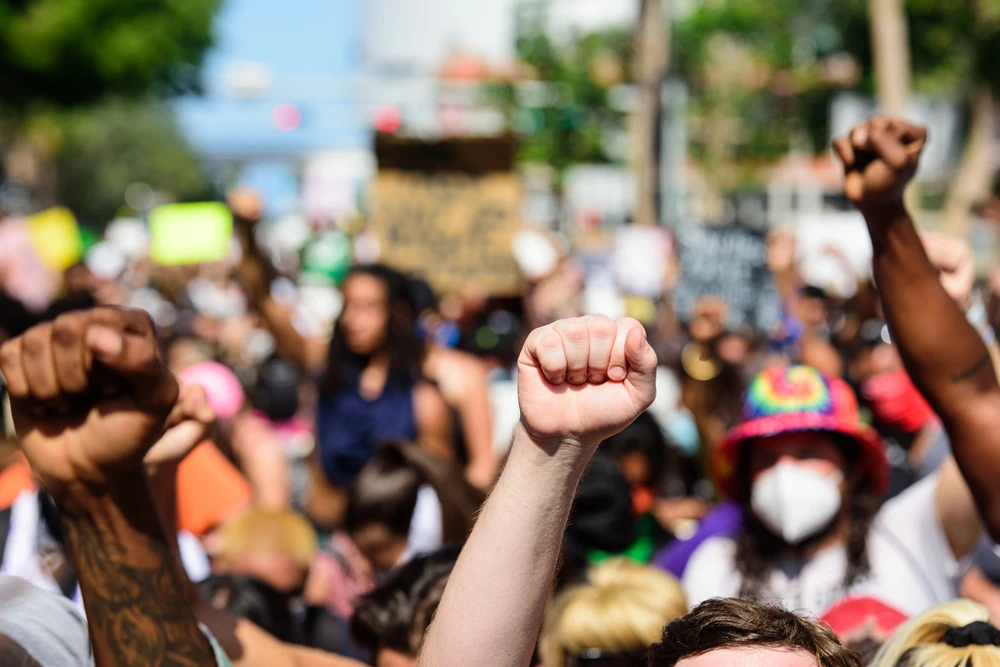
Throughout history, music has been one of the most powerful weapons in the fight against injustice, war, oppression and social inequality. A great protest song has the power to mobilize masses, awaken the conscience of a generation and shake regimes. From acoustic folk and soul anthems to furious punk and hip-hop indictments, these are the twenty best and most influential protest songs of all time.
Cast your vote - the ranking shifts live based on the votes.
Bob Dylan – Blowin' in the Wind
Armed with just an acoustic guitar and harmonica, Bob Dylan formulated the questions in 1962 that would define the civil rights and anti-war movements forever. The poetic simplicity and timeless metaphors make Blowin' in the Wind the original protest song of modern times.
John Lennon – Give Peace a Chance
Recorded during Lennon's famous Bed-In for Peace at the Queen Elizabeth Hotel in Montreal, this song became the global anthem of the peace movement. The hypnotic chant, handclaps and universal slogan gave millions of protesters a shared voice against the Vietnam War.
Log in to post a comment.
Marvin Gaye – What's Going On
Written from the perspective of a returning Vietnam veteran confronted with racial tension and police violence at home. Marvin Gaye's velvety, concerned vocals over lush strings and a relaxed soul groove hide razor-sharp social criticism.
Log in to post a comment.
Public Enemy – Fight the Power
Made at the request of director Spike Lee for Do the Right Thing, Fight the Power is a sonic sledgehammer against institutional racism. The Bomb Squad built a swirling wall of sound full of samples and screeching saxophones, over which Chuck D fires his razor-sharp call to resistance.
Log in to post a comment.
Sam Cooke – A Change Is Gonna Come
Inspired by Dylan's Blowin' in the Wind and his own experiences of racial segregation, Sam Cooke wrote this monumental soul anthem. The dramatic orchestra and Cooke's unmatched, emotional vocals made it the hymn of the civil rights movement.
Log in to post a comment.
Rage Against the Machine – Killing in the Name
Released in the wake of the Rodney King beating and the Los Angeles riots, RATM delivered an explosion of pure rage against police brutality and racism. Tom Morello's ripping guitar riffs and Zack de la Rocha's defiant, repeated refusal remain an unmatched beacon of rebellion.
Log in to post a comment.
The Cranberries – Zombie
Written by Dolores O'Riordan after an IRA bombing in Warrington in which two children were killed. The heavy grunge guitars, pounding drums and O'Riordan's anguished, yodeling vocal bursts capture the despair and vicious circle of violence during the Troubles in Northern Ireland.
Log in to post a comment.
Bob Marley & The Wailers – Get Up, Stand Up
Inspired by the poverty and political violence Marley saw in Haiti, Bob Marley and Peter Tosh wrote this blazing call for self-determination and resistance. The tight reggae groove and unmistakable message to stand up for your rights make it a worldwide human rights anthem.
Log in to post a comment.
Edwin Starr – War
With the unforgettable opening cry 'War, what is it good for? Absolutely nothing!', Edwin Starr delivered the most direct anti-war anthem ever. Norman Whitfield's pumping Motown production, dominated by heavy drums and fierce horns, breathes pure adrenaline and outrage.
Log in to post a comment.
U2 – Sunday Bloody Sunday
Opened by Larry Mullen Jr.'s tight military drum roll and The Edge's piercing guitar chords, Bono sings about the 1972 massacre in Derry. The song refuses to take sides with armed factions and instead calls for peace and universal mourning for innocent victims.
Log in to post a comment.
Bruce Springsteen – Born in the U.S.A.
Often mistaken for a nationalist party song, Born in the U.S.A. is in reality a bitter indictment of how disadvantaged Vietnam veterans were treated. The monumental synth riff and Max Weinberg's thundering drums hide a harrowing story of hopelessness.
Log in to post a comment.
Gil Scott-Heron – The Revolution Will Not Be Televised
With just congas, a subtle bassline and his masterful spoken-word poetry, Gil Scott-Heron warned that real change can't be consumed through the TV screen. His razor-sharp satire of consumerism and media apathy laid the foundation for political hip-hop.
Log in to post a comment.
Buffalo Springfield – For What It's Worth
Written by Stephen Stills after the Sunset Strip unrest in Los Angeles, the song captures the tense atmosphere of the late '60s with its subtle guitar harmonics and restrained tension. 'Stop, children, what's that sound' became the soundtrack of an awakening youth culture.
Log in to post a comment.
Neil Young – Ohio
Written in a fit of anger after the National Guard shot four students dead at Kent State University in 1970. Neil Young's ripping guitar riffs and the raw harmonies of Crosby, Stills, Nash & Young made Ohio one of the most direct journalistic rock indictments ever.
Log in to post a comment.
Midnight Oil – Beds Are Burning
The Australian rock band led by Peter Garrett demanded the return of land to the Pintupi Aboriginal people with Beds Are Burning. The pumping rock beat, piercing horns and Garrett's energetic vocals turned this local struggle into a worldwide hit.
Log in to post a comment.
Tracy Chapman – Talkin' 'Bout a Revolution
With four simple acoustic chords and her warm, soulful voice, Tracy Chapman paints the approaching uprising of the impoverished underclass. The quiet hope and belief in economic justice give the song remarkable moral force.
Log in to post a comment.
Kendrick Lamar – Alright
Co-produced by Pharrell Williams, Alright became the unofficial anthem of the Black Lives Matter movement. Kendrick Lamar's virtuoso flow over a jazzy, syncopated beat pairs the harsh reality of police violence with an indestructible hope of survival and resilience.
Log in to post a comment.
Creedence Clearwater Revival – Fortunate Son
In 1969, John Fogerty denounced the class inequality around the US military draft, from which the children of the wealthy elite escaped. The furious Southern rock riff and Fogerty's gravelly vocals breathe pure working-class anger.
Log in to post a comment.
Billie Holiday – Strange Fruit
Composed by Abel Meeropol, Strange Fruit is considered one of the first great protest songs in American history. Billie Holiday's haunting, sparse delivery about the lynching of Black Americans in the South has a chilling, hushed beauty that still shocks deeply.
Log in to post a comment.
Boudewijn de Groot – Welterusten, Meneer de President
With lyrics by Lennaert Nijgh, Boudewijn de Groot wrote the most important Dutch protest song ever. Addressed to American president Lyndon B. Johnson, it condemns the atrocities of the Vietnam War, wrapped in a deceptively sweet acoustic melody.
Log in to post a comment.
Missing an item in this list?
Log in or create a free account to add an item yourself.
Log in / create account
Log in to post a comment.