
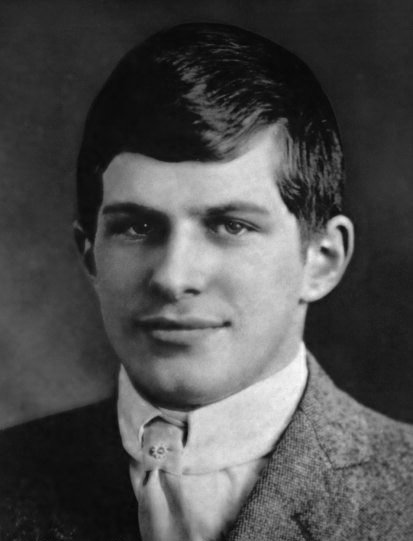
The smartest man who ever lived was, by estimate, William James Sidis. His IQ was estimated between 250 and 300. He was a child prodigy who went to Harvard at age 11 and spoke 25 languages. Sadly, his extreme intelligence led to a lonely and tragic life, far away from the spotlight.
An average IQ is around 100. People scoring above 140 are considered 'geniuses'. The people on this list go way beyond that.
It is striking that a high IQ doesn't always lead to worldwide fame or wealth. Some solve the hardest mathematical problems, others work in hospitality or write for TV shows.
Here are the 10 highest scores humanity has (probably) ever produced.
Cast your vote - the ranking shifts live based on the votes.
William James Sidis (IQ: 250-300)
Sidis is often seen as the ultimate example of a child prodigy gone wrong. His parents drilled him from birth to become a genius. It worked, but at a high price. He could read the newspaper when he was 18 months old.
As an adult, he withdrew from science to do simple office jobs and collect streetcar transfers. Biographies of his life often describe how he experienced his intelligence as a curse rather than a blessing.
Terence Tao (IQ: 230)
Unlike Sidis, Terence Tao uses his gift very much in public. He is called the “Mozart of Mathematics”. At 24 he became the youngest professor ever at UCLA. He won the Fields Medal (the Nobel Prize of mathematics). Colleagues say he can solve problems others don't even dare to start on.
Massive historical bias here. Half of what people credit to Terence Tao was actually done by someone else.
Marilyn vos Savant (IQ: 228)
Marilyn is the most famous woman on this list. In the 1980s she was listed in the Guinness Book of World Records with the highest score ever measured. She became world-famous with her column “Ask Marilyn” in Parade magazine, where she solves complicated puzzles sent in by readers. The most famous example is the 'Monty Hall problem', where she turned mathematicians worldwide against her (even though she was right).
A true pioneer.
Christopher Hirata (IQ: 225)
Imagine: you're 13 years old and you win a gold medal at the International Physics Olympiad. That's what Christopher Hirata did. At 16 he was already working with NASA on whether humans could live on Mars. Today he is a professor working on dark energy, one of the biggest mysteries of the universe.
Log in to post a comment.
Kim Ung-yong (IQ: 210)
This South Korean child prodigy spoke four languages by the age of two. According to the stories, NASA brought him to America to work there when he was eight. After ten years, however, he returned to Korea because he was unhappy.
He deliberately chose a 'normal' life and became a civil engineer at a local company, proving that happiness matters more than achievement.
Log in to post a comment.
Edith Stern (IQ: 200+)
Edith Stern is one of the most prolific inventors of our time. At her birth, her father announced that he would mold “the perfect human being”. She went to university at 12 and worked for IBM for many years. She has more than 100 patents to her name. Her work at IBM led to breakthroughs in telephony and internet technology that we still use today.
Log in to post a comment.
Christopher Langan (IQ: 195-210)
Langan is often called “the smartest man in America”, but he took a very different path. He felt misunderstood at school and dropped out of college. For years he worked as a bouncer at a bar on Long Island. In his spare time he developed a complicated “Theory of Everything” (the CTMU). He is a controversial figure because he links intelligence to disputed philosophical ideas.
School history books barely scratch the surface of how wild Christopher Langan's life actually was.
Rick Rosner (IQ: 192-198)
Rick Rosner doesn't fit the stereotype of the dusty professor at all. He is a TV writer and... a former stripper and nude model. He has taken more than 30 IQ tests to improve his score. He is obsessed with health and takes dozens of pills a day to keep his brain young. In documentaries he talks openly about his obsessive drive to be the smartest.
Log in to post a comment.
Garry Kasparov (IQ: 190)
To many, he is the best chess player of all time. Kasparov became world champion in 1985 at the age of 22. His intelligence shows mainly in his strategic insight and memory; he can replay thousands of chess games in his head. He made world news when he took on IBM's supercomputer Deep Blue, a battle between human intuition and brute computing power.
Log in to post a comment.
Albert Einstein (IQ: 160 - Estimate)
You might be wondering: where is Einstein? The man synonymous with genius never took an IQ test. Experts estimate his score at around 160. That is very high, but lower than the rest of this list. It shows that an IQ score doesn't say everything: his biography on the Nobel Prize website proves that creativity and imagination are at least as important as raw brainpower for changing the world.
Log in to post a comment.
Missing an item in this list?
Log in or create a free account to add an item yourself.
Log in / create account
Lecturing the Harvard Mathematical Club on four-dimensional bodies at age eleven is astounding, but his tragic retreat into collecting streetcar transfers highlights the immense toll of parental pressure.
Log in to post a comment.