


The smallest sovereign state in the world is Vatican City. Occupying only 0.44 square kilometers (about 109 acres) in the heart of Rome, it is a country you can walk across in less than twenty minutes. It has its own flag, anthem, stamps, and even a small army, the Swiss Guard, making it a fully functional nation despite being smaller than a typical city park.
In a world obsessed with growth and expansion, these ten nations prove that size isn’t everything. These microstates are the survivors of history—political anomalies that managed to maintain their independence through diplomacy, geography, or sheer luck. Some are island paradises in the middle of the ocean, while others are mountain fortresses surrounded by larger neighbors. Living in these countries offers a unique perspective on citizenship; in some, the head of state might be someone you bump into at the grocery store. From the gambling halls of Europe to the sinking atolls of the Pacific, these are the smallest spots on the map.
1. Vatican City (0.44 sq km)
Vatican City is an absolute monarchy ruled by the Pope. It is an enclave, meaning it is entirely surrounded by the city of Rome. Despite its size, it exerts massive global influence as the spiritual center of the Roman Catholic Church. It contains world-class treasures like the Sistine Chapel and St. Peter’s Basilica. Interestingly, it is the only country in the world where no one is born; citizenship is granted based on office rather than birth. For a closer look at the unique demographics of these microstates, the World Bank provides startling statistics on their population densities.
2. Monaco (2.02 sq km)
Monaco is the playground of the global elite. Located on the French Riviera, it is the most densely populated country in the world. Because there is no room left to build outward, Monaco has expanded upward with skyscrapers and even into the sea through land reclamation projects. It is famous for its Grand Prix, its legendary casino, and its status as a tax haven. The entire country is smaller than Central Park in New York, yet it manages to host some of the world’s most extravagant events. The BBC highlights its fascinating history of royal drama and financial prowess.
3. Nauru (21 sq km)
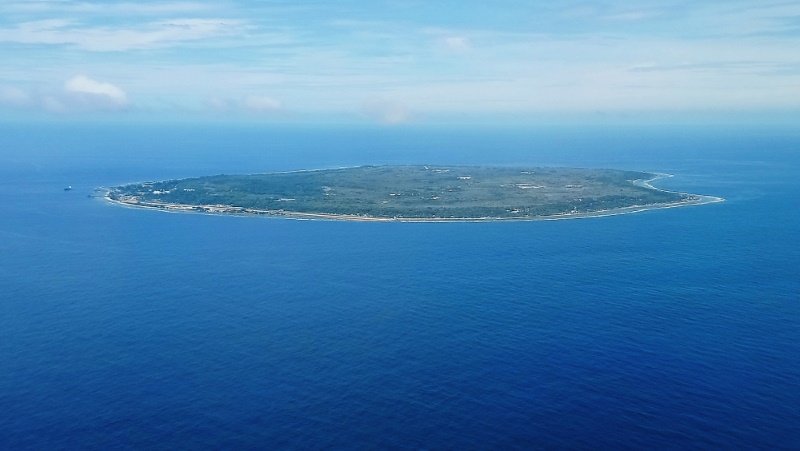
Nauru is the smallest island nation in the world and the smallest republic. Located in the Pacific Ocean, it was once incredibly wealthy due to phosphate mining. When the resources ran out, the economy collapsed, leaving a scarred landscape in the center of the island. Today, Nauru faces significant challenges with climate change and health issues. It is one of the least visited countries on Earth, offering a quiet, isolated existence for its few thousand residents.
4. Tuvalu (26 sq km)
Tuvalu is a chain of low-lying coral atolls in the South Pacific. It is so small and narrow that in some places, you can stand on the main road and see the ocean on both sides. Tuvalu is at the frontline of climate change; because its highest point is only 4.5 meters above sea level, it is at risk of disappearing if sea levels continue to rise. Despite this, the nation has found a modern way to survive by selling its digital assets, specifically its profitable “.tv” internet domain suffix. UNESCO continues to monitor many of these Pacific islands for their unique cultural and natural heritage.
5. San Marino (61 sq km)
San Marino claims to be the world’s oldest republic, founded in the year 301. It is perched on the slopes of Mount Titano in Italy. Its three fortresses look like something out of a fairytale, overlooking the surrounding Italian countryside. San Marino is one of the few countries that has more vehicles than people. It has managed to stay independent for seventeen centuries, even surviving the unification of Italy and the chaos of two world wars.
6. Liechtenstein (160 sq km)
Nestled in the Alps between Switzerland and Austria, Liechtenstein is a wealthy, German-speaking principality. It is a major financial center but also a paradise for winter sports. It is one of the few “doubly landlocked” countries, meaning you have to cross at least two borders to reach an ocean. The Prince of Liechtenstein still lives in a castle overlooking the capital, Vaduz, and is one of the world’s wealthiest monarchs.
7. Marshall Islands (181 sq km)
The Marshall Islands consist of over 1,000 islands and 29 atolls spread across the Pacific. While the land area is tiny, the nation covers a massive oceanic territory. It has a complex history with the United States, which used parts of the islands for nuclear testing in the mid-20th century. Today, the islands are famous for their world-class diving and vibrant coral reefs, though they share the same rising-sea-level fears as Tuvalu.
8. Saint Kitts and Nevis (261 sq km)
This Caribbean nation consists of two volcanic islands. It was the first Caribbean island to be settled by Europeans, earning it the nickname “Mother Colony of the West Indies.” Today, it is a popular stop for cruise ships and is known for its lush rainforests and historic sugar plantations. It was also the pioneer of the “citizenship by investment” program, allowing wealthy foreigners to buy a passport by donating to the state.
9. Maldives (300 sq km)
While the Maldives spans 90,000 square kilometers of the Indian Ocean, the land area of its 1,192 islands is remarkably small. It is the lowest country in the world. Known for its ultra-luxury resorts on private islands, the Maldives is a dream destination for travelers. Its economy is almost entirely dependent on tourism and fishing, making it highly sensitive to global economic and environmental trends.
10. Malta (316 sq km)
Malta is an archipelago in the Mediterranean Sea with a history that spans seven millennia. Because of its strategic location between Europe and Africa, it has been occupied by every major empire, from the Romans and Moors to the Knights of St. John and the British. This has resulted in a unique culture and a capital city, Valletta, that is entirely a UNESCO World Heritage site. Despite its size, Malta is a bustling, modern EU member state with a thriving film and tech industry.
