Classical music is still hugely popular and can be heard everywhere, from films and commercials to sports stadiums and ringtones. Some pieces became famous thanks to Hollywood, while others are so familiar that we have almost forgotten that someone actually composed them.
These are the ten most famous pieces of classical music, the ones almost everyone recognizes within seconds.
10. Carl Orff: O Fortuna
Carmina Burana is a collection of medieval poems found in a Bavarian monastery. In 1935 and 1936, German composer Carl Orff set two dozen of them to new music, and the work premiered in 1937. The thunderous “O Fortuna”, about the cruel wheel of fortune, opens and closes the work. It has since been used in countless films, trailers, commercials and sports events whenever something needs to sound epic.
9. Antonio Vivaldi: The Four Seasons
Italian Baroque composer Antonio Vivaldi published The Four Seasons, a set of four violin concertos each depicting a season, in 1725. Each concerto was accompanied by a poem, and the music imitates birdsong, thunderstorms, barking dogs and icy winds. Thanks to radio and recordings, it became one of the most popular pieces of classical music of all time, especially the opening of “Spring”. Violinist Nigel Kennedy’s 1989 recording sold more than two million copies, making it one of the best-selling classical albums ever.
8. Gioachino Rossini: William Tell Overture
In 1829, Italian composer Gioachino Rossini premiered his opera about the Swiss folk hero William Tell. The opera lasts around four hours, but it is mainly the overture that everyone recognizes. Its galloping final section became the theme music of the American radio and TV series The Lone Ranger in the 20th century, and since then, it is almost impossible to hear it without thinking of horses.
7. Wolfgang Amadeus Mozart: Eine kleine Nachtmusik
Mozart wrote countless memorable melodies in his short life. The opening of his Serenade No. 13 for strings in G major, better known as Eine kleine Nachtmusik (“A Little Night Music”), from 1787, with its leaping melody, has become almost synonymous with classical music itself. Strangely, it was not published until 1827, decades after Mozart’s death.
6. Richard Wagner: Ride of the Valkyries
German composer Richard Wagner became famous for his monumental operas. His Ring of the Nibelung, a cycle of four operas based on Germanic and Norse legends, takes around 15 hours to perform over four evenings. Its most famous passage is the Ride of the Valkyries, from the second opera, Die Walküre. It got a second life thanks to Francis Ford Coppola’s Vietnam War film Apocalypse Now (1979), in which American helicopters attack a village while blasting the music from loudspeakers.
5. George Frideric Handel: Hallelujah Chorus
German-born composer George Frideric Handel, a contemporary of Bach, spent most of his career in England. He composed his oratorio Messiah in 1741, reportedly in just 24 days. It is especially popular around Christmas and Easter. The second part ends with the famous “Hallelujah” chorus. According to a popular tradition, King George II stood up during the chorus at an early London performance, and audiences have stood up for it ever since, although historians are not sure the king was even there.
4. Johann Strauss II: The Blue Danube
The first version of the waltz On the Beautiful Blue Danube, from 1867, was written for a choir and was only a modest success. Austrian composer Johann Strauss II then reworked it into an orchestral version, which caused a sensation at the World’s Fair in Paris that same year. It has remained hugely popular ever since and is played every year at the Vienna Philharmonic’s New Year’s Concert. Director Stanley Kubrick used it memorably in 2001: A Space Odyssey, in the famous scene where a spacecraft docks with a rotating space station.
3. Richard Strauss: Also sprach Zarathustra
Also sprach Zarathustra is a symphonic poem of around half an hour, composed in 1896 by German composer Richard Strauss and inspired by Nietzsche’s book of the same name. Its dramatic opening, “Sunrise”, took on a life of its own after Kubrick used it in 2001: A Space Odyssey. Brazilian musician Eumir Deodato later scored a hit with a jazz-funk version, and Elvis Presley used it to open his concerts in the 1970s. Today, it is often played at sports events.
2. Johann Sebastian Bach: Toccata and Fugue in D minor
Bach is now one of the most famous composers in history, but after his death he was largely forgotten until a revival in the 19th century. The origin of his Toccata and Fugue in D minor for organ is a mystery: it is often considered an early work, and some scholars even doubt that Bach wrote it. The dramatic organ piece was first published in 1833. Its fame grew enormously thanks to Walt Disney’s Fantasia (1940), which opens with Leopold Stokowski’s orchestral version, and it is now the go-to music for horror films and haunted houses.
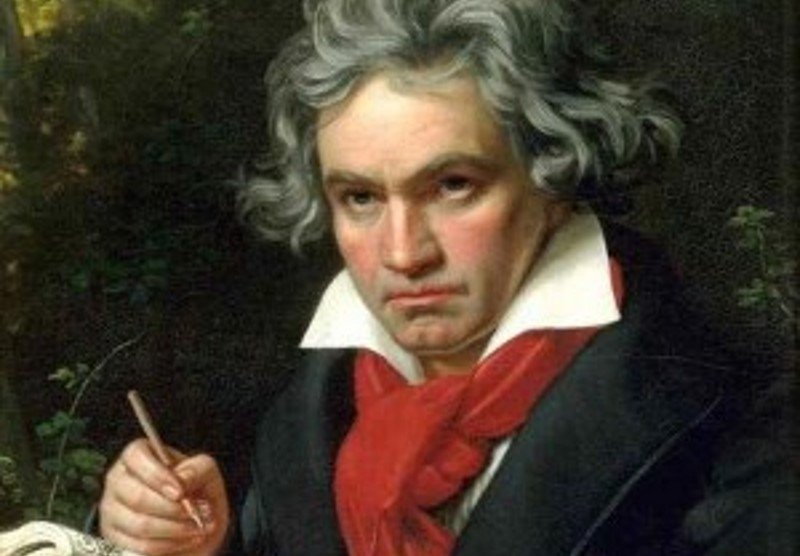
1. Ludwig van Beethoven: Symphony No. 5
The four-note opening of Beethoven’s Fifth Symphony, “da-da-da-DUM”, is probably the most famous motif in all of classical music. It is hard to explain why such a simple idea became so iconic, but the combination of drama and simplicity makes it instantly recognizable. Beethoven’s secretary later claimed the composer described it as “fate knocking at the door”. During the Second World War, the rhythm was used by the BBC because it matches the letter V in Morse code, for “victory”. A disco version, A Fifth of Beethoven, even appeared on the soundtrack of Saturday Night Fever.