


Movie monsters are often reduced to being the “bad guy,” but look closer and you’ll find they are frequently victims of circumstance, fear, or biology. From ancient deities to failed experiments, these creatures didn’t choose to be nightmares—they were made into them by a world that didn’t understand them.
In this ranking, we explore the ten most misunderstood movie monsters that deserved a little more empathy and a lot less pitchfork.
10. The Creature (The Creature from the Black Lagoon, 1954)
The Gill-man was minding his own business in a secluded Amazonian lagoon until a team of scientists showed up, drugged him, and tried to cage him. He isn’t an invader; he is the last of his kind defending his home.
His fascination with Kay (Julie Adams) is often framed as predatory, but it’s more of a tragic curiosity for a creature that has been alone for millennia. He didn’t want to conquer the world; he just wanted his lagoon back.
9. King Kong (King Kong, 1933)
As the famous closing line says, “It was beauty killed the beast.” Kong was a king on Skull Island, a god to his people. He was kidnapped, chained, and put on display in a cold, noisy city for profit.
His rampage through New York wasn’t an act of malice, but of pure terror and a desperate attempt to protect Ann Darrow. Kong is a classic symbol of the destruction that occurs when humanity tries to exploit the natural world for entertainment.
8. The Monster (Frankenstein, 1931)
Boris Karloff’s portrayal of the Monster is the ultimate study in misunderstanding. He was brought into the world with the mind of a child and the body of a titan, only to be immediately rejected by his creator.
The famous scene with the little girl by the lake isn’t an act of murder, but a tragic mistake by someone who didn’t understand the permanence of death. The Monster isn’t evil; he is a lonely, confused “newborn” who was met with torches instead of a father’s guidance.
7. Godzilla (Godzilla, 1954)
In his original 1954 debut, Godzilla wasn’t a hero or a fun action star. He was a walking metaphor for the atomic bomb. Woken and mutated by nuclear testing, he is a creature in constant physical pain, radiating heat and destruction wherever he goes.
He is less of a villain and more of a “natural disaster” caused by human arrogance. Godzilla represents nature’s revenge against a humanity that has gone too far with technology.
6. The Pale Man (Pan’s Labyrinth, 2006)
While undeniably one of the most terrifying designs in cinema, the Pale Man is a creature of strict rules. He sits motionless in front of a feast, waiting. He only attacks when Ofelia breaks the one rule she was given: do not eat the fruit.
He represents the institutionalized greed and gluttony that Ofelia sees in the fascist world above her. He isn’t a hunter; he is a trap that triggers only when someone gives in to their own temptation.
5. Edward Scissorhands (Edward Scissorhands, 1990)
The neighborhood initially saw Edward as a novelty, then as a monster. With blades for fingers, he is a creator who cannot touch the things he loves without destroying them.
Edward is the “gentle monster” personified. His only crime was being unfinished and thrust into a suburban society that values conformity above all else. He fled back to his castle not because he hated people, but because people couldn’t handle his differences.
4. The Xenomorph (Alien, 1979)
As Ash famously says, “I admire its purity.” The Xenomorph isn’t “evil” in a moral sense; it is a perfect biological organism. It doesn’t have an agenda, it doesn’t have a religion, and it doesn’t have a conscience.
It is a survivor. It kills because its biology dictates it must reproduce and protect its hive. We view it as a monster because we are at the bottom of its food chain, but to the Xenomorph, we are simply host bodies for its next generation.
3. Brundlefly (The Fly, 1986)
Seth Brundle (Jeff Goldblum) is a tragic figure whose “monstrosity” is a slow, agonizing disease. After a teleportation accident fuses his DNA with a housefly, he loses his humanity piece by piece.
He isn’t a villain; he is a man dying of a terminal, grotesque condition. His desperate plea at the end of the film to be “put out of his misery” is one of the most heartbreaking moments in horror history. He didn’t want to hurt anyone; he just wanted to be a scientist.
2. The Babadook (The Babadook, 2014)
“If it’s in a word or it’s in a look, you can’t get rid of the Babadook.” The monster in this film is a literal manifestation of grief and depression. It can’t be killed because grief can’t be killed; it can only be managed.
The ending, where the mother feeds the creature in the basement, is the ultimate metaphor for living with mental illness. The Babadook isn’t trying to destroy the family; it is a part of them that they have to learn to acknowledge and keep in check.
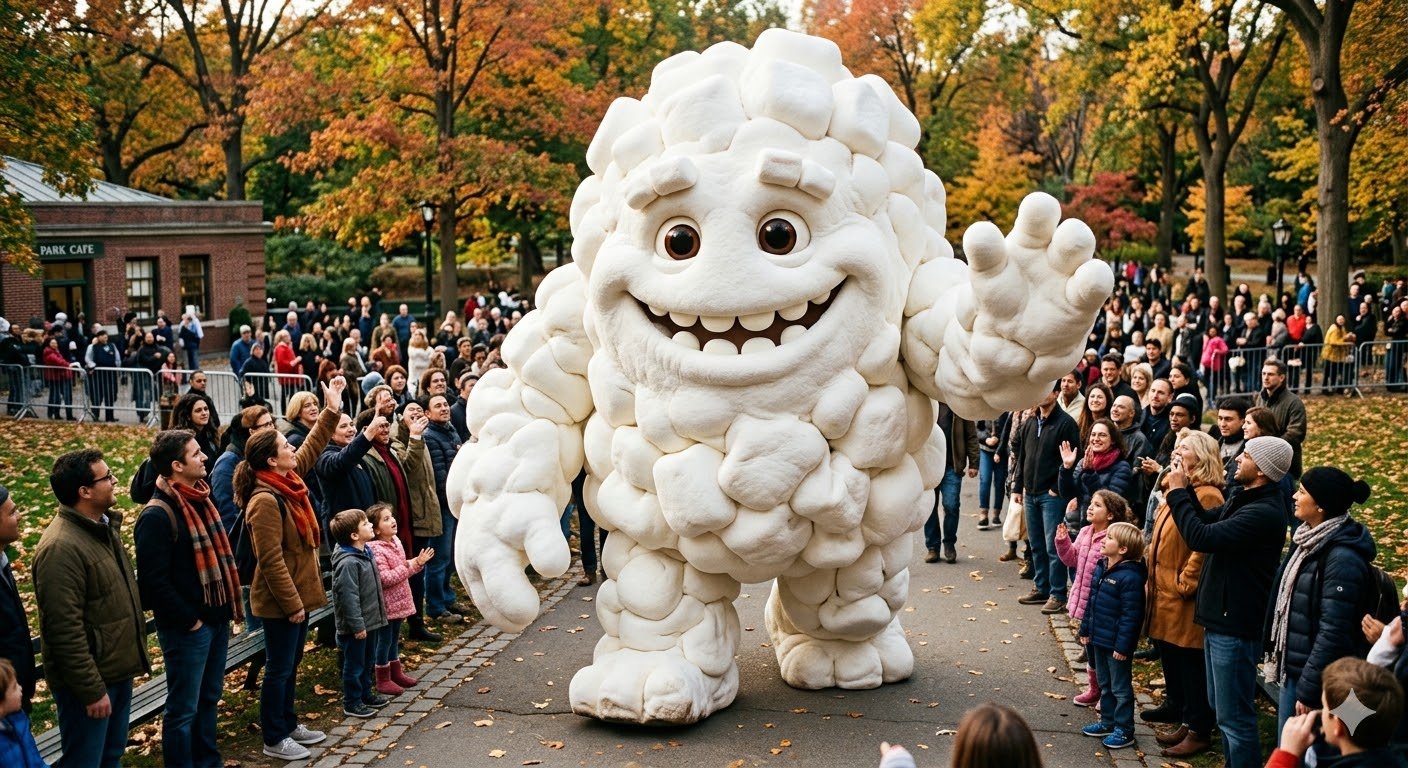
1. The Stay Puft Marshmallow Man (Ghostbusters, 1984)
Think about it: the “Destructor” only took this form because Ray Stantz tried to think of the most harmless thing possible. It is a giant, smiling corporate mascot that was forced to be the vessel for an ancient Sumerian god.
The Stay Puft Marshmallow Man is the ultimate misunderstood monster because its very existence is a cosmic joke. It didn’t ask to be a 100-foot tall Harbinger of Doom; it just wanted to be a delicious campfire snack.
