


Sports venues range from intimate arenas to colossal structures that push the boundaries of engineering. In this ranking, we look at the largest stadiums on Earth, ordered by their official permanent seating capacity as of 2026.
10. Bryant-Denny Stadium (USA) — 100,077
Located in Tuscaloosa, Alabama, Bryant-Denny Stadium is the home of the University of Alabama’s football team. Since opening in 1929 with just 12,000 seats, it has undergone numerous expansions to reach its current staggering capacity.
The stadium is named after George H. Denny, a former university president, and Paul “Bear” Bryant, a legendary coach. In 2024, the playing surface was officially named Saban Field to honor coach Nick Saban. It is a fortress of American college football where the “Roll Tide” chant echoes through a sea of crimson.
9. Darrell K Royal-Texas Memorial Stadium (USA) — 100,119
The home of the Texas Longhorns in Austin, Texas, this stadium is a monument to the scale of sport in the Lone Star State. It was dedicated in 1924 to honor Texans who served in World War I.
With its massive south end zone expansion completed in recent years, the venue now comfortably seats over 100,000 fans. The stadium atmosphere is defined by “Bevo,” the live longhorn mascot, and the massive “Godzillatron” video board, which was one of the largest in the world upon its installation.
8. Neyland Stadium (USA) — 101,915
Rising along the banks of the Tennessee River in Knoxville, Neyland Stadium serves as the home for the University of Tennessee Volunteers. It is famous for its iconic orange-and-white checkerboard end zones.
The stadium’s capacity has fluctuated over the years due to renovations focused on luxury seating and fan experience, but it remains one of the most intimidating environments for visiting teams. The “Vol Naval,” a fleet of boats that docks outside the stadium on game days, provides a unique tradition found nowhere else in sports.
7. Tiger Stadium (USA) — 102,321
Known famously as “Death Valley,” LSU’s Tiger Stadium in Baton Rouge is legendary for its noise levels. It is widely considered one of the most difficult places in the world for an opponent to play, especially during night games.
The stadium’s structure is unique; it was originally built with dormitories tucked underneath the stands to justify its construction during the Great Depression. Today, it is a massive bowl of purple and gold where the roar of the crowd has literally been known to register on local seismographs.
6. Kyle Field (USA) — 102,733
Located on the campus of Texas A&M University in College Station, Kyle Field is the home of the “12th Man.” This refers to the tradition of the entire student body standing throughout the game to show their readiness to play if needed.
A massive $485 million redevelopment completed in 2015 turned it into one of the most modern and imposing structures in the country. The stadium is designed to trap noise, making the synchronized swaying and chanting of the Aggie fans a formidable sight for any visitor.
5. Ohio Stadium (USA) — 102,780
Affectionately known as “The Horseshoe” due to its distinct shape, Ohio Stadium is the heart of Columbus, Ohio. Since its opening in 1922, it has been the hallowed ground for Ohio State Buckeyes football.
The stadium is famous for the “Dotting of the I” by the marching band during their pre-game performance. Despite its age, a series of renovations have kept the concrete giant at the top of the capacity charts while preserving its historic rotunda and classical architecture.
4. Beaver Stadium (USA) — 106,572
Penn State’s Beaver Stadium is a towering structure in State College, Pennsylvania. It is perhaps best known for its “White Out” games, where every single fan in the 106,000-plus crowd wears white, creating a blinding, deafening wall of sound.
The stadium is unusual in that it was literally moved; in 1960, the previous stadium was dismantled and moved a mile across campus to its current location, where it has since been expanded multiple times to become the second-largest stadium in the Western Hemisphere.
3. Michigan Stadium (USA) — 107,601
Known simply as “The Big House,” this is the largest stadium in the United States. Located in Ann Arbor, Michigan, it has hosted crowds of over 100,000 for nearly every home game since 1975.
The stadium’s design is deceptively simple: it is a massive, sunken bowl with no upper decks on the sidelines, yet its sheer circumference allows it to hold a small city’s worth of people. It holds the record for the largest attendance at a college football game and even an American record for a soccer match.
2. Narendra Modi Stadium (India) — 132,000
The Narendra Modi Stadium in Ahmedabad is the largest cricket stadium in the world and the largest sports venue in the world by permanent seating capacity. Reconstructed and reopened in 2020, it is a marvel of modern sports architecture.
With a capacity of 132,000, it is the crown jewel of Indian cricket. The venue features 360-degree LED lights that eliminate shadows on the pitch, and it serves as the home ground for the Gujarat Titans. It is the definitive stage for the sport’s most massive events, including World Cup finals.
1. Rungrado 1st of May Stadium (North Korea) — 150,000
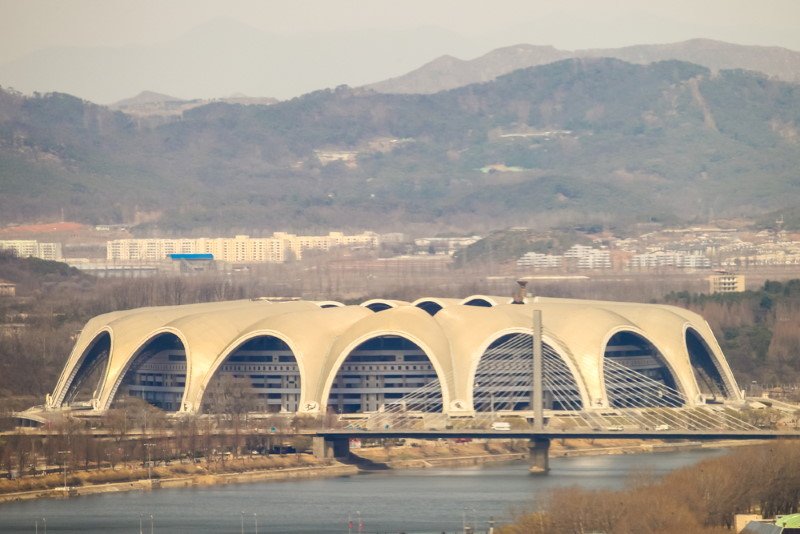
The Rungrado 1st of May Stadium in Pyongyang remains the largest stadium in the world by official capacity. Its roof features 16 arches arranged in a ring, resembling a blooming magnolia flower.
While it hosts soccer and athletics, it is most famous for the Arirang Mass Games, where tens of thousands of participants perform synchronized gymnastics and dance. While some independent analysts estimate its true seating capacity might be closer to 114,000, its official claim of 150,000 remains unchallenged on the world stage.
