It’s almost unbelievable, but Netflix has been a permanent part of our daily lives for more than twelve years. Since its start in the Netherlands at the end of 2013, the streaming service has grown into a giant that is present in almost every household.
However, in 2026, the landscape will have completely changed due to cutthroat competition and the rise of AI-personalized content. What do we actually know about this internet giant that dominates our free time? For more exciting lists, explore our guide to groundbreaking streaming television.
1. Local pride: Dutch productions
While Netflix used to mainly spit out American hits, nowadays there is much more attention to local content. After the great success of series such as Undercover and the first real Dutch Original Ares, the range of Dutch and Belgian productions has grown considerably.
European regulations also require streaming services to spend at least 30% of their budget on European works. As a result, we will see more Dutch top actors and directors appear on the world stage in 2026 than ever before.
2. Staggering numbers
The 2026 statistics show how dominant the platform is. Netflix has hundreds of millions of subscribers worldwide and the company spends more than $20 billion annually on new content. In the Netherlands alone, the vast majority of the population watches the service every week.
3. The end of linear TV
The traditional way of watching TV (sitting in front of the TV at a fixed time) is almost completely extinct under the age of thirty. Netflix has forever changed the way we consume media.
Binging (watching a series for hours on end) has become the standard. While this makes for great entertainment, psychologists still warn about the impact on our social interactions and sleep patterns. The sofa has become the central point of life in many households.
4. Netflix Cheating: A Relationship Crisis
Want to watch a series together? Just be careful.
Research by Netflix shows that almost half of couples suffer from “Netflix Cheating”: secretly watching episodes ahead without your partner. In 2026, this phenomenon will be so great that there will even be ‘prevention settings’ in profiles to prevent you from accidentally looking further. Series such as Stranger Things and the latest true-crime documentaries are the biggest temptations for this digital cheating.
5. The Battle for 'Originals'
The supply of films and series that are not made by Netflix itself has decreased drastically in recent years. Competitors such as Disney+, HBO Max and SkyShowtime have withdrawn their own rights.
This forced Netflix to invest billions in its own productions, the so-called Netflix Originals. In 2026, the majority of the library will consist of our own content. Nowadays you often have to go to a specialized service for that one old classic.
6. Micro-categories and the algorithm
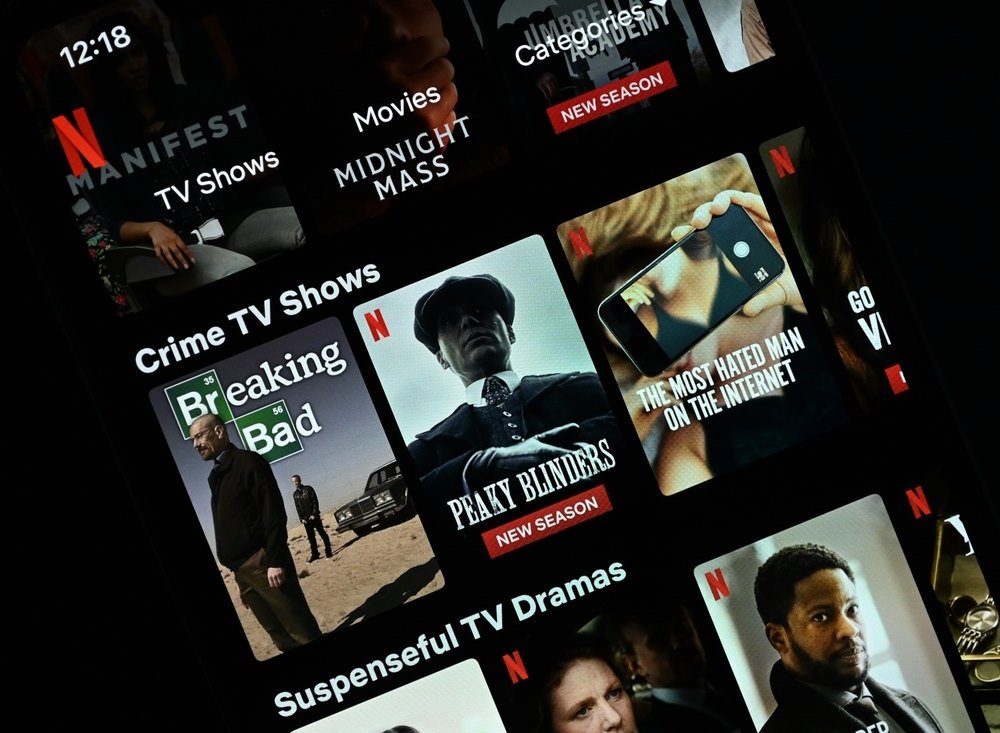
You’ve probably noticed that Netflix gives you suggestions like “Thrilling crime series with a strong female lead”. There are now more than 70,000 of these specific micro-categories. The platform uses this data to create a unique profile of you.
7. Netflix is watching piracy
How does Netflix determine which series to purchase or produce? They use a smart, but controversial algorithm that, among other things, looks at what is often illegally downloaded on torrent sites.
If a series is distributed illegally en masse in a certain region, Netflix knows there is demand for it and they buy the legal rights. In 2026, this system will be even more advanced: AI now even predicts hypes on social media before a series is even released.
8. The biggest blunder in history
In the year 2000, Blockbuster had the opportunity to buy Netflix for ‘only’ $50 million. Blockbuster’s CEO laughed off the offer; he thought online streaming was an unimportant niche market.
We now know how that ended: Blockbuster went bankrupt in 2010 and was left with only one symbolic store, while Netflix’s market value will reach hundreds of billions in 2026. A classic example of how a lack of vision can collapse an empire.
9. Older than Google
We see Netflix as a modern tech company, but its roots lie deeper in the past than you think. Netflix was founded in 1997, which means the company is older than Google!
In the early days it was a DVD lending service through the mail. It wasn’t until 2007 that the transition to online streaming began. In 2026, the circle is almost complete: physical media is for collectors, while Netflix experiments with cloud gaming and interactive formats.
10. A fine as a source of inspiration
The official story is that founder Reed Hastings was so frustrated about a $40 fine at the Blockbuster video store (for returning Apollo 13 late) that he decided to start Netflix. Although co-founder Marc Randolph later admitted that this was mainly a brilliant PR stunt, it captured the spirit of the times. People were done with fines and physical stores.
Every selection highlighted here represents an exceptional example of talent, dedication, or historical significance. Which of these standout entries do you consider the most impressive?