 Kathy Hutchins / Shutterstock.com
Behind every legendary hit there is a producer. Not the singer who gets the applause, but the figure behind the mixing desk who determines how a song sounds, feels and sticks. Some of them not only created careers, but invented entire genres. From the Wall of Sound to G-funk, from ambient to the perfect pop hit: these are the architects of popular music.
Which one of these deserves the top spot? Cast your votes below and let us know your personal ranking in the comments!
Cast your vote - the ranking shifts live based on the votes.
Quincy Jones – The man who could do it all
Few musicians have had as broad a career as Quincy Delight Jones Jr. He started out as a trumpet player and arranger for Lionel Hampton, wrote jazz songs for Count Basie, composed film scores for more than fifty films, produced Frank Sinatra's legendary recordings at the Sands, and eventually became the man behind Michael Jackson's three most successful albums: Off the Wall, Bad, and of course Thriller, the best-selling album of all time with 70 million copies sold. Jones' strength lay in his ability to fuse genres. He combined jazz, funk, soul and pop as if there had never been any boundaries between them. He won
George Martin – The Fifth Beatle
When George Martin heard a demo tape from an unknown Liverpool band in 1962, he didn't think much of them. Still, he took a chance. That decision would change pop music forever. Martin produced virtually every Beatles album and transformed their simple rock songs into complex musical constructions. He added string quartets to “Yesterday,” a full orchestra to “A Day in the Life,” and played a central role in the conceptual leap from Rubber Soul to Sgt. Pepper's Lonely Hearts Club Band. Martin was classically trained as an oboist and composer, and brought that knowledge to the pop studio. He was one of the first to understand that
Log in to post a comment.
Phil Spector – The Wall of Sound
Phil Spector was a genius. He was a monster too. Those two things are both true, and music history struggles with them. His “Wall of Sound” – a production method in which he had dozens of musicians play simultaneously to create a massive, echoing sound – defined pop music of the 1960s. “Be My Baby” by The Ronettes, “You've Lost That Lovin' Feelin'” by The Righteous Brothers: these weren't songs, these were sonic cathedrals. Spector was the first producer to make his name bigger than that of his artists. He controlled everything: the arrangements, the musicians, the mix. Even The Beatles hired him i
Log in to post a comment.
Dr. Dre – The Architect of the West Coast
Andre Romell Young started out as a member of the controversial rap group N.W.A., but his real legacy lies behind the buttons. With his debut album The Chronic from 1992, he introduced G-funk to the world: slow beats, thick synths, and samples from Parliament-Funkadelic, wrapped in lyrics about Compton's street life. The album sold three million copies and launched the career of an unknown rapper named Snoop Doggy Dogg. Dre's second album, 2001, proved he was no one-hit wonder. But perhaps his greatest talent was discovering others. He signed Eminem when no one believed in a white rapper, produced The
Log in to post a comment.
Max Martin – The Hit Factory
If you've listened to the radio in the last thirty years, you've heard Max Martin. The Swedish producer and songwriter has 28 number-one hits on the Billboard Hot 100, more than anyone except Paul McCartney and John Lennon. He wrote “…Baby One More Time” for Britney Spears, “I Want It That Way” for the Backstreet Boys, “Since U Been Gone” for Kelly Clarkson, “Shake It Off” for Taylor Swift, and “Blinding Lights” for The Weeknd. Martin's secret? An obsessive attention to melody and structure. He works according to a method he calls “melodic math”: every note must fall in the perfect place. His productions sound tired
Log in to post a comment.
Rick Rubin – The Minimalist Master
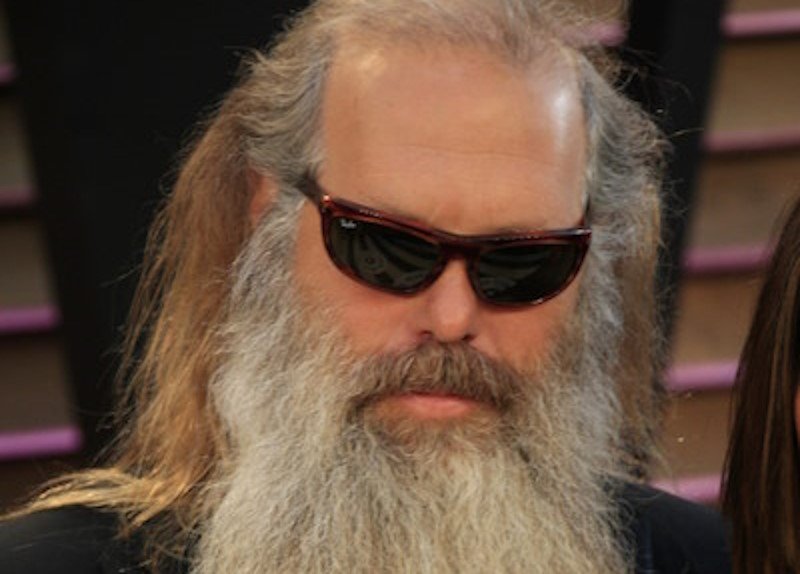
Rick Rubin founded his record label Def Jam in 1984 from his university dorm room. Within a few years he produced the breakthrough acts of LL Cool J, the Beastie Boys and Run-DMC. But unlike most hip-hop producers of the era, Rubin didn't stop there. He produced Slayer and Danzig, Johnny Cash's late masterpieces, the Red Hot Chili Peppers' Blood Sugar Sex Magik, and Kanye West's Yeezus. Rubin's philosophy is radically simple: eliminate everything that is not essential. His productions are often bare, focused on the voice and feeling rather than production tricks. That approach worked for Metallica's rough rock
Log in to post a comment.
Brian Eno – The inventor of ambient
Brian Eno calls himself a “non-musician”, but that is falsely modest. As a member of Roxy Music in the early 1970s, he experimented with synthesizers and sound effects. After leaving the band, he developed ambient music: music designed to influence an environment instead of being actively listened to. His 1978 album Music for Airports gave the genre its name. But Eno's influence as a producer is greater. He worked with David Bowie on the legendary “Berlin Trilogy” (Low, “Heroes”, Lodger), co-wrote “Heroes” with Bowie, and produced Talking Heads' seminal albums, including Remain in Light.
Log in to post a comment.
Berry Gordy – The man behind Motown
Berry Gordy didn't produce most of Motown's hits, but he created the system that made them possible. In 1959, he founded Motown Records in Detroit with an $800 loan. Within ten years, his label had scored more than a hundred top ten hits with artists such as Stevie Wonder, Marvin Gaye, Diana Ross & The Supremes, The Temptations and The Jackson 5. Gordy ran Motown like a hit factory, complete with quality control. Songs had to be approved by a panel before being released. The house band, the Funk Brothers, played on virtually every recording. The result was a recognizable “Motown sound”: tight, soulful, d
Log in to post a comment.
Mutt Lange – The perfectionist
Robert John “Mutt” Lange is the man you call if you want to make an album that sells millions of copies. He produced AC/DC's Highway to Hell and Back in Black, Def Leppard's Hysteria, and Shania Twain's Come On Over, one of the best-selling albums of all time. Lange is known for his obsessive work ethic: recording sessions can last months as he perfects every note, every harmony, every drum beat. His productions are glossy and bombastic, designed to blast from car radios and stadium speakers. Critics sometimes call his work sterile, but the sales figures speak for themselves. Hysteria took three years to make and
Log in to post a comment.
Nile Rodgers – The groove master
Nile Rodgers is the guitarist and producer who survived disco. As founder of Chic, he scored hits in the late 1970s such as “Le Freak” and “Good Times”, the bassline of which became the basis for “Rapper's Delight”, one of the first commercial hip-hop hits ever. When disco died, Rodgers moved into production work and proved his skills were timeless. In the 1980s he produced David Bowie's Let's Dance, Madonna's Like a Virgin, and Duran Duran's “The Reflex”. Decades later he was back with Daft Punk's “Get Lucky” and Random Access Memories, the album that won four Grammys. Rodgers' strength lies in his guitar playing – str
Log in to post a comment.
Missing an item in this list?
Log in or create a free account to add an item yourself.
Log in / create account
Log in to post a comment.