


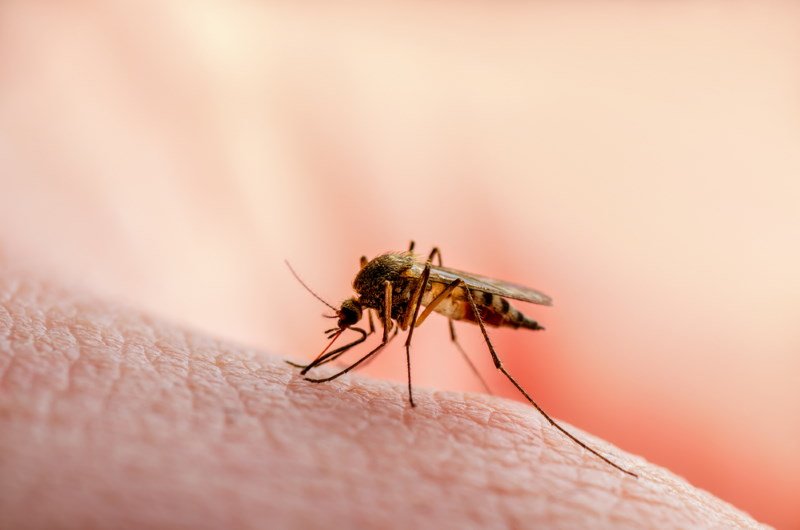
The deadliest animal in the world is, by a wide margin, the mosquito. This small insect is responsible for an estimated 700,000 to 1 million deaths per year. They do not kill through physical injury, but by spreading diseases such as malaria, dengue, and yellow fever.
In this list, we look at the number of human victims per year. It is a sobering statistic: the most dangerous animals are usually not predators looking to eat us, but animals defending their territory or spreading parasites.
Here are the 10 animals you should statistically be most afraid of.
1. The Mosquito (700,000+ deaths)
The undisputed number one. Mosquitoes are the transport vehicles (vectors) for deadly viruses and parasites. In particular, the malaria mosquito in Africa claims hundreds of thousands of lives annually, mainly among young children. The World Health Organization warns that more than half of the world’s population is at risk of diseases transmitted by mosquitoes.
2. Snakes (100,000+ deaths)
Although the Australian Inland Taipan has the strongest venom, the Saw-scaled Viper claims the most victims. This snake lives in densely populated areas in India, Africa, and the Middle East and is extremely aggressive. Because medical help in these regions is often far away, a bite is frequently fatal.
3. Dogs (25,000 – 30,000 deaths)
This comes as a shock to many. The dog ranks so high on the list because of rabies. In Western countries, this is well under control, but in parts of Asia and Africa, stray dogs cause thousands of infections per year. According to statistics, 99% of human rabies cases are caused by dog bites.
4. Freshwater Snails (10,000+ deaths)
It seems innocent: a small snail in a lake. However, these snails carry a parasitic worm that causes the disease Schistosomiasis (bilharzia). The worms burrow through your skin when you swim in contaminated water and lay eggs in your body, leading to organ failure. It is the deadliest parasitic disease in the tropics after malaria.
5. Assassin Bugs (10,000+ deaths)
In South America, they are called Kissing Bugs because they often bite you in the face while you sleep. They transmit the parasite that causes Chagas Disease. This disease is treacherous because symptoms sometimes only appear years after the bite, when the heart suddenly becomes seriously damaged.
6. Tsetse Fly (10,000 deaths)
This fly is found in sub-Saharan Africa and spreads sleeping sickness. The bite is painful, but the real danger is the parasite that attacks the nervous system. Victims suffer from sleep disturbances (hence the name), confusion, and ultimately death if not treated in time.
7. Scorpions (3,250 deaths)
Of the nearly 2,000 species of scorpions, only about 25 are deadly to humans. The most dangerous is the Deathstalker. They live in North Africa and the Middle East. Because they like to hide in shoes and clothing, they often come into conflict with people. The venom is life-threatening, especially for children and the elderly.
8. Roundworms (2,500+ deaths)
The Ascaris worm is a parasite that lives in human intestines. You ingest them through contaminated food or water (due to poor hygiene). Although they often cause no symptoms, large numbers can cause intestinal blockages or nutritional deficiencies. Globally, an estimated one billion people are carriers of this parasite.
9. Crocodiles (1,000 deaths)
The Nile crocodile and the Saltwater crocodile are the only animals on this list that actively view humans as prey. Where a shark often bites out of curiosity and lets go, a crocodile does not let go. They drag their prey into the water to drown it. They strike unexpectedly at the water’s edge in Africa and Southeast Asia.
10. Hippos (500 deaths)
The deadliest large land mammal is not the lion, but the hippo. They look bulky, but can run 30 km/h on land. They are extremely territorial and aggressive. National Geographic reports that most accidents happen when people in small boats get between the hippo and deeper water, or between a mother and her calf.
