


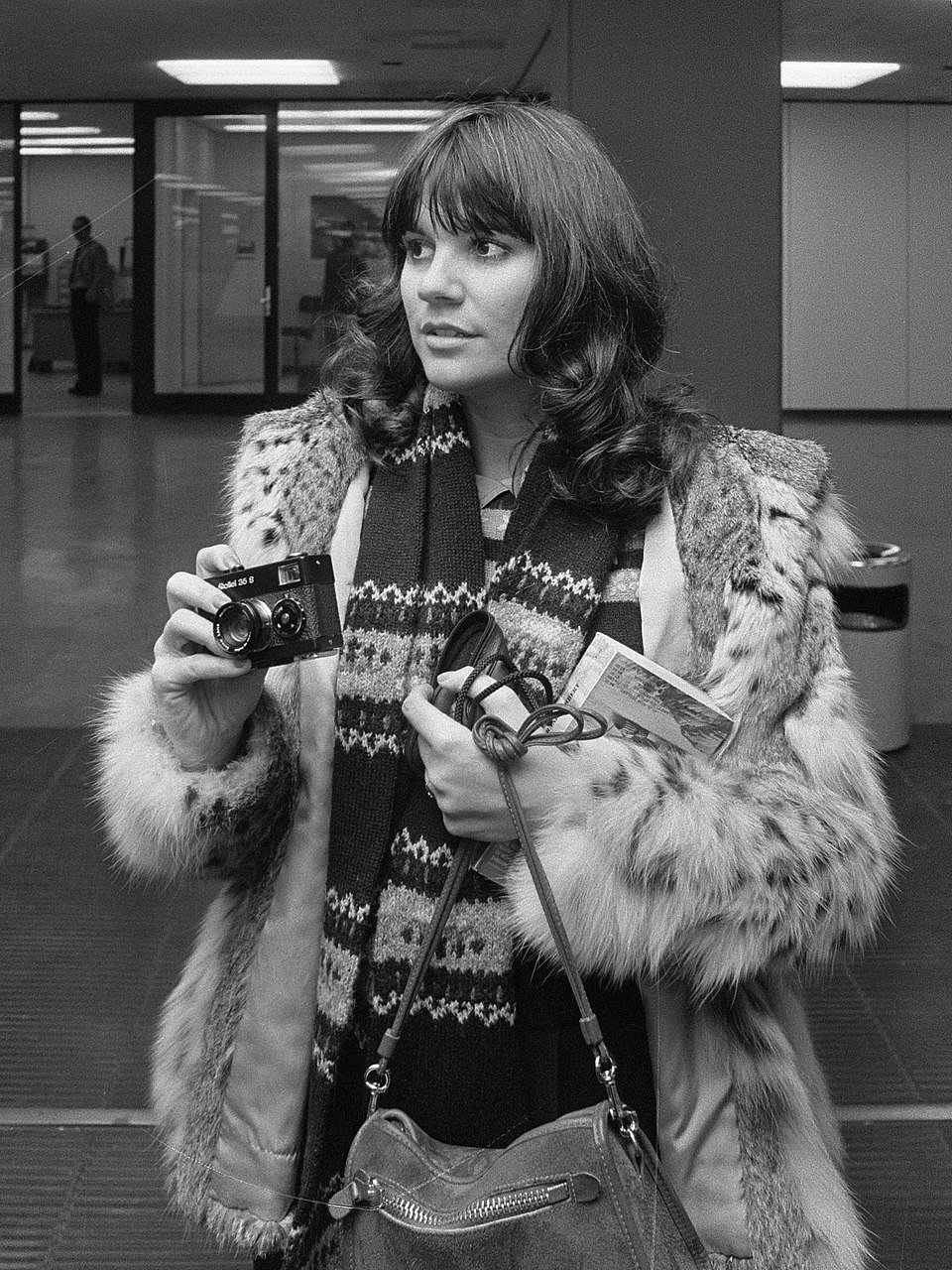
There are singers who convince you with rawness, and singers who do it with technique. Ronstadt did something rare: she used technique to make rawness believable. Her voice could be velvet and cutting at the same time.
And perhaps even more importantly: she didn’t just make covers of other people’s songs, but re-conquests. It was as if she lifted a song out of its own history for a moment, dusted it off, and then put it back as a classic that had always been hers.
10. Different Drum (with The Stone Poneys)
This is Ronstadt before the arenas, before the Grammys, before the image of the great voice in the spotlight. You hear a young singer who already knows exactly what she does not want to be: someone else’s supporting role.
“Different Drum” has the lightheartedness of the sixties, but also that mature core of someone choosing her own route, even if it means softly closing a door. It is not a dramatic farewell; it is a smile with a backbone.
9. When Will I Be Loved
Country pop can sometimes feel like wallpaper: pleasant, but unremarkable. Ronstadt turns it into an engine. This track drives with the windows down through an afternoon sun that is just a bit too bright.
Everything fits: the pace, the harmony, the way she doesn’t sing the question in the title as a lament, but as a slightly irritated observation. It is the kind of track you turn up loud without even noticing you are singing along.
8. It’s So Easy
The title lies. Nothing about this song is “easy” if you want to do it right: you need just enough bite, just enough swing, and a voice that can grin without melting.
Ronstadt balances that as if it were child’s play. She doesn’t sound in love here; she sounds dangerous: as if she knows she has already won the situation, and you just haven’t realized it yet.
7. Tracks of My Tears
Some songs have been sung so often that you almost hear them automatically. Ronstadt breaks that automatism open. Her version feels less like retro soul and more like a late confession: you are still sitting upright, but something inside is snapping.
She doesn’t exaggerate. She doesn’t let the melody cry; she lets it tremble. And that is where the magic lies: sadness that doesn’t explode but lingers.
6. Ooh Baby Baby
This is Ronstadt as a close-up, without makeup. Not the grand rock singer, but the storyteller who lets you get too close. The softness in her voice isn’t vulnerability as a stylistic device; it is vulnerability as truth.
She isn’t singing “look how beautiful I can do this,” she is singing “I’m still here, but it hurts.” You can almost hear the silence between the lines.
5. Hurt So Bad
Here she is at her most cinematic. The song feels like a scene in slow motion: someone walks away, the door closes, and suddenly the room becomes too big.
Ronstadt doesn’t present it as theatrical grief, but as a kind of controlled storm. She keeps the emotion under tension, and that is exactly why the release is so satisfying. This is heartbreak wearing a leather jacket.
1. You’re No Good
There is a difference between dismissing someone and unmasking them. Ronstadt does the latter. She sings this as if she had already realized what was going on weeks ago, and is now simply presenting the bill.
The groove is tight, the timing is vicious, and she sounds remarkably upbeat for someone who is definitively throwing someone else out of her life. That contrast makes it iconic: it is not bitter, it is liberating.
3. Long Long Time
This is a song you don’t just “listen” to, but one you undergo. Ronstadt sings it with a kind of clarity that does not spare you: no melodramatic turns, no grand plea, just that quiet realization that some loves last longer in your head than in reality.
The chorus feels like a door you have already tried to close a thousand times. Every time, it blows open again. This is one of the most ruthless ballads of the era.
2. Blue Bayou
“Blue Bayou” is nostalgia without the sugar coating. Ronstadt doesn’t turn it into a postcard; it sounds more like someone in the middle of a busy city catching a scent of home and being almost startled by it.
Her voice floats above the music here like a memory you cannot hold onto. The song is so good because it doesn’t try to prove it is beautiful. It simply is beautiful, and that is enough.
1. Somewhere Out There (with James Ingram)
You could dismiss this as a soundtrack classic, but that would be an understatement. This song is pure melodic architecture, and Ronstadt is the reason it doesn’t drown in sugar.
She sings with a kind of quiet greatness: not bombastic, but immense. As if she lets you believe for a moment that distance can be bridged, that hope doesn’t have to be naive. It sticks because it captures the strange secret of her voice: she can comfort you and break you in the same breath.
