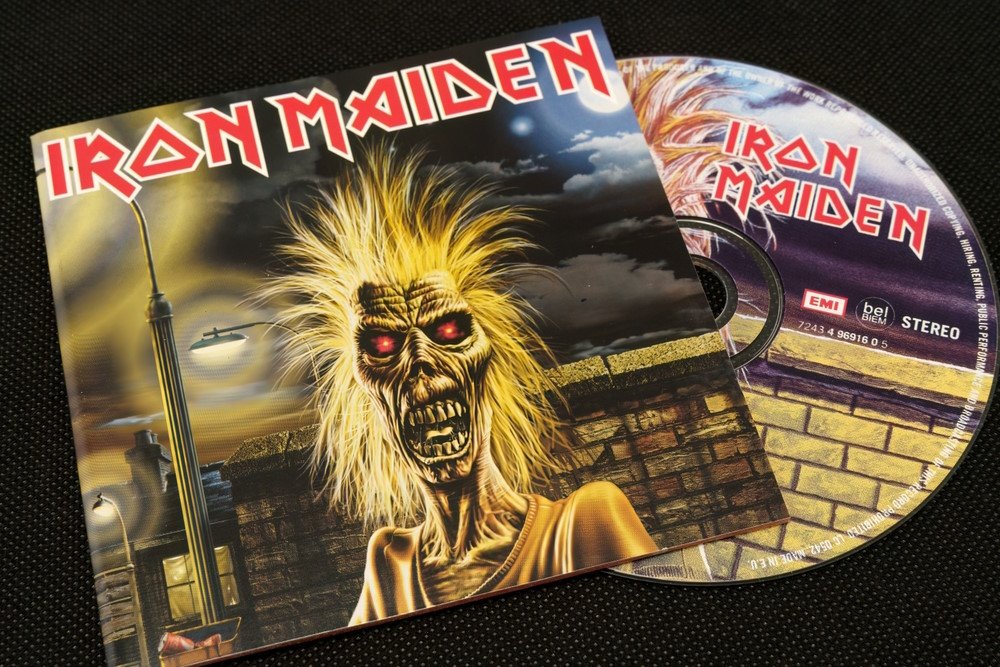
Formed in Leyton, East London, in 1975 by bassist, primary songwriter, and uncompromising bandleader Steve Harris, Iron Maiden stand as the undisputed architects and champions of the New Wave of British Heavy Metal (NWOBHM) and one of the most revered rock institutions in history.
Rejecting mainstream commercial radio trends, Iron Maiden conquered the globe on their own terms: fueled by Harris’s galloping finger-picked basslines, the operatic, air-raid siren vocals of Bruce Dickinson, the dazzling three-guitar harmonies of Dave Murray, Adrian Smith, and Janick Gers, and the thunderous, swing-infused drumming of Nicko McBrain.
10. Hallowed Be Thy Name
The major, seven-minute finale of their landmark 1982 masterpiece The Number of the Beast, “Hallowed Be Thy Name” is universally regarded by musicians and critics as one of the greatest heavy metal compositions ever recorded. Written by Steve Harris, the song captures the terrifying final hours of a condemned prisoner awaiting the gallows at 8 o’clock in the morning.
Opening with the somber tolls of a church death knell and a weeping, melancholic clean guitar arpeggio, Bruce Dickinson delivers a dramatic vocal soliloquy exploring existential terror and the search for spiritual meaning.
9. Phantom of the Opera
Featured on their raw, ferocious 1980 eponymous debut album, “Phantom of the Opera” is the seven-minute progressive metal epic that proved Steve Harris’s songwriting ambitions reached far beyond conventional punk-rock aggression. Based on Gaston Leroux’s gothic 1910 novel, the song features original frontman Paul Di’Anno delivering a gritty, menacing vocal performance.
The blistering middle jam section laid down the foundational DNA for European power metal and progressive thrash.
8. 2 Minutes to Midnight
The hard-hitting lead single from 1984’s Powerslave, “2 Minutes to Midnight” is a scathing, razor-sharp protest against the Cold War arms race, nuclear proliferation, and the corporate profiteering of warfare. Written by guitarist Adrian Smith and Bruce Dickinson, the title directly references the Doomsday Clock maintained by the Bulletin of the Atomic Scientists, which reached two minutes to midnight in September 1953.
Built upon Smith’s legendary, swinging hard-rock riff and McBrain’s driving snare pocket, the track bristles with concussive energy.
7. Aces High
Opening Powerslave with the concussive roar of an RAF Spitfire fighter aircraft diving into combat, “Aces High” is four minutes and twenty-nine seconds of pure, adrenaline-soaked aerial combat. Written by Steve Harris, the song depicts the heroic struggle of British fighter pilots defending England against the German Luftwaffe during the 1940 Battle of Britain.
Driven by a blinding 210-BPM tempo, galloping basslines, and soaring twin-guitar leads, Dickinson delivers a breathless, high-flying vocal performance that mimics the panic, g-forces, and survival instincts of aerial dogfights: “Run, live to fly, fly to live, do or die / Won’t you run, live to fly, fly to live, Aces high!”
6. The Number of the Beast
Written by Steve Harris following a nightmare after watching Damien: Omen II and inspired by Robert Burns’s 1791 poem Tam o’ Shanter, the title track of 1982’s The Number of the Beast is one of the most famous, controversial, and recognizable heavy metal anthems in history. Opening with British actor Barry Clayton reciting the biblical passage from the Book of Revelation (13:18), the song detonates into an ominous, syncopated guitar motif.
The recording is immortalized by Bruce Dickinson’s bone-chilling, throat-shredding vocal scream at the conclusion of the intro, engineered by producer Martin Birch forcing Dickinson to sing the passage for four consecutive hours until he collapsed in absolute, unhinged fury.
5. Can I Play with Madness
The buoyant lead single from their 1988 progressive concept masterpiece Seventh Son of a Seventh Son, “Can I Play with Madness” is an irresistible fusion of heavy metal crunch, multilayered vocal harmonies, and bright synthesizer textures. Co-written by Adrian Smith, Bruce Dickinson, and Steve Harris, the song centers on a young man consulting a crystal-gazing prophet to divine his future, only to be driven mad by what he learns.
The song features an infectious, swinging drum beat from Nicko McBrain and a catchy, anthemic pop-metal chorus that proved Iron Maiden could craft radio-friendly hooks without sacrificing their technical pedigree.
4. The Trooper
Inspired by Lord Tennyson’s 1854 poem The Charge of the Light Brigade about the disastrous Battle of Balaclava during the Crimean War, “The Trooper” from 1983’s Piece of Mind features the most iconic, instantly recognizable twin-guitar harmony riff in heavy metal history. Written by Steve Harris, the song charges forward on a galloping bass and drum rhythm that simulates cavalry horses thundering across open plains.
Dickinson delivers a blistering narrative from the perspective of an unnamed cavalryman cut down by Russian artillery fire: “You’ll take my life but I’ll take yours too / You’ll fire your musket but I’ll run you through!”
3. Wasted Years
Serving as the lead single for their futuristic 1986 album Somewhere in Time, “Wasted Years” was written solely by guitarist Adrian Smith while messing around with a newly acquired Roland guitar synthesizer. The song opens with an unforgettable, sparkling 16th-note guitar arpeggio played entirely on the high E string that immediately hooks the listener.
Lyrically, the song was born from the exhausting, relentless grind of their 331-day “World Slavery Tour,” offering a deeply philosophical reflection on tour homesickness, aging, and the futility of living in the past: “So understand / Don’t waste your time always searching for those wasted years / Face up, make your stand / Realize you’re living in the golden years!”
2. Run to the Hills
Released in February 1982 as the lead single for The Number of the Beast, “Run to the Hills” was the major record that officially introduced Bruce Dickinson as Iron Maiden’s new lead singer, rewriting the band’s commercial trajectory overnight. Written by Steve Harris, the track addresses the brutal 19th-century colonization of the American West and the displacement of Indigenous tribes.
The song is celebrated for its balanced, dramatic duality: the first verse and chorus are sung from the perspective of the Native American tribes defending their homeland (“White man came across the sea / He brought us pain and misery”), while the second half shifts to the perspective of the ruthless US cavalry soldiers (“Raping the women and wasting the men”).
1. Fear of the Dark
Standing as the undisputed, immortal summit of Iron Maiden’s live mythology, the title track of their 1992 album Fear of the Dark is one of the most powerful shared concert experiences in human music history. Written by Steve Harris about his personal lifelong paranoia of darkness and feeling watched when walking alone at night, the track unfolds with striking theatrical grandeur.
The song begins in eerie, hushed suspense: Dave Murray’s delicate clean guitar melody floats through the darkness as Dickinson whispers chillingly about nocturnal shadows shifting.
Which choice on this list is your personal favorite? Share your thoughts and rankings in the comments below.