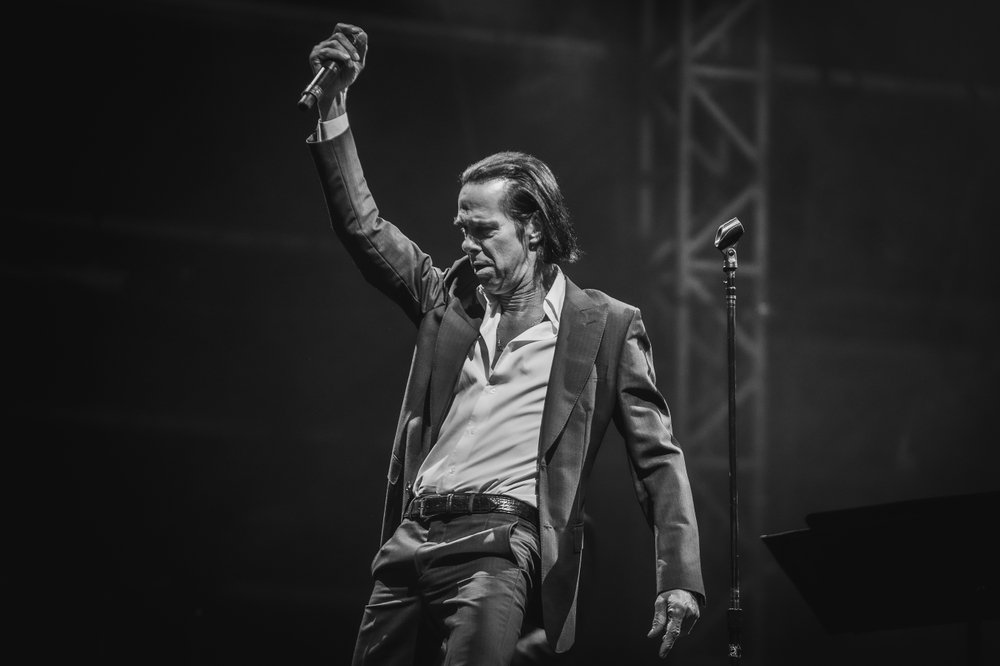
Nick Cave is modern rock music’s supreme gothic prince, literary shaman, and wandering theological poet.
Emerging from the post-punk wreckage of Melbourne’s The Birthday Party and relocating to West Berlin in the early 1980s, Cave formed The Bad Seeds, an ever-evolving brotherhood of avant-garde virtuosos anchored by multi-instrumentalist Mick Harvey, Einstürzende Neubauten’s Blixa Bargeld, and violinist-visionary Warren Ellis.
10. Tupelo
The apocalyptic opening track of their 1985 sophomore album The Firstborn Is Dead, “Tupelo” was inspired by blues legend John Lee Hooker’s song about the devastating 1936 Tupelo flood. Cave wove the natural catastrophe with the mythological birth of Elvis Presley and his stillborn twin brother Jesse Garon in Tupelo, Mississippi, depicting it as the arrival of an apocalyptic messiah.
Driven by Barry Adamson’s menacing, subterranean bassline and Mick Harvey’s crashing, thunderclap drumming, Cave delivers a ferocious Old Testament sermon: “Looka yonder! A monster comes!”
9. We No Who U R
The serene, sinister lead single from their acclaimed 2013 album Push the Sky Away, “We No Who U R” marked a radical shift toward spacious, ambient minimalism following the departure of Mick Harvey. Built around Warren Ellis’s delicate keyboard loops, gentle electronic clicks, and warm flute textures, the song glides like nocturnal fog.
Contrasting pastoral, tranquil beauty with quiet surveillance dread, “We know who you are, and we know where you live / And we know there’s no need to forgive”, Cave murmurs with hypnotic menace.
8. Henry Lee (with PJ Harvey)
A chilling, magnetic murder ballad from 1996’s Murder Ballads, “Henry Lee” adapts a traditional Scottish folk ballad (“Young Hunting”) about a scorned woman who murders her unfaithful lover and dumps his body down a 100-foot well. The song features an electrifying vocal duet between Nick Cave and British alt-rock icon PJ Harvey.
The chemistry between the two vocalists was intoxicating, sparking a high-profile real-life romance. The one-take music video directed by Rocky Schenck, captured against a stark white backdrop as Cave and Harvey slowly embrace and dance, is strikingly intimate.
7. O Children
Serving as the major closing hymn of their 2004 double album Abattoir Blues / The Lyre of Orpheus, “O Children” is a sweeping, eight-minute gospel lament apologizing to future generations for the broken, war-torn world left behind by their elders: “We have the answer to all your fears / It’s packed between our ears / The answer is, no.” Backed by the glorious London Community Gospel Choir and a rolling, majestic piano progression, Cave’s delivery moves from mournful sorrow into extraordinary spiritual ecstasy.
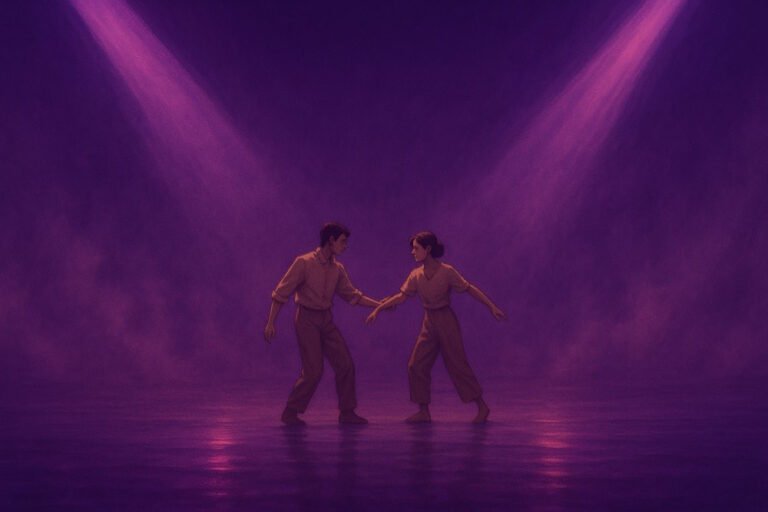
The song achieved worldwide immortality in 2010 when director David Yates chose it for the touching tent dance scene between Harry Potter and Hermione Granger in Harry Potter and the Deathly Hallows: Part 1, introducing Cave to millions of younger fans.
6. Jubilee Street
The undisputed centerpiece of 2013’s Push the Sky Away, “Jubilee Street” begins as a quiet, atmospheric narrative about a disgraced prostitute named Bee and a man dragging his dark history behind him like a tie-down. The song is famed as one of the most astonishing dynamic crescendos in modern rock history.
Building from delicate, fingerpicked guitar strums and subtle string swells, the track steadily accelerates in tempo, tension, and volume.
5. The Mercy Seat
The ferocious lead single from 1988’s Tender Prey, “The Mercy Seat” is one of the most harrowing and psychologically complex rock compositions ever recorded. Told from the manic, deteriorating perspective of a condemned man strapped into the electric chair awaiting execution, the title brilliantly plays on both the execution seat and the biblical “Mercy Seat” (the throne of God where sins are judged).
Propelled by a frantic, looping string figure and Mick Harvey’s unrelenting drum rattle, Cave delivers a breathless, psychotic stream-of-consciousness confession, wrestling with guilt, innocence, and divine judgment.
4. Red Right Hand
Featured on 1994’s Let Love In, “Red Right Hand” takes its evocative title from John Milton’s 1667 epic poem Paradise Lost, referring to the vengeful, striking hand of God. Cave crafts a menacing, supernatural figure who stalks the impoverished edges of town, offering material gifts in exchange for human souls.
Driven by a sinister, loping bassline, a tolling funeral bell, and Blixa Bargeld’s eerie organ stabs, the atmosphere is suffocatingly dark.
3. Where the Wild Roses Grow (with Kylie Minogue)
The runaway international crossover smash that stunned the music industry in 1995, “Where the Wild Roses Grow” paired the dark gothic prince with Australian pop princess Kylie Minogue. Cave had harbored a long-standing artistic fascination with Minogue and wrote the murder ballad specifically for her pristine, innocent vocal timbre.
Based on the traditional Appalachian folk ballad “Down in the Willow Garden,” Cave portrays the obsessed murderer while Minogue plays his ill-fated victim, Elisa Day.
2. The Ship Song
The radiant lead single from 1990’s The Good Son, “The Ship Song” signaled a major emotional evolution: stepping away from the violent noise of his Berlin years toward majestic, sweeping piano ballads. Recorded in São Paulo, Brazil, the song is a tender, passionate plea for emotional vulnerability and surrendering defensive walls in love.
Cave’s stately grand piano chords, Mick Harvey’s acoustic guitar, and sweeping strings cradle his rich baritone: “Come sail your ships around me / And burn your bridges down.”
1. Into My Arms
The undisputed, sacred masterpiece of Nick Cave’s career: written in a rehabilitation clinic in early 1996 in the wake of the dissolution of his relationships with Viviane Carneiro and PJ Harvey, “Into My Arms” served as the striking opening hymn of 1997’s The Boatman’s Call. Stripping away all distortion, drums, and theatrical posturing, Cave sits alone at an upright piano, joined only by Martyn P.
Casey’s subtle bass and subtle Hammond organ.
Which choice on this list is your personal favorite? Share your thoughts and rankings in the comments below.