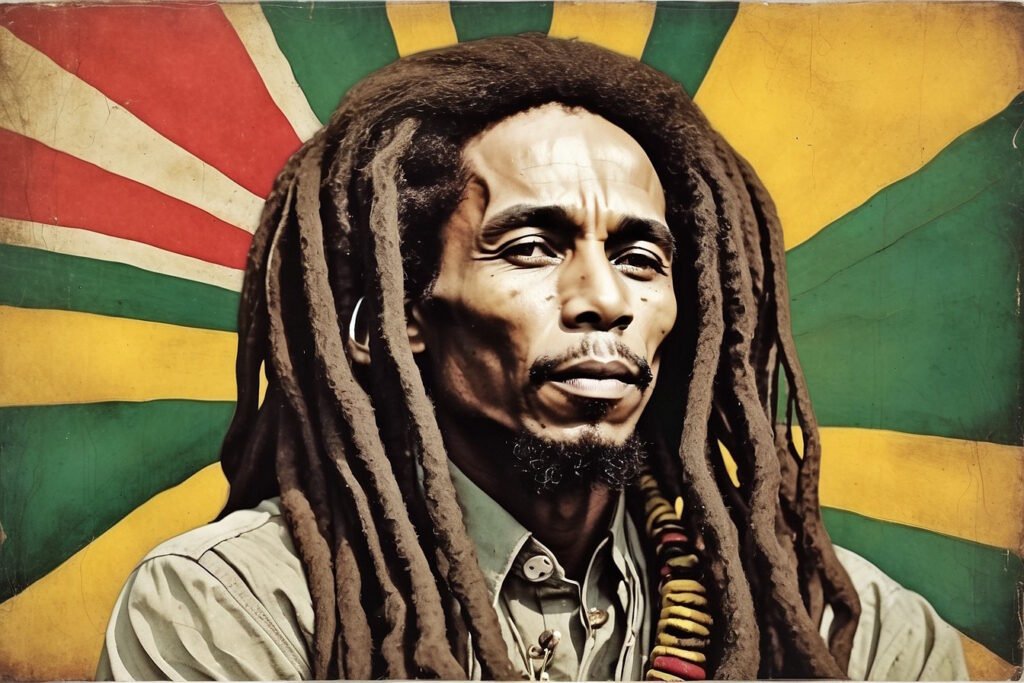
More than four decades after his untimely death in May 1981 at the age of 36, Bob Marley remains an immortal cultural prophet.
Emerging from the impoverished shantytowns of Trenchtown, Kingston, Jamaica, alongside Peter Tosh and Bunny Wailer, Marley elevated Jamaican ska, rocksteady, and roots reggae into a universal language of liberation, spiritual redemption, and human solidarity.
10. Get Up, Stand Up
Co-written by Bob Marley and Peter Tosh after witnessing extreme poverty and state oppression during a tour of Haiti, “Get Up, Stand Up” was the opening track on 1973’s Burnin’. Powered by a funky wah-wah guitar groove and Aston “Family Man” Barrett’s commanding bassline, the song is a direct call to resist institutional oppression and religious passivity.
Rejecting promises of “pie in the sky when you die,” the lyrics urge people to demand dignity and human rights here on Earth: “Get up, stand up / Stand up for your rights!” It became the official anthem of Amnesty International and countless civil rights movements worldwide.
9. Jamming
Recorded in London for 1977’s landmark album Exodus following an assassination attempt on Marley’s life in Kingston, “Jamming” radiates triumphant celebration. In Jamaican patois, “jamming” refers to getting together in musical celebration and communal fellowship.
Driven by Carlton Barrett’s crisp one-drop drum pattern and joyous brass accents, the track later inspired Stevie Wonder to write his hit tribute “Master Blaster (Jammin’),” cementing the song’s global crossover influence.
8. Buffalo Soldier
Released posthumously on 1983’s Confrontation, “Buffalo Soldier” addresses the bitter historical irony of African-American cavalry regiments fighting Native Americans during the American Indian Wars. Stolen from Africa and brought to America, Black soldiers were deployed to conquer indigenous lands for a government that denied them basic civil rights.
With its infectious “Wo-yo-yo” chant and bouncy rhythm, Marley turned a painful historical lesson on slavery and displacement into one of the most recognizable reggae hooks on earth.
7. Is This Love
The opening track of 1978’s sunny, romantic album Kaya, “Is This Love” is pure, tender affection. Set to a gentle, swaying groove punctuated by sweet backing vocals from the I-Threes (Rita Marley, Judy Mowatt, and Marcia Griffiths), the song captures the modest domestic dream of sharing a bed, cooking dinner, and loving unconditionally.
The memorable music video, filmed at London’s Ronnie Scott’s Jazz Club, notably features a seven-year-old Naomi Campbell dancing alongside Marley, capturing the youthful warmth of his UK years.
6. Stir It Up
Written by Marley for his wife Rita in 1967 and later popularized internationally by American singer Johnny Nash, The Wailers’ definitive 1973 recording for Catch a Fire was the spark that ignited reggae’s global conquest. Featuring smooth wah-wah guitar overdubs by American session musician Wayne Perkins, the track possesses a sultry, hypnotic intimacy.
Marley’s purring vocal delivery and Aston Barrett’s deep, melodic bass work make “Stir It Up” one of the most sensual love songs ever committed to tape.
5. One Love / People Get Ready
Originally recorded as a fast-paced ska track in 1965, the re-recorded 1977 Exodus version incorporating elements of Curtis Mayfield’s gospel-soul classic “People Get Ready” became Marley’s universal signature anthem. Selected by the BBC as the “Song of the Millennium,” the track is a extraordinary plea for global harmony, racial reconciliation, and spiritual peace.
“One love, one heart / Let’s get together and feel alright.” Those simple, profound words remain humanity’s most enduring musical prayer against division and warfare.
4. Could You Be Loved
Written in 1979 on an airplane while the band was experimenting with acoustic guitars, “Could You Be Loved” is an exhilarating fusion of reggae, Brazilian samba, and upbeat disco. Anchored by Tyrone Downie’s pulsing clavinet riff and a bubbling Brazilian cuíca percussion track, the single conquered dancefloors worldwide.
Yet behind its irresistible dance tempo lay a sharp intellectual warning: “Don’t let them fool ya / Or even try to school ya / Oh, no! We’ve got a mind of our own.”
3. Redemption Song
Recorded alone with just an acoustic guitar as he was secretly battling terminal cancer in 1980, “Redemption Song” is Bob Marley’s parting spiritual proof. Quoting pan-African visionary Marcus Garvey’s historic speech (“Emancipate yourselves from mental slavery, none but ourselves can free our minds”), the song strips away all reggae production to lay bare the prophet’s soul.
Hearing Marley’s frail yet resolute voice sing “All I ever have: redemption songs” feels like witnessing the quiet, sacred close of an extraordinary earthly mission.
2. Three Little Birds
Inspired by three actual birds (pelicans or canaries) that would land on the windowsill of Marley’s home at 56 Hope Road in Kingston, “Three Little Birds” has become the world’s greatest acoustic antidote to anxiety. Marley sings with unconditional warmth, offering a timeless promise of resilience in the face of despair.
“Don’t worry about a thing / ‘Cause every little thing gonna be alright.” The song has been adopted by football clubs, hospital wards, and school choirs across the globe as an indestructible hymn of optimism.
1. No Woman, No Cry (Live)
While the studio version on 1974’s Natty Dread is superb, the live recording captured on July 18, 1975 at the Lyceum Theatre in London is widely recognized as one of the greatest live performances in modern music history. In Jamaican patois, the title means “No, woman, don’t cry,” serving as a soothing reassurance to the women of Trenchtown struggling to raise families amidst political violence and poverty.
Backed by an ecstatic London crowd singing every syllable in unison over organist Earl Lindo’s warm chords, Marley reminisces about porridge cooked over open government-yard fires and friends lost along the way. “Everything’s gonna be alright, everything’s gonna be alright.”
Which choice on this list is your personal favorite? Share your thoughts and rankings in the comments below.