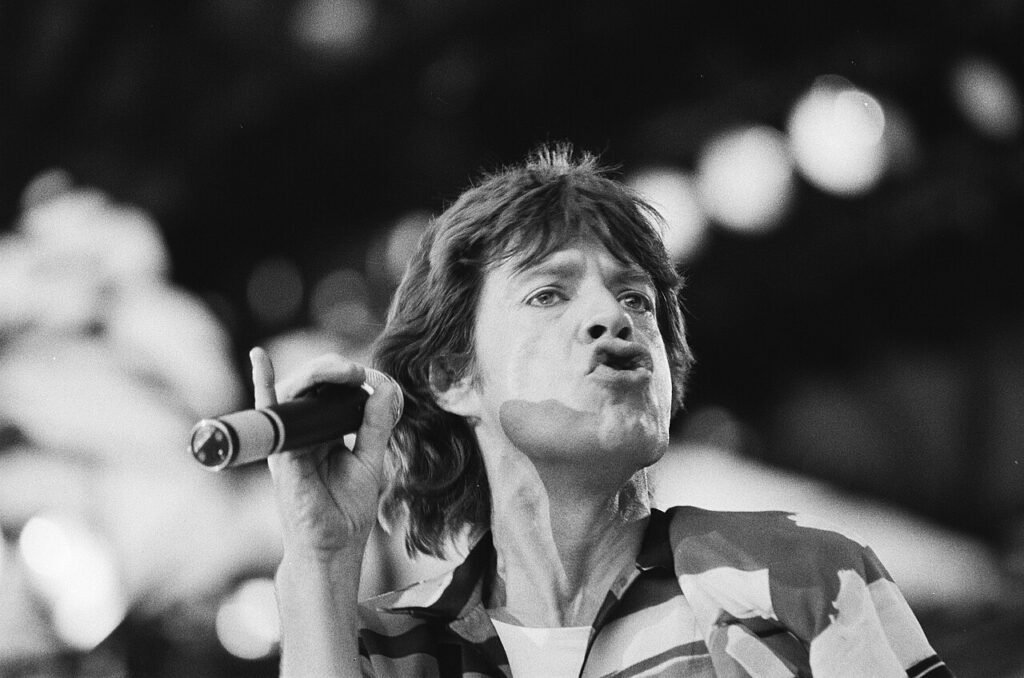
Hailed universally and undeniably as the “World’s Greatest Rock & Roll Band,” The Rolling Stones, formed in London in 1962 by singer Mick Jagger, guitarist Keith Richards, multi-instrumentalist Brian Jones, bassist Bill Wyman, and drumming deity Charlie Watts, did not merely play rock and roll; they defined its swagger, danger, and rebellious spirit.
Rejecting the clean-cut mop-top charm of the British Invasion, the Stones embraced the raw, sexual, and uninhibited blues of Muddy Waters, Chuck Berry, and Howlin’ Wolf.
10. Brown Sugar
Opening their 1971 classic Sticky Fingers with one of the most recognizable, swinging guitar riffs in rock history, “Brown Sugar” was recorded in December 1969 at the historic Muscle Shoals Sound Studio in Alabama. Driven by Keith Richards’ open-G rhythm guitar and Charlie Watts’ effortless backbeat pocket, the track is propelled by Bobby Keys’ blistering, raucous tenor saxophone solo and Ian Stewart’s rolling piano.
Written by Mick Jagger while filming Ned Kelly in Australia, the song explores controversial, transgressive lyrical themes touching on the transatlantic slave trade, interracial romance, heroin, and taboo sexual desire.
9. Wild Horses
Also recorded during the magical three-day sessions at Muscle Shoals in late 1969 for Sticky Fingers, “Wild Horses” is an exquisite, heart-wrenching country-rock ballad. Keith Richards composed the chorus and core chord progression while struggling with the painful homesickness of touring away from his infant son Marlon, with Jagger contributing the poignant verses reflecting on his crumbling relationship with Marianne Faithfull.
The arrangement is lush and organic, weaving Richards’ 12-string acoustic guitar picking with Mick Taylor’s weeping, acoustic slide fills and Jim Dickinson’s gentle tack piano.
8. Jumpin’ Jack Flash
Released in May 1968 after the band decisively abandoned the psychedelic experimentation of Their Satanic Majesties Request to return to their dirty blues roots, “Jumpin’ Jack Flash” is the triumphant mission statement that inaugurated the Stones’ golden era. The title was inspired by Richards’ gardener, Jack Dyer, whose heavy footsteps outside their English country home woke Jagger one rainy morning.
The song features one of Richards’ most ingenious recording tricks: he layered multiple acoustic guitars tuned to open-E and open-D directly into a cheap cassette recorder microphone until the tape distorted, creating an abrasive, compressed buzz-saw riff that sounded heavier than any electric guitar.
7. You Can’t Always Get What You Want
The magnificent, seven-and-a-half-minute choral finale of 1969’s Let It Bleed, “You Can’t Always Get What You Want” is widely celebrated as the Stones’ sweeping, operatic answer to The Beatles’ “Hey Jude.” Opening with the angelic voices of the London Bach Choir accompanied by Al Kooper’s French horn intro, the track gradually transforms into an exhilarating gospel-rock epic.
Lyrically, the song captured the bitter morning-after hangover of the 1960s counterculture dream, surveying drug addiction, anti-war demonstrations on the streets of London, and emotional burnout: “You can’t always get what you want / But if you try sometimes, well you might find / You get what you need.”
6. (I Can’t Get No) Satisfaction
In May 1965, Keith Richards woke up in the middle of the night at the Fort Harrison Hotel in Clearwater, Florida, with a guitar riff running through his head. He reached for his acoustic guitar and a cassette recorder, laid down the famous three-note riff with the mumbled phrase “I can’t get no satisfaction,” and fell back asleep; when he played the tape the next morning, it had two minutes of guitar followed by forty minutes of him snoring.
When the band recorded the track at RCA Studios in Hollywood, Richards plugged a Gibson Maestro Fuzz-Tone pedal into his guitar, intending the distortion as a placeholder for a horn section.
5. Start Me Up
Originally recorded as a reggae cut titled “Never Stop” during the 1978 Some Girls sessions, “Start Me Up” sat in the vaults for years until engineer Chris Kimsey discovered a single rock take among dozens of outtakes for 1981’s Tattoo You. Keith Richards added his legendary, open-G Telecaster opening chop, arguably the crispest, punchiest guitar intro in rock history, and an immortal anthem was born.
Propelled by Charlie Watts’ immaculate, concussive snare pocket and Ronnie Wood’s complementary rhythm guitars, the track radiates pure, uninhibited swagger.
4. Gimme Shelter
Opening 1969’s Let It Bleed with an ominous, dread-inducing guitar arpeggio and shivering guiro percussion, “Gimme Shelter” captured the dark, apocalyptic collapse of the 1960s peace-and-love dream, anticipating the Manson Family murders, the escalation of the Vietnam War, and the tragic disaster at the Altamont Free Concert just weeks after its release. Keith Richards crafted a menacing, bluesy riff that weeps with impending doom.
The recording was immortalized by gospel-soul singer Merry Clayton, whom the band woke up in the middle of the night to record backing vocals while heavily pregnant.
3. Sympathy for the Devil
Opening 1968’s Beggars Banquet, “Sympathy for the Devil” was inspired by Mikhail Bulgakov’s masterpiece novel The Master and Margarita (given to Jagger by Marianne Faithfull). The track is an audacious, hypnotic six-minute samba-rock epic that presents Lucifer as a suave, sophisticated gentleman who has witnessed and orchestrated humanity’s darkest historical atrocities: the crucifixion of Jesus Christ, the Russian Revolution, the slaughter of the Romanovs, and the assassinations of John and Robert Kennedy.
Driven by Rocky Dzidzornu’s frantic conga drums, Bill Wyman’s driving maracas, and the entire band chanting that hypnotic, relentless falsetto chorus: “Woo-woo! Woo-woo!”, the track builds with terrifying momentum.
2. Angie
The acoustic centerpiece of 1973’s Goats Head Soup, “Angie” was written primarily by Keith Richards while undergoing detox from heroin at a clinic in Vevey, Switzerland. Built around Richards’ delicate, weeping acoustic guitar picking and Nicky Hopkins’ sublime grand piano chords, the song captures the agonizing, quiet heartbreak of an unavoidable romantic parting.
While rumors persisted for decades that the song was written about David Bowie’s first wife Angela, Richards confirmed the name arrived to him as a generic pseudonym (coinciding with the birth of his daughter Angela).
1. Paint It Black
Standing as the undisputed, immortal summit of The Rolling Stones’ discography, 1966’s “Paint It Black” from Aftermath is a genre-shattering masterpiece of grief, gothic psychological despair, and multi-cultural musical alchemy. Driven by Brian Jones’ hypnotic, exotic sitar riff, which he improvised after learning the instrument from Indian classical master Harihar Rao, the track was the first rock record in history to top the charts featuring a sitar.
The song is propelled by Charlie Watts’ thunderous, Middle Eastern-inflected tom-drum rhythm and Bill Wyman’s heavy organ pedal bass.
Which choice on this list is your personal favorite? Share your thoughts and rankings in the comments below.