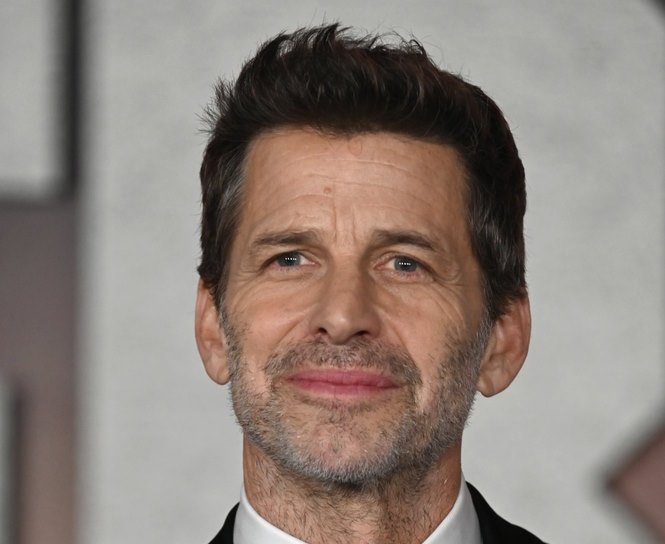
Zack Snyder is one of the most visually distinctive, polarizing, and culturally influential auteur filmmakers in contemporary global cinema.
Emerging from the world of high-end music videos and commercial advertising, Snyder brought a radical aesthetic revolution to Hollywood: an operatic visual grammar characterized by dramatic speed-ramping (shifting dynamically between ultra-slow-motion and hyper-accelerated combat), high-contrast desaturated color palettes, painterly mythological framing, and heavy thematic preoccupations with gods, monsters, sacrifice, and modern mythmaking.
10. Legend of the Guardians: The Owls of Ga’Hoole (2010)
An animated family adventure about warring clans of mythic owls might have seemed like an eccentric departure for a director known for hyper-violent R-rated spectacles, but Legend of the Guardians: The Owls of Ga’Hoole is one of the most visually stunning, technically animated films ever produced. Adapted from Kathryn Lasky’s fantasy book series and animated by Australian visual effects house Animal Logic (Happy Feet, The Lego Movie), the film follows Soren, a young barn owl captured by the fascist “Pure Ones” who escapes to find the legendary knight guardians of Ga’Hoole.
Snyder applies his signature cinematic visual language to computer animation with astonishing results: aerial dogfights through raging monsoon rainstorms and roaring forest fires feature hyper-detailed feather physics, water droplet refraction, and dynamic speed-ramped combat with battle claws.
9. Sucker Punch (2011)
Undoubtedly the most controversial and fiercely debated film in Zack Snyder’s career, Sucker Punch is an audacious, multi-layered visual puzzle-box that operates as a dark psychological allegory wrapped inside explosive pop-culture fantasy. Emily Browning stars as Babydoll, a young woman wrongfully institutionalized in a terrifying 1950s asylum by her abusive stepfather, scheduled to be lobotomized in five days.
To cope with systemic institutional abuse, Babydoll retreats into nested fantasy realities, first imagining the asylum as a decadent bordello, and then into jaw-dropping action dreamscapes where she and her fellow inmates battle samurai giants, steampunk zombie soldiers, and fire-breathing dragons.
8. Army of the Dead (2021)
Marking Zack Snyder’s triumphant return to the zombie genre seventeen years after his directorial debut, Army of the Dead is a hyper-kinetic, genre-blending spectacle that fuses a post-apocalyptic monster epidemic with a high-stakes Las Vegas heist caper. Dave Bautista stars as Scott Ward, a battle-hardened former zombie war mercenary hired by a casino magnate (Hiroyuki Sanada) to lead a ragtag team of infiltration specialists into a walled-off, zombie-infested Las Vegas to recover $200 million from an underground vault before the U.S. government nukes the city.
Serving as his own cinematographer, Snyder shot the film on custom digital cameras equipped with vintage 1960s Canon Dream lenses, creating a lush, dreamlike shallow depth of field rarely seen in modern action cinema.
7. Rebel Moon: Part One & Part Two (2023-2024)
Originally conceived as a mature pitch for an R-rated Star Wars spin-off, Rebel Moon represents Zack Snyder’s effort to construct a completely original, sprawling science fantasy space opera mythology. The saga follows Kora (Sofia Boutella), a former soldier of the tyrannical Imperium living in hiding on the peaceful farming moon of Veldt, who embarks on a recruitment odyssey across the galaxy to assemble a band of exiled warriors to defend her village against the sadistic Admiral Noble (Ed Skrein).
Drawing deep artistic inspiration from Akira Kurosawa’s Seven Samurai and vintage European comic magazines like Heavy Metal, Snyder fills his cosmos with tactile, industrial sci-fi textures, mythic alien gladiators, biomechanical dreadnoughts, and philosophical combat androids (voiced by Anthony Hopkins).
6. Batman v Superman: Dawn of Justice (Ultimate Edition) (2016)
While the truncated two-and-a-half-hour theatrical release was burdened by studio-mandated cuts, the three-hour Ultimate Edition of Batman v Superman: Dawn of Justice stands as one of the most ambitious, complex, and politically challenging superhero deconstructions ever produced by a major Hollywood studio. Exploring the terrifying geopolitical consequences of godlike power arriving on Earth, the film pits a paranoid, world-weary Batman (Ben Affleck in a career-defining performance) against an alienated Superman (Henry Cavill), manipulated by tech oligarch Lex Luthor (Jesse Eisenberg).
Affleck’s brutal, Frank Miller-inspired Batman is an absolute force of nature, epitomized by the legendary warehouse rescue sequence, widely hailed as the single greatest Batman combat scene ever captured on celluloid.
5. Man of Steel (2013)
Tasked with reinventing the world’s most famous superhero for a modern, post-9/11 cinematic landscape, Zack Snyder delivered a grand, sci-fi-infused epic with Man of Steel. Goyer and produced by Christopher Nolan, the film grounds Kal-El/Clark Kent (Henry Cavill) as a solitary alien immigrant drifting through an insecure world, terrified of his own powers and searching for his cosmic identity while wrestling with the contrasting philosophies of two fathers: biological father Jor-El (Russell Crowe) and adoptive father Jonathan Kent (Kevin Costner).
Cavill brought earnest warmth, moral grace, and physical perfection to Superman, while Michael Shannon was terrifyingly magnificent as General Zod, driven not by evil but by an unyielding biological programming to preserve Krypton at all costs.
4. Dawn of the Dead (2004)
Romero’s untouchable 1978 horror masterpiece seemed like a fool’s errand, but Zack Snyder’s feature directorial debut, scripted by James Gunn, was a sensational lightning strike that revolutionized the modern zombie genre. Starring Sarah Polley, Ving Rhames, and Jake Weber as survivors barricaded inside a sprawling suburban shopping mall in Everett, Wisconsin, the film traded Romero’s shambling ghouls for terrifying, hyper-aggressive sprinting zombies.
The film’s opening ten-minute prologue, as a tranquil suburban neighborhood descends into screaming, burning apocalypse at dawn, set to Johnny Cash’s “The Man Comes Around”, is an absolute kinetic cinematic pacing and visceral horror.
3. Watchmen (2009)
Alan Moore and Dave Gibbons’ seminal 1986 graphic novel Watchmen was widely deemed “unfilmable” by decades of Hollywood filmmakers, including Terry Gilliam and Darren Aronofsky. Zack Snyder proved the skeptics wrong by crafting a towering, uncompromising, and aesthetically sublime Cold War deconstruction of superhero fascism and human morality.
The film’s legendary opening credits sequence, a five-minute, slow-motion chronological montage tracing the rise and tragic fall of masked vigilantes across mid-20th-century American history, scored to Bob Dylan’s “The Times They Are a-Changin'”, is pure cinematic poetry.
2. 300 (2006)
Zack Snyder’s breakthrough 300, adapted from Frank Miller and Lynn Varley’s graphic novel about the historic 480 BC Battle of Thermopylae, was a revolutionary cultural sensation that permanently transformed the visual grammar of action cinema. Gerard Butler stars as King Leonidas, leading a phalanx of three hundred Spartan warriors in a glorious, defiant last stand against the colossal million-man Persian empire led by the god-king Xerxes (Rodrigo Santoro).
Filmed entirely on blue-screen soundstages in Montreal with a revolutionary digital color-grading process (“the crush”), Snyder transformed celluloid into living graphic-novel artwork.
1. Zack Snyder’s Justice League (2021)
The release of Zack Snyder’s Justice League represents the most extraordinary, triumphant chapter in modern cinematic history. After personal family tragedy forced Snyder to step away during original production in 2017, resulting in a butchered theatrical release by studio executives, a relentless, global fan movement and the solidarity of his cast compelled Warner Bros. to allow Snyder to finish and release his uncompromised four-hour vision in its native 1.33:1 IMAX aspect ratio.
The result is nothing short of a colossal, operatic masterpiece of modern mythology.
Which choice on this list is your personal favorite? Share your thoughts and personal rankings in the comments below.