French films have always been an important alternative to Hollywood films. They are often more original, artistic and explicit than their American counterparts.
Moreover, the appearance of French actors and actresses is legendary. What are the ten best French films? For more fascinating countdowns, take a look at our guide to landmark French cinema classics.
10. Subway (1985)
In the 1980s, a new generation of filmmakers emerged who did not shy away from action, without losing their sense of French style. Luc Besson became the best-known representative of the cinéma du look and would later break through internationally.
Subway marked his big breakthrough. Pursued by both gangsters and the police, a charming thief flees to a hidden world beneath Paris. In the Paris subway he meets eccentric characters and gets help from the bored wife of a gangster boss, played by Isabelle Adjani.
9. Les quatre cents coups (1959)
François Truffaut’s impressive debut is considered one of the first and most important Nouvelle Vague films. In the late 1950s, young directors wanted to break with traditional film forms and show subjects that were closer to their own lives. The film follows unhappy teenager Antoine Doinel, who is neglected both at home and at school.
8. Le salaire de la peur (1953)
Henri-Georges Clouzot’s exceptionally exciting Le salaire de la peur became a classic within the action genre. In a remote South American village, an oil company is looking for men willing to do a life-threatening job.
Four drivers must transport trucks loaded with unstable dynamite through mountainous terrain. Any bump can be fatal. Yves Montand stars as a charismatic director who does everything he can to survive this hellish journey.
7. Alphaville: an extraordinary adventure of Lemmy Caution (1965)
Jean-Luc Godard was a key figure of the Nouvelle Vague and responsible for a series of groundbreaking films. Alphaville is among his most radical and original works.
Secret agent Lemmy Caution is sent to the futuristic city of Alphaville to track down a colleague. There, the computer Alpha 60, which has eliminated emotions and free will, rules. Caution must not only unravel a conspiracy, but also destroy the system itself.
6. Belle de Jour (1967)
Belle de Jour is Catherine Deneuve’s best-known role. In this film by Luis Buñuel she plays a woman who finds no physical fulfillment in her marriage.
When her husband works, she leads a secret life as a prostitute. In that world she can live out her fantasies. The dreamy and sometimes surreal atmosphere makes it unclear what is really happening and what is only going on in her head.
5. Le Fabuleux Destin d'Amélie Poulain (2001)
Jean-Pierre Jeunet made his name with visually rich films full of eccentric characters. With Amélie he reached an unprecedented international audience. The young Amélie leads a secluded life in Montmartre, where she works as a waitress.
4. 37°2 le matin (1986) (Betty Blue)
Jean-Jacques Beineix’s second film became internationally known as Betty Blue. The film follows the relationship between the calm Zorg and the explosive Betty.
When Betty discovers Zorg’s novel, she decides he should become a writer. Their passionate relationship slowly derails as the world around them becomes increasingly hostile. Béatrice Dalle became an icon, but Beineix would never match the success of this film.
3. L'Année dernière à Marienbad (1961)
This enigmatic film by Alain Resnais has divided viewers for decades. For some it is a masterpiece, for others an impenetrable puzzle.
In a luxurious hotel, a man claims he met a woman the year before. She denies this. The film plays with time, memory and repetition and evokes a dreamlike atmosphere that would later influence many filmmakers, including David Lynch.
2. Le Samouraï (1967)
Jean-Pierre Melville’s Le Samouraï is one of the most influential French crime films ever. The austere style was imitated countless times.
Alain Delon plays a silent assassin who lives according to strict routines. When an assignment goes wrong, he comes under police surveillance. Tapped telephones and threatened betrayal put pressure on his life.
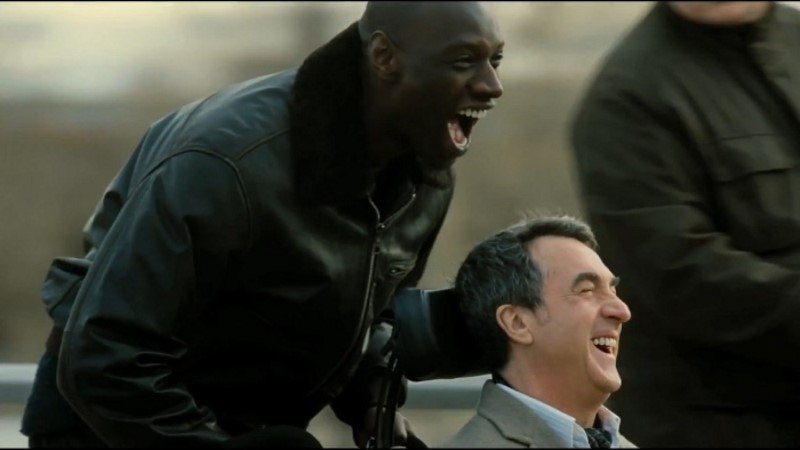
1. Intouchables (2011)
Intouchables by Olivier Nakache and Éric Toledano was a worldwide success and reached an audience that rarely sees French films. The film is based on the memoirs of Philippe Pozzo di Borgo.
Philippe is a wealthy aristocrat who becomes paralyzed after an accident. Driss, a young man from the Parisian banlieue, becomes his caregiver.
An unexpected friendship develops between the two that is both moving and puts things into perspective. Intouchables combines humor with humanity and closes this list in an accessible but convincing way.
Every selection featured here represents a distinctive creative milestone that left a permanent impression on popular culture. Which of these legendary favorites deserves the crown as your personal number one?