While American cinema frequently treats the casino as a backdrop for explosive kinetic heists or neon-drenched organized crime warfare, European filmmakers have long approached the gambling house as a profound philosophical stage.
Across French noir, Mediterranean character studies, British underground dramas, and Italian satirical romps, European gambling movies examine the delicate, destructive tension between mathematical obsession, existential fatalism, high-society decadence, and the seductive illusion of human agency against blind luck.
10. Pension Mimosas (France, 1935)
Directed by Jacques Feyder, one of the major masters of French poetic realism, Pension Mimosas uses the alluring casino culture of the Côte d’Azur not as a spectacle of glamorous escapism, but as a devastating engine of moral destruction. The film stars the incomparable Françoise Rosay as Louise Noblet, the proprietor of a modest seaside boarding house who raises her foster son Pierre with boundless maternal devotion.
As Pierre grows into adulthood, he drifts into Paris and succumbs to gambling addiction, drowning in massive debts that threaten his freedom.
9. Le Joueur (The Gambler, France/Italy, 1958)
Adapted from Fyodor Dostoevsky’s semi-autobiographical 1866 novella, director Claude Autant-Lara’s Le Joueur transports the Russian author’s feverish, obsessive psychology into a sumptuous mid-century European coproduction. Starring the legendary Gérard Philipe as Alexey Ivanovich alongside screen icon Liselotte Pulver, the film follows an impoverished Russian tutor residing at the fictional German spa town of Roulettenburg, whose grand casino serves as the meeting ground for decaying European aristocrats living on borrowed credit.
Philipe delivers an astonishing, hyper-focused performance, capturing the exact sensory frenzy that Dostoevsky described: the icy thrill of risking one’s final gold coins, the irrational belief in winning streaks, and the psychotic euphoria of beating the bank.
8. Montecarlo Gran Casino (Italy, 1987)
Directed by Carlo Vanzina, Montecarlo Gran Casino represents the vibrant, satirical, and unapologetically commercial branch of Italian popular comedy (the commedia all’italiana). The film weaves together multiple intersecting narrative threads of Italian misfits, aristocratic grifters, wealthy industrialists, and down-on-their-luck gamblers descending upon the world-renowned Casino de Monte-Carlo for a weekend of high-stakes debauchery.
Featuring a force ensemble of beloved Italian comic talent, including Christian De Sica, Massimo Boldi, Ezio Greggio, and Paolo Rossi, the film skewers the desperate social climbing and superstitious rituals endemic to casino culture.
7. Mélodie en sous-sol (Any Number Can Win, France, 1963)
Directed by Henri Verneuil and featuring a peerless screenplay co-written by dialogue virtuoso Michel Audiard, Mélodie en sous-sol is one of the supreme achievements of French crime cinema. The film unites two towering titans of French cinema across generational divides: the weathered, immovable Jean Gabin as Charles, an aging master thief newly released from prison, and the devastatingly handsome young Alain Delon as Francis, his reckless, ambitious protégé.
Rather than picking pockets or robbing banks, the duo targets the underground subterranean vault of the ultra-luxurious Palm Beach Casino in Cannes during the peak of the summer tourist season.
6. Fatum (Fate, Spain, 2023)
Directed by Juan Galiñanes in his electrifying feature directorial debut, Fatum is a white-knuckle contemporary Spanish thriller that examines gambling addiction through the prism of frantic real-time suspense. The narrative centers on Sergio (played with raw desperation by Luis Tosar), a compulsive gambler who promises his long-suffering family that his days at the betting parlor are over.
However, receiving what he believes is an infallible tip on a football match, he slips into an underground betting parlor to make one final bet to clear his family’s debts.
5. Croupier (UK/Germany, 1998)
Directed by veteran British master Mike Hodges (famed for Get Carter), Croupier is widely regarded by film scholars and professional dealers alike as the most authentic, psychologically acute examination of casino mechanics ever produced in Europe. Clive Owen delivers the star-making performance of his career as Jack Manfred, an aspiring, cynical novelist in London who takes a job as a croupier at the Golden Lion casino to pay his rent, discovering that the detached cruelty of the gaming table provides the perfect raw material for his writing.
Unlike conventional gambling movies that focus on the gamblers, Croupier views the casino through the cold, emotionless eyes behind the green baize.
4. Tricheurs (Cheat, France/West Germany, 1984)
Directed by Iranian-born French master Barbet Schroeder, Tricheurs is an intense, obsessive psychological study of professional gambling addiction set against the sun-bleached, decadent backdrop of Madeira and European resort casinos. The film stars Jacques Dutronc as Elric, a charismatic, utterly unrepentant gambler who lives purely for the adrenaline surge of wagering everything he owns on roulette and blackjack.
When Elric encounters Suzie (Bulle Ogier), another compulsive gambler, the two form a toxic, magnetic partnership that quickly surpasses legitimate play.
3. Le Roman d’un tricheur (The Story of a Cheat, France, 1936)
Written, directed, and narrated by the inimitable French dramatist Sacha Guitry, Le Roman d’un tricheur is an audacious, avant-garde masterpiece of narrative innovation that revolutionized sound cinema. The film unfolds entirely through the witty, continuous first-person voiceover narration of its protagonist, an aging cheat sitting in a Parisian cafe penning his memoirs, with onscreen dialogue virtually absent in favor of rhythmic, pantomimic visual storytelling.
The protagonist’s philosophical cynicism begins in childhood: after being caught stealing eight sous, he is punished by being sent to bed without dinner, which miraculously saves his life when his entire family dies that very night from eating poisonous wild mushrooms.
2. La Baie des Anges (Bay of Angels, France, 1963)
Written and directed by French New Wave luminary Jacques Demy, La Baie des Anges is a mesmerizing, sun-drenched fever dream that captures the romantic and emotional madness of casino addiction like no other film in history. Set against the sparkling Mediterranean backdrop of Nice and Monte Carlo, the film stars Claude Mann as Jean Fournier, a straitlaced Parisian bank clerk who is introduced to roulette by a coworker and quickly becomes intoxicated by beginner’s luck.
In Nice, Jean falls under the hypnotic spell of Jackie Demaistre, played by Jeanne Moreau in one of the most magnetic, dazzling screen performances of her career.
1. Bob le flambeur (Bob the Gambler, France, 1956)
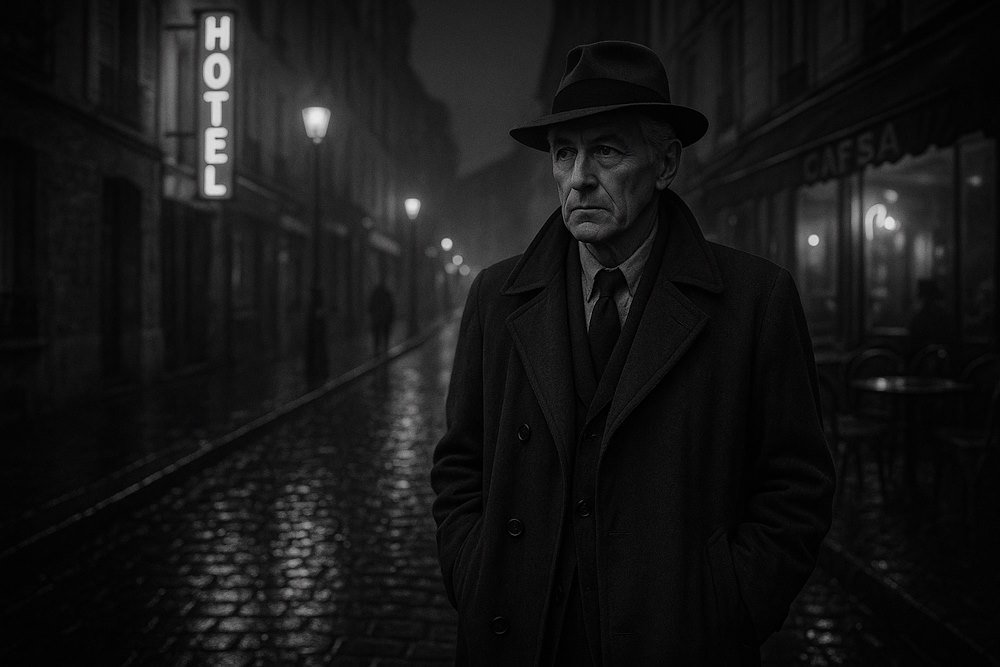
Standing unchallenged atop European gambling cinema is Jean-Pierre Melville’s peerless masterpiece Bob le flambeur. Serving as the essential bridge between classic American film noir and the revolutionary aesthetics of the French New Wave, this stylish, melancholy crime ballad introduced the world to Melville’s signature universe of trench coats, fedoras, sacred codes of honor, and existential fatalism.
Roger Duchesne stars as Bob Montagné, an aging, silver-haired gentleman criminal and compulsive gambler residing in the bohemian heart of Montmartre. Despite his suave demeanor and deep moral code, Bob suffers a catastrophic losing streak that threatens to erase him completely.
Which choice on this list is your personal favorite? Share your thoughts and rankings in the comments below.