
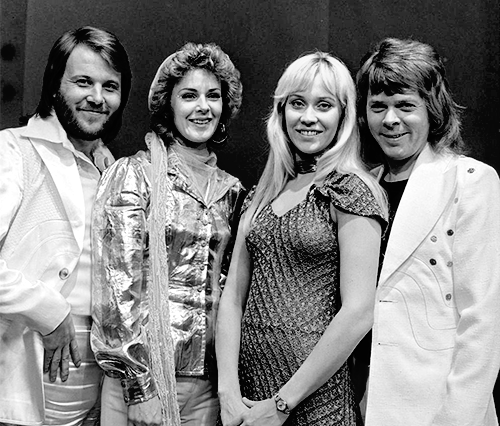
 AVRO - FTA001019454_012 from Beeld & Geluid wiki/CC BY-SA 3.0 nl
The music of ABBA is a wonderful paradox. On the surface it seems like perfect, polished pop music, but those who listen more carefully hear enormous musical complexity and often a deep, Scandinavian melancholy.
Benny Andersson and Björn Ulvaeus were masters in the studio; they built their songs layer by layer, inspired by Phil Spector's "Wall of Sound," but with European precision. The voices of Agnetha Fältskog and Anni-Frid Lyngstad often blend into one unique, powerful sound that cuts through all the instrumentation. It's music that makes you dance with a tear in your eye.
These are the ten best ABBA songs.
Cast your vote - the ranking shifts live based on the votes.
Dancing Queen
Dancing Queen is not for nothing one of the best pop songs of all time. It begins with that legendary glissando on the piano – a slide onto the dance floor. The song is the textbook example of the "European Wall of Sound": the production is so full of layers of strings, synths, guitars and vocals that there isn't a millisecond of silence. It's a constant stream of euphoria, but as always with ABBA there's a melancholic edge. It's the sound of pure youth and the fleeting nature of it, captured in four minutes of perfection.
The Winner Takes It All
The ultimate "break-up song." The power lies in the simplicity: a driving, fast piano melody that just keeps going, like the thoughts of someone going through a divorce. Agnetha delivers the performance of her life here. She doesn't just sing a text; she relives her own pain. Her voice sounds fragile, direct and unadorned. There are no background choirs to hide behind; it's pure, raw emotion on a bed of perfect pop melodies.
Who voted for The Winner Takes It All? Should be fighting for the bottom 3 on an objective ranking.
Eagle
Here ABBA shows that they can also do atmospheric rock. Eagle is long, expansive and spaciously produced. The synthesizers and guitars are mixed to create a floating effect, meant to imitate the flight of an eagle. It's music for headphones: you constantly hear new details in the background. The solos are melodic and dreamy, far removed from the compact radio hits they're known for.
Flawless production. 🔥
The Day Before You Came
Perhaps their most artistic and mysterious work. It's one of the final recordings of the group and sounds completely different: electronic, cold and repetitive. The synthesizer loop just keeps going, like a train rumbling through a rainy landscape. Agnetha sings flatly and almost emotionlessly about everyday banalities, which makes the underlying tension unbearable. It feels like the calm before the storm, a ghost story wrapped in synthpop.
The acoustic version of The Day Before You Came is somehow even more emotional than the studio cut.
Chiquitita
This song is a comforting arm around your shoulder. It begins as a whisper-soft ballad with acoustic guitar, in which Agnetha sings as if she is encouraging a crying friend. Halfway through, the song transforms: the drums come in and a rhythmic piece emerges with clear Spanish influences. It doesn't end with a chorus, but with an instrumental outro in which the piano skips and dances, as a symbol of regained joy in life.
Log in to post a comment.
Thank You For The Music
ABBA often flirted with musical and cabaret, and this is the best example of that. It begins intimate and small, with a simple piano and vocals that sound as if she's standing in an empty hall. Slowly it builds into a theatrical singalong. The clever part is that it never feels kitschy; the gratitude in the vocals sounds genuine and warm. It often serves as a farewell song, a final bow to the audience, full of nostalgia and class.
Log in to post a comment.
Gimme! Gimme! Gimme! (A Man After Midnight)
The atmosphere of this song is icy cold and nocturnal. The foundation is that iconic synthesizer riff, distorted by a flanger effect, which sounds like an icy wind gust. The bass line is tight disco, but the strings that lie over it create a dramatic, almost desperate tension. It's not about the fun of going out, but about the loneliness that strikes as the night goes on. It's dark disco at its best.
Log in to post a comment.
Waterloo
This is pure, undiluted winning mentality. Waterloo is built on a driving glam rock beat that is clearly inspired by the English rock scene of the seventies. The tearing tenor saxophone and the heavy bass line make the sound full and aggressive. It's one of the few songs where ABBA really sounds "dirty" and loud, designed to make an immediate impression. The energy is so explosive from the first beat that sitting still becomes impossible; it's the big bang of their worldwide success.
Log in to post a comment.
Mamma Mia
The genius of Mamma Mia lies in the nervous energy. The intro is carried by a marimba, which gives the song a ticking, almost hurried rhythm, like a heartbeat that skips a beat. The transitions between the verses and the chorus are abrupt and tight; the music literally stops for a moment to give the vocals all the space. Beneath the cheerful melody lies lyrics about despair and surrender to a love you don't actually want, and you hear that internal conflict reflected in the restless arrangements.
Log in to post a comment.
Happy New Year
Although this song is played every New Year at midnight, it's actually the perfect soundtrack for the hangover the next morning. The production is slow and dragging, without the usual disco beat. The acoustic guitar and the childlike choir give it a fragile atmosphere. Agnetha sings with a clarity that cuts through bone and marrow, where the text doesn't celebrate what's coming, but mourns what's gone. It's a beautiful, melancholic song about the emptiness after the party noise.
Log in to post a comment.
Missing an item in this list?
Log in or create a free account to add an item yourself.
Log in / create account
Still mind-blowing to think about: dancing Queen is not for nothing one of the best pop songs of all time.
Log in to post a comment.