
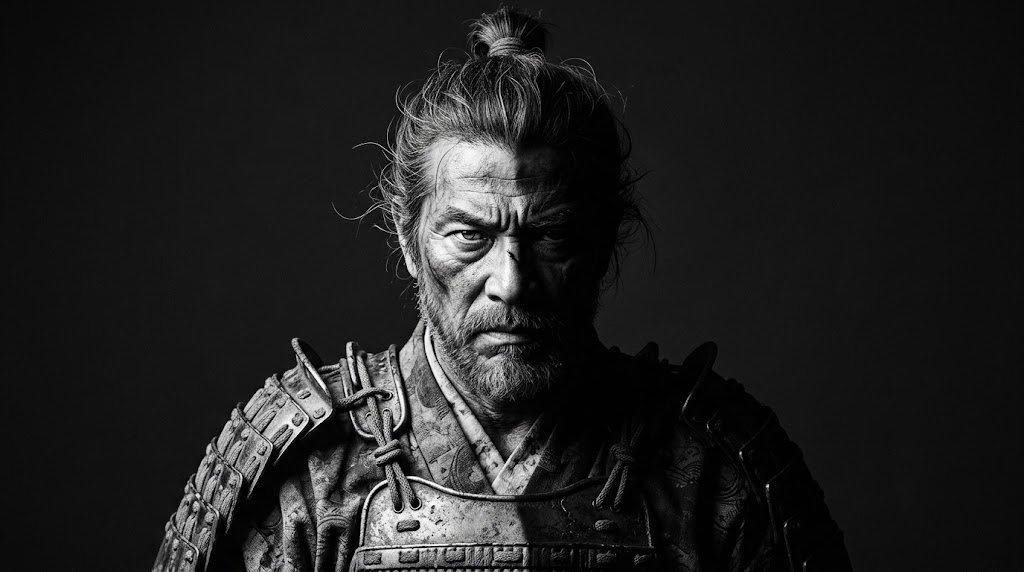
Revered as the "Emperor" of world cinema, Akira Kurosawa transformed the visual grammar of motion pictures and inspired generations of legendary Western directors, including George Lucas, Sergio Leone, Francis Ford Coppola, and Steven Spielberg. Through dynamic environmental elements—lashing rain, howling winds, and churning mud—revolutionary multi-camera setups, and profound humanism, the Japanese master crafted timeless landmarks.
From thrilling samurai spectacles to devastating existential dramas and morally complex crime noirs, Kurosawa's vision remains peerless in the history of the seventh art.
Which one of these deserves the top spot? Cast your votes below and let us know your favorites in the comments!
Cast your vote - the ranking shifts live based on the votes.
Seven Samurai (1954)
The foundational blueprint for modern ensemble and action filmmaking. When an impoverished farming village hires seven masterless ronin to defend against ruthless marauding bandits, Kurosawa orchestrates an epic of unparalleled kinetic energy. Toshiro Mifune dazzles as wild warrior Kikuchiyo, leading toward a rain-soaked, mud-caked climactic battle that remains one of cinema's greatest achievements.
Rashomon (1950)
The groundbreaking film that brought post-war Japanese cinema to global prominence by winning the Golden Lion at the Venice Film Festival. Depicting the murder of a samurai and the assault of his wife through four radically contradictory testimonies, Kurosawa coined the "Rashomon effect"—revealing that objective human truth is hopelessly clouded by ego and memory.
Log in to post a comment.
Ran (1985)
Kurosawa's monumental, color-drenched magnum opus reimagines Shakespeare's King Lear in Sengoku-era Japan. When aging warlord Hidetora divides his domain among three sons, he unleashes an apocalyptic spiral of betrayal and madness. The siege of the third castle—staged without sound effects, guided only by Toru Takemitsu's mournful orchestral score—is pure canvas painting brought to life.
Log in to post a comment.
Yojimbo (1961)
Toshiro Mifune embodies the archetype of the cynical, toothpick-chewing wandering ronin who wanders into a dusty town torn apart by two greedy warring gangs and cleverly pits them against one another. Serving as the direct blueprint for Sergio Leone's A Fistful of Dollars, this razor-sharp western-hybrid revolutionized the modern antihero.
Log in to post a comment.
Ikiru (1952)
"Life is brief, fall in love, maidens..." Takashi Shimura turns in a heart-wrenching, transcendent performance as Kanji Watanabe, a numb Tokyo bureaucrat who discovers he has terminal stomach cancer and resolves to accomplish one meaningful act before dying: building a neighborhood playground. It remains Kurosawa's most emotionally profound and humanitarian masterpiece.
Log in to post a comment.
High and Low (1963)
A brilliant, precision-engineered crime procedural divided cleanly into two halves. Wealthy shoe executive Kingo Gondo (Toshiro Mifune) prepares a high-stakes corporate takeover when a kidnapper strikes—only for Gondo to realize the extortionist mistakenly abducted his chauffeur's son instead. An excruciating moral dilemma gives way to an exhilarating police manhunt across Yokohama.
Log in to post a comment.
Throne of Blood (1957)
Transposing Shakespeare's Macbeth to feudal Japan while weaving in classical Noh theatrical styling, Kurosawa crafts an eerie, fog-shrouded descent into madness. Toshiro Mifune gives a feverish performance as the ambitious General Washizu, culminating in a jaw-dropping finale where real archers fired actual arrows mere inches from the actor's body.
Log in to post a comment.
The Hidden Fortress (1958)
The sweeping adventure classic that famously inspired George Lucas to create Star Wars. Two bickering, cowardly peasants (the direct forebears to C-3PO and R2-D2) unwittingly escort a legendary general (Toshiro Mifune) and a disguised princess across enemy territory. Spirited, dynamic, and wonderfully cinematic, it is pure entertainment from start to finish.
Log in to post a comment.
Sanjuro (1962)
The witty, action-packed companion piece to Yojimbo sees Mifune reprise his role as the scruffy master swordsman, this time mentoring a squad of naive young samurai attempting to root out political corruption. Celebrated for its lightning-fast climax featuring a geyser of theatrical blood, the duel set the standard for modern cinematic action violence.
Log in to post a comment.
Kagemusha (1980)
Backed financially by devoted Hollywood admirers George Lucas and Francis Ford Coppola, this Palme d'Or-winning epic explores power, identity, and illusion. A petty thief spared from execution due to his uncanny resemblance to a dying warlord is thrust into serving as his political double to prevent their clan from collapsing. It is a visually staggering historical tapestry.
Log in to post a comment.
Missing an item in this list?
Log in or create a free account to add an item yourself.
Log in / create account
Log in to post a comment.