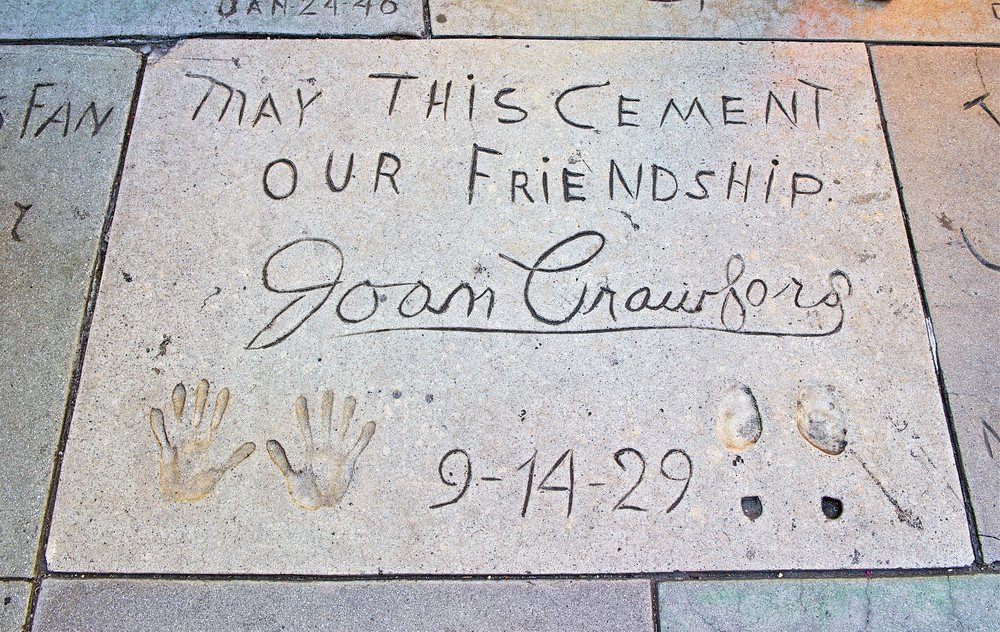
Joan Crawford remains one of the most polarizing, magnetic, and fiercely enduring titans in the entire annals of Golden Age Hollywood cinema.
Across six relentless decades, she clawed her way up from desperate Midwestern poverty, through the jazz-crazed dance marathons of the Roaring Twenties, into the gilded stratosphere of MGM stardom, before engineering one of the greatest mid-career resurrections in movie history with an Oscar-winning triumph at Warner Bros.
1. She Wasn’t Born Joan (Lucille Fay LeSueur)
The woman who would define cinematic sophistication entered the world under the far less glamorous name Lucille Fay LeSueur, born in San Antonio, Texas, around 1904 (though Crawford notoriously obscured her exact birth year throughout her life). Abandoned by her biological father, Thomas LeSueur, before she was even born, Lucille grew up under the surname Cassin after her mother remarried a vaudeville theater manager named Harry Cassin.
It was in Cassin’s theater that young Lucille first glimpsed the intoxicating world of stage performance, dancing in the wings and dreaming of an escape from grueling domestic reality. When MGM studio mogul Louis B.
2. From Hotel Maid to Flapper Star
Crawford’s ascent to stardom was devoid of silver spoons; her youth was marked by intense manual labor and profound emotional insecurity. Following her stepfather’s abandonment of the family, young Lucille worked as a scholarship student at private boarding academies, performing backbreaking laundry duties, scrubbing dormitory floors, and waiting on affluent classmates who openly scorned her.
Rather than breaking her spirit, this early deprivation ignited an unquenchable ambition. Determined to dance her way out of poverty, she entered Charleston dance contests across Kansas City and Chicago, dancing until her feet bled to capture prize money and industry attention.
3. The Icon of the Winning Dress (Letty Lynton)
In the pre-Code 1932 melodrama Letty Lynton, Crawford solidified her standing as Hollywood’s supreme fashion trendsetter. Legendary costume designer Adrian crafted an extraordinary white organdy evening gown featuring voluminous, ruffled tiers at the shoulders that dramatically accentuated Crawford’s waist while balancing her broad, athletic shoulders.
The design was revolutionary, turning what traditional studio couturiers considered a physical flaw into the classic high-fashion silhouette of the 1930s. The cultural impact was staggering.
4. She Fought Her Way Free from MGM & Won an Oscar for Mildred Pierce
By the late 1930s, Crawford’s career hit a perilous wall. In 1938, the Independent Theatre Owners Association famously published an open letter labeling Crawford, along with Greta Garbo, Katharine Hepburn, and Marlene Dietrich, as “Box Office Poison.”
Unwilling to linger at MGM in tepid supporting parts or decorative drawing-room romances, Crawford boldly negotiated a studio buyout in 1943, terminating her eighteen-year tenure at Metro-Goldwyn-Mayer and moving to Warner Bros. for a fraction of her previous weekly salary.
5. The Feud and Fragile Truce with Bette Davis in What Ever Happened to Baby Jane?
By the 1960s, both Crawford and her arch-rival Bette Davis found themselves pushed aside by a youth-obsessed studio system. Recognizing that Hollywood would not write substantive roles for women in their fifties, Crawford personally secured the film rights to Henry Farrell’s psychological thriller novel What Ever Happened to Baby Jane? and took the project to director Robert Aldrich, specifically proposing that she and Bette Davis co-star as wheelchair-bound Blanche Hudson and her demented former child-star sister Baby Jane.
The production became the stuff of cinematic legend. Mutual professional respect was laced with venomous competitive tension.
6. Mommie Dearest and the Controversial Legacy
In November 1978, barely a year and a half after Crawford’s death, her adopted daughter Christina Crawford published Mommie Dearest, a searing tell-all memoir that shattered Hollywood’s glossy illusions. The book detailed harrowing allegations of physical abuse, obsessive germaphobia, extreme disciplinary rituals, and emotional volatility, crystallized in the infamous wire hanger tantrum.
Adapted into a 1981 biographical melodrama starring Faye Dunaway, the narrative cemented an enduring pop-culture caricature of Crawford as an unhinged, tyrannical monster. However, the reality of Crawford’s household remains fiercely contested among those who knew her intimately.
7. Mrs. Pepsi: High-Powered Corporate Executive and Board Member
In 1955, Crawford married her fourth and final husband, Alfred Steele, the dynamic chairman and CEO of the Pepsi-Cola Corporation. Steele credited Crawford with revitalizing the brand’s public image as she traveled relentlessly alongside him on international corporate goodwill tours, opening bottling plants across the globe, courting franchise owners, and transforming herself into an extraordinarily effective global ambassador for the beverage conglomerate.
When Steele died suddenly of a heart attack in 1959, Crawford was not merely a grieving widow, she was deeply in debt due to extensive renovations on their lavish Fifth Avenue penthouse.
8. The Diva of Uncompromising Discipline and Fan Dedication
Crawford’s work ethic was legendary even by the spartan standards of studio-era Hollywood. Throughout her five-decade career, she arrived on set hours before call time, fully memorized not only her own dialogue but also every line of her scene partners, and never complained about rigorous shooting conditions.
She maintained an ironclad regimen of physical fitness, skincare, and vocal coaching, treating her screen persona as an industrial enterprise that required constant vigilance and maintenance. Her dedication to fans was exceptional in film history.
9. Grand Guignol, Horror, and Unapologetic Late-Career Survival
Following the tremendous box-office success of Baby Jane, Hollywood created an entirely new subgenre dubbed “psycho-biddy” or “Hagsploitation,” casting aging screen sirens in lurid shockers and Gothic psychological horrors. Rather than retiring quietly into private life, Crawford embraced the genre with fierce professional commitment, partnering with horror impresario William Castle for the axe-wielding thriller Strait-Jacket (1964) and I Saw What You Did (1965).
Crawford threw herself into promotional tours for these pulp thrillers with the same regal intensity she had brought to prestige MGM dramas, personally handing out miniature bloody axes to audience members at movie premieres.
10. The Final Will and Supreme Act of Control
Joan Crawford passed away on May 10, 1977, in her Manhattan apartment from a myocardial infarction while battling pancreatic cancer. In true Crawford fashion, she orchestrated every detail of her departure with meticulous precision.
When her will was filed for probate in New York Surrogate’s Court, it delivered one final, stunning dramatic bombshell that made international headlines.
Which choice on this list is your personal favorite? Share your thoughts and rankings in the comments below.