The music industry has a long history of young talents who signed bad contracts out of inexperience or desperation. Many iconic hits earned millions, but because of legal constructions, the artists themselves often saw only a small part of that money, or none at all. These are ten music stars who missed out on millions in royalties.
1. Little Richard and “Tutti Frutti”
In the 1950s, the young Little Richard was struggling to support his family after his father was killed. When Specialty Records offered him a contract, he signed. He reportedly received only around half a cent for every record sold, far below the usual rate, and according to popular accounts sold the publishing rights to “Tutti Frutti” for a small one-off fee.
“Tutti Frutti” became one of the songs that defined rock and roll, but it was Pat Boone’s tame cover version that initially sold best with white audiences. In 1984, Little Richard filed a lawsuit against his former label and publisher, claiming he had been cheated out of millions. He never recovered the decades of lost income.
2. Richard Ashcroft and “Bitter Sweet Symphony”
The Verve had permission to use a sample from an orchestral version of the Rolling Stones’ “The Last Time”, recorded by Andrew Loog Oldham’s orchestra. But after the song became a worldwide hit in 1997, Allen Klein, whose company owned the rights to the Stones’ early songs, claimed that the band had used more of the sample than agreed.
The result: the songwriting credit went to Mick Jagger and Keith Richards, and the royalties went to Klein’s company. Richard Ashcroft, who had written the lyrics and melody, earned almost nothing from his biggest song. In 2019, Jagger and Richards voluntarily signed their share of the rights over to Ashcroft. A nice gesture, but more than twenty years of income were gone.
3. The Animals and “The House of the Rising Sun”
When The Animals recorded their famous version of this traditional folk song in 1964, only one band member was credited as arranger: keyboard player Alan Price. A popular story claims there was simply not enough room on the record label for all five names, although historians are skeptical.
Whatever the reason, the consequences were huge. Because the song itself was in the public domain, all the arranger royalties went to Price alone. Singer Eric Burdon, guitarist Hilton Valentine and the rest of the band received nothing from this worldwide number one hit, which caused lasting resentment within the band.
4. Lori Lieberman and “Killing Me Softly”
In 1971, the young singer Lori Lieberman saw a performance by Don McLean in Los Angeles and was deeply moved. According to her account, she wrote down her feelings and shared them with the songwriters Norman Gimbel and Charles Fox, who developed them into a song. She recorded it first, in 1972.
But she did not receive a songwriting credit. Gimbel and Fox claimed full authorship and later disputed how much her input had contributed. When Roberta Flack took the song to the top of the charts in 1973 and won Grammys with it, and when the Fugees had another worldwide hit with it in 1996, Lieberman did not share in the songwriting royalties.
5. Georgia Dobbins and “Please Mr. Postman”
Motown’s first number one hit was born out of necessity. In 1961, the teenage group The Marvelettes needed an original song for their audition. Their lead singer, Georgia Dobbins, reworked a blues song by a friend, William Garrett, into what became the pop-soul classic “Please Mr. Postman”.
Shortly before the recording, Dobbins left the group to care for her sick mother. The remaining members recorded the song and scored a huge hit, later covered by the Beatles and the Carpenters. Although Dobbins is credited as one of the songwriters, along with several others, she never became famous and received only a small share of the success.
6. John Fogerty and Creedence Clearwater Revival
The contract that John Fogerty and Creedence Clearwater Revival signed with Fantasy Records in the 1960s was extremely unfavorable. The band received a low royalty rate, and Fogerty had to give up the publishing rights to his songs, including classics such as “Proud Mary” and “Have You Ever Seen the Rain”.
When the band broke up, Fantasy owner Saul Zaentz kept the rights to the catalog. In a bizarre twist, Fogerty was sued in the 1980s for plagiarizing himself: the label claimed that his new solo song “The Old Man Down the Road” sounded too much like the CCR song “Run Through the Jungle”, which he had written himself. Fogerty won, but it took him until 2023 to finally gain control of the publishing rights to his own songs.
7. Soft Cell and “Where Did Our Love Go”
The British duo Soft Cell made a classic beginner’s mistake. Their 1981 megahit “Tainted Love” was itself a cover, and on the B-side, they put another cover: the Supremes’ “Where Did Our Love Go”, instead of a song of their own.
Normally, a band writes the B-side itself, so that at least some songwriting royalties come in from every single sold. Because Soft Cell had written neither song, the lucrative songwriting income from millions of copies went entirely to the original writers. Marc Almond later called it one of the most expensive mistakes of their career.
8. Tommy James and the mob
Tommy James and the Shondells scored hit after hit in the 1960s, including “Hanky Panky”, “Mony Mony” and “Crimson and Clover”. But their label, Roulette Records, was run by Morris Levy, a man with close ties to organized crime.
In his 2010 autobiography, Me, the Mob, and the Music, James estimated that Levy withheld tens of millions of dollars in royalties. Because Levy was so dangerous, James did not dare to fight him. Levy was convicted of extortion in 1988 and died in 1990, before he could begin his prison sentence. Most of the money was never recovered.
9. Billy Joel and his first contract
In 1971, the young Billy Joel signed a contract with Family Productions, run by producer Artie Ripp. It would haunt him financially for years. His debut album, Cold Spring Harbor, was even accidentally mastered at the wrong speed, making his voice sound unnaturally high.
When Joel later signed with Columbia Records and became a superstar with “Piano Man”, Ripp still received a royalty on many of his records for years as part of the deal to release him from his contract. Joel later had further financial problems when he discovered that his former manager had mismanaged and lost millions of his money, which led to a lawsuit in 1989.
10. TLC and bankruptcy at the top
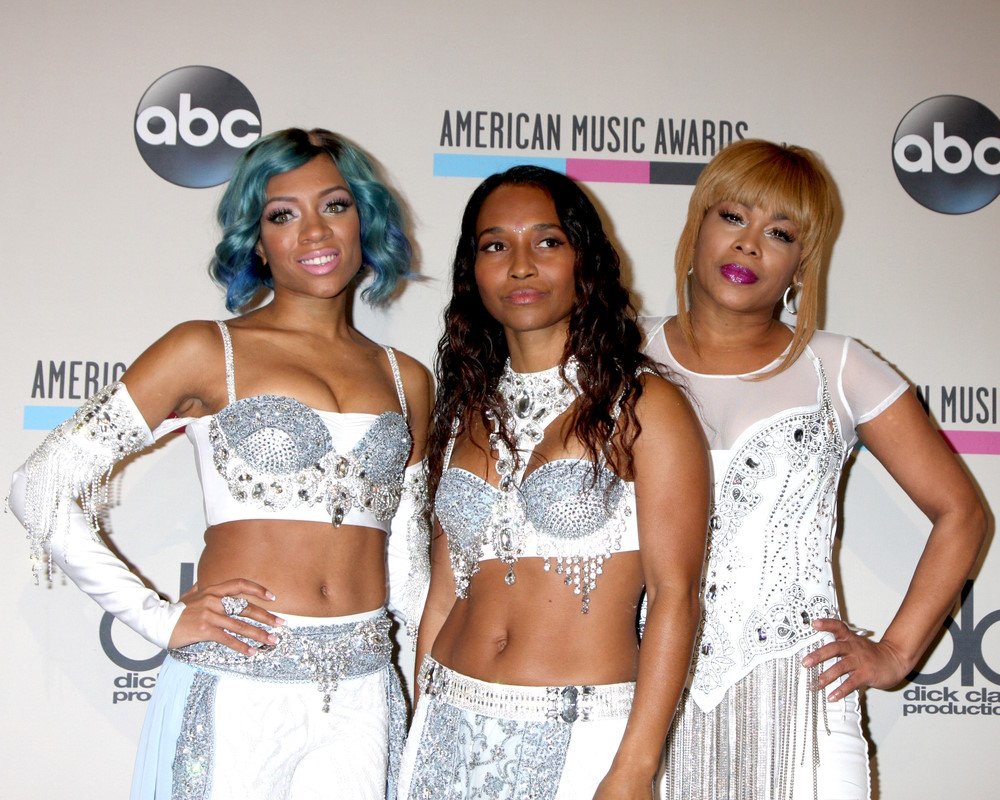
In 1995, TLC was one of the most popular girl groups in the world. Their album CrazySexyCool sold more than ten million copies and produced huge hits such as “Creep” and “Waterfalls”. Yet that same year, the three members filed for bankruptcy.
The reason lay in their contracts. After the costs of production, videos, tours and management fees had been deducted from their royalties, the members said they had earned only around 50,000 dollars each from their biggest album. Tionne “T-Boz” Watkins later explained that people thought they were millionaires, while they were in fact broke. They eventually renegotiated their deals, but much of the fortune from their greatest success had gone elsewhere.